Schools
Iowa City School District Enrollment Up More than 400 Students
The Iowa City School Board heard a report Tuesday night on enrollment numbers for the district.


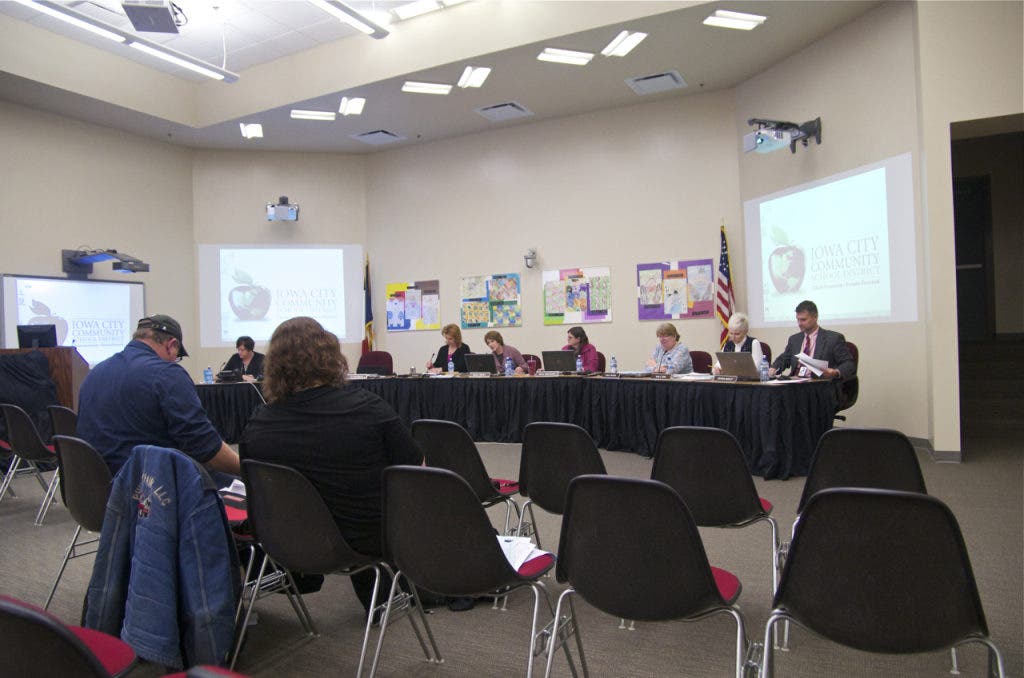
The Iowa City School District continues to grow, but it's not growing so fast that the district can't adjust to the problems that come with that growth.
At least, for the most part.
At the Iowa City School Board's first meeting in the new administration building on North Dodge street, Assistant Superintendent Ann Feldmann presented the Iowa City School Board with some pleasant news. According to her , the school district's enrollment is up approximately 436 students from a year ago, bringing total enrollment to a total of 12,454. With that, a year from now, should come the additional $5,900 per student in funding from the state.
Find out what's happening in Iowa Cityfor free with the latest updates from Patch.
Feldmann said that the best part is that even though the enrollment is growing, it is slow enough for the district to manage it while waiting for funding based on that growth that will, by the nature of the system, arrive a year later than the students do.
"The growth isn't exploding like some other districts, it's really a healthy amount of growth that we are seeing now," Feldmann said.
Find out what's happening in Iowa Cityfor free with the latest updates from Patch.
The largest increase, according to Feldmann's report was at the elementary level, with 233 more students K-6 than the previous year.
Also of note was the class size numbers: according to the report, the average class size district wide for Kindergarten through Second grade is 20.4 students, Third through Sixth grade is 25.3, it's between 24 and 30 students at the junior high level, and between 20 and 30 at the high school level.
Feldmann said that the district has intentionally focused resources on keeping the class sizes low at the Kindergarten through Second grade level partially for its own reasons, and partially because federal funding has been targeted to achieve this goal.
"We do make a value judgment there," Feldmann said.
Board member Sarah Swisher said she was pleased that the numbers for class sizes weren't as high as some in the community might think, given recent concern over .
"They don't jive with community overall perception with our class sizes," Swisher said. "If you would ask the average Iowa City resident what's going on with class sizes, they would say that they are all sky high, and that's not the case at all."
Feldmann conceded after the meeting that pockets of schools with large class sizes do exist in the district, but that administrators are working as much as they can with a restricted budget to make these occurrences both less severe and less frequent. She suggested that some solutions for the large class sizes could be combined class rooms, utilizing half-time teachers and on the whole building future schools with larger, more efficient capacities.
Feldmann said that it is much easier to fix problems with class size if they can be adjusted before the school year begins. For the class rooms that do have problems now, there are steps that can be taken, but it remains to be seen if the district will do about it.
"There are systematic ways that we can look at solving it, but we haven't addressed them, yet," she said.
Julie Van Dyke, a Hills Elementary School parent, addressed the board on the topic of enrollment, noting that the district's enrollment would be even better if the board could find a way to prevent some of the parents who have open enrolled their children out of Iowa City into other districts from doing so in the future.
"I note that we still are dramatically increasing in the open enrollment out, and there are fewer and fewer people coming in," Van Dyke said.
Van Dyke suggested to the board that they improve their survey methods to determine why the parents are making these decisions, so they can better know what in the future might keep more students in Iowa City Schools.
Finally, African American students remain the largest minority population in the Iowa City School District, at 16.6 percent, according to the report. Meanwhile, the Hispanic/Latino population is the quickest growing minority for the second year in a row, increasing from 8.55 to 8.9 percent. Minorities on the whole make up approximately one third of the total student body.
Get more local news delivered straight to your inbox. Sign up for free Patch newsletters and alerts.