Neighbor News
Recognizing and Reducing Racism
We need, first, to acknowledge the continuation and consequences of racism, and then the possible remedies.
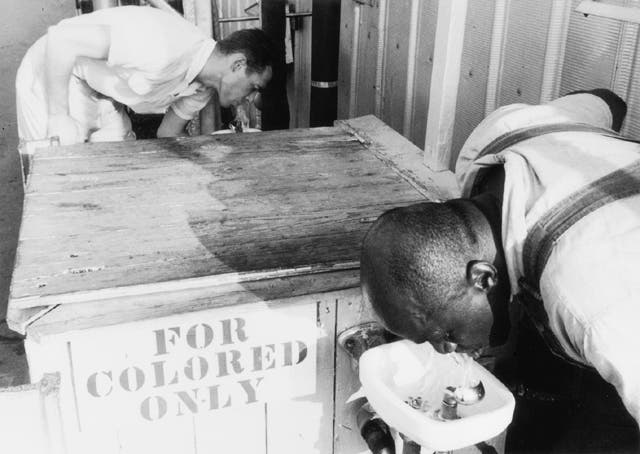
I am about as familiar as an Iowa white boy can be with the evil consequences of racism, as a result of spending most of the 1950s in Texas and throughout the South. There were still the poll tax designed to keep blacks from voting, black and white water fountains and restrooms, “No Colored” signs in restaurant and store windows, and the need for a lawsuit to open a law school to blacks. Crosses were burned in the yards of the U.S. Court of Appeals judges with whom I worked in their efforts to right these wrongs.
Such experiences helped shaped my reaction as an F.C.C. commissioner upon discovering that the broadcasting industry the Commission was supposed to regulate “in the public interest” was one of, if not the, country’s most racist and sexist. I pushed for, and the Commission achieved, increased employment of African Americans and women in front of the cameras, in broadcast management, and ownership.
But there is no comparison between being a compassionate observer and being an unwilling target in such a world.
Make no mistake. The offensive Confederate flags may be coming down, but racism is still with us, south, north, east and west. Today’s black lives are more likely threatened by a bullet from a gun than a rope from a tree, but their churches are still burned by a match from an arsonist.
The Southern Poverty Law Center’s annual measure of hate groups in the U.S. indicates that while their number ranged from 131 to 149 during 2001 to 2008, during President Obama’s presidency, from 2010 through 2014, the number ranged from 824 to 1360.
For those blacks able to avoid death, more common are the daily reminders of the painful ways in which they may have been negatively judged solely because of the color of their skin.
[The column continues with, among other things, the data and illustrations supporting that last sentence, plus some practical suggestions on what we can all do to eliminate, or at least reduce, the continuation and consequences of the tragedy we call “racism.” The column in its entirety can be found here:
Find out what's happening in Iowa Cityfor free with the latest updates from Patch.
http://fromdc2iowa.blogspot.com/2015/08/recognizing-and-reducing-racism.html ]
#RaceRelations #Racism