Schools
Third High School Supporters Get Boost from Report, Iowa City Superintendent
A report analyzing school population and correlation with achievement shows all three high schools in optimal population range if a third high school was opened.


There are advantages to large schools and advantages to small schools.
When it comes to school building population, there's no absolutely right answer, it's all about hitting the sweet spot between large and small schools and tailoring instruction to whatever situation you choose.
That was the main message of a report on the effect of school population size on student performance submitted for the Iowa City School Board's consideration by Hanover Research out of the Washington D.C. area.
Find out what's happening in Iowa Cityfor free with the latest updates from Patch.
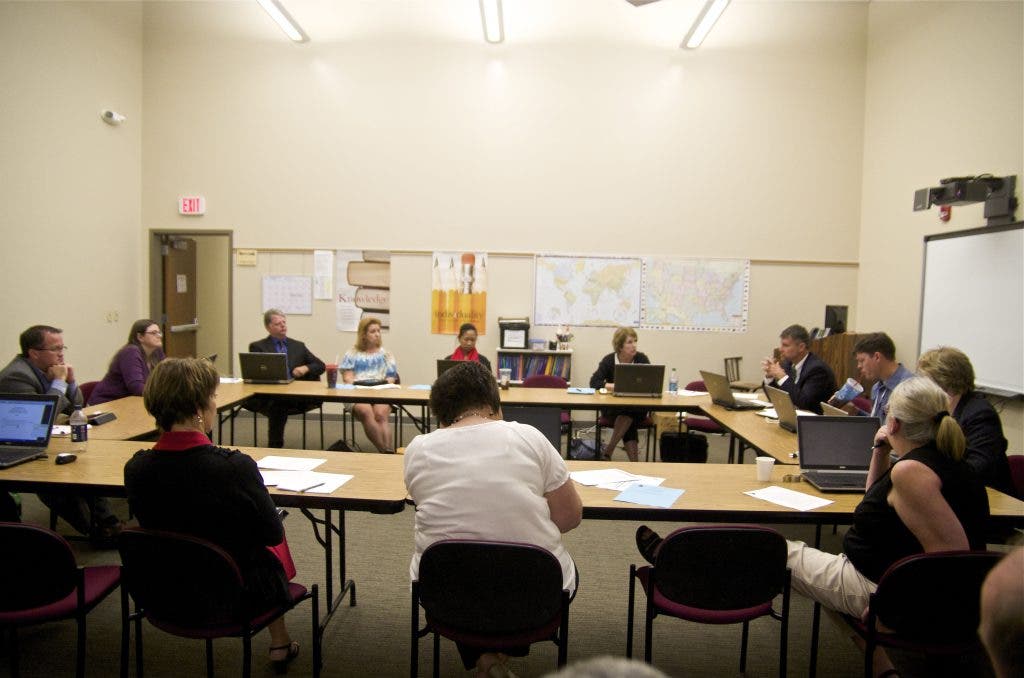
The report was discussed during the district's facilities meeting held before the regular school board meeting on Tuesday evening. The question is important as the school district ponders the consequences of building a third high school, which would affect the size of student population at all three high schools.
At the meeting, Iowa City Superintendent Steve Murley also reaffirmed that the district is following a previous board directive to continue planning for a third high school, including actively looking for land for the school.
Find out what's happening in Iowa Cityfor free with the latest updates from Patch.
The Diminishing Returns of Large High Schools
Superintendent Steve Murley explained to the board that the report considered small high schools to be at 500 students or below and large high schools are 1,500 students or more.
Murley said that the report listed the benefits of small schools as allowing students a sense of belonging, with there also being less of a chance that troubled or struggling students would "fall through the cracks." In large schools, the benefit is an increased opportunity for more diverse social and academic activities, as well as extra curricular activities.
"We probably currently lean a little bit toward the large size both in terms of advantages and disadvantages," Murley said.
He said that the advantage that large schools have in offering a wide breadth of academic offerings is clear, but that as schools transitioned from being large to very large, the benefits gradually began to decrease, suggesting a parabolic curve with the most benefit in the 1,000 to 1,500 range.
"You're really starting to hit the top of that parabola (Editor: where you get the most benefit) at 1,500 students," Murley said.
Murley said that this "sweet spot" of around 1,500 students is close to where Iowa City City High School and West High School already are with their enrollments of 1,425 and 1,975 students respectively. If a new high school was opened with 800 or 900 students, likely in the quickly growing North Corridor area, this would drop enrollment at West and City High down below 1,500 most likely depending on enrollment trends and the year the schools opens, but this still would place all three high schools in this positive middle range.
He said this supported the continued action by the administration to plan to build a third high school.
"The standing order is to move forward with a third high school," Murley said. "Certainly based on what we see in here that does validate that decision."
What's Next and Board Reaction
Board member Tuyet Dorau piped in at the end of the report, asking for a practical takeaway.
"We just basically regurgitated information that a lot of us have known" Dorau said. "Where do we go from here?"
Murley said in response that he plans on continuing to look for land for both the high school and for a potential new elementary building in Iowa City. He said he would also have a more formalized request for proposal in September the district may or may not hire to help shore up revenue, enrollment, capacity, and redistricting info as the board faces some weighty decisions ahead.
Board member Sarah Swisher said she hoped the board doesn't get stuck focusing just on the high school problem, but instead should look into how to solve the elementary school crowding problem, a more pressing issue in her mind.
"When they go into this plan I'd like to see them come back with elementary education as sort of the top priority this time," Swisher said.
Fellow board member Jeff McGinness said that he agrees there is a need for help at the elementary level, but since everything is interconnected, he is most interested in looking at a comprehensive plan with short, medium, and long term goals before making any decisions.
"I don't have any problem saying that [elementary crowding] is a priority, but I do have a problem with it being the priority to the exclusion of everything else," McGiness said. "My hope would be the administration would be able to identify the most pressing need."
Get more local news delivered straight to your inbox. Sign up for free Patch newsletters and alerts.