Neighbor News
Why no coverage of giving a man with Asperger Syndrome 45 years for 2 voice messages
Injustice In Iowa-The Criminalization of Asperger Syndrome and Mental illness-Daniel S. Jason
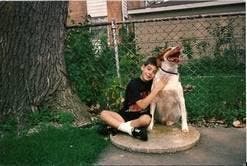
The Appeal in the case of Daniel S. Jason will received worldwide attention. The Justice Department has been contacted.
Reasons for Appeals
1) The sentence was consecutive instead of concurrent. There must be an explanation for this. It is a very stiff sentence for a person with an organic brain disorder.2) The district court provided sufficient reasons to support its decision to impose a term of incarceration. It cited the nature of the offenses, their ongoing nature, and the continuing course of contact by Jason. However, the court did not provide any reasons for its decision to impose consecutive sentences. See State v. Jacobs, 607 N.W.2d 679, 690 (Iowa 2000) (vacating sentences where court failed to state reasons for imposing consecutive sentences). Although the reasons given for imposing consecutive sentences may be the same reasons for granting probation, reasons must be identified. Id. Here, the trial court provided no explanation for the imposition of consecutive sentences during the sentencing hearing or in the sentencing order.3) Daniel was threatened with wearing a shock belt and therefore chose a bench trial instead. This was cruel and unusual punishment and should be cause for a new trial. Daniel wrote “They had me on a shock belt so I got scared and wanted it off so I waived a jury trial.”4) Daniel was not allowed to consent to his medical records being released. As a result, Dr. Mills testimony was used a s a rebuttal witness instead of the primary witness:Dr. Mills testified to the following during the trial:Daniel has no history of violence. Daniel did not have intent and is not a stalker. His actions are part of having Asperger Syndrome and not a suitor stalker. His actions were flawed and ambivalent. He did not want to contact his ex-girlfriend so he chose a flawed way. He had her phone number and did not call it. He was blowing off steam. Daniel cannot connect the dots. There is a disconnect between how we feel and how he feels. Daniel made reference to an embarrassing incident in the Johnson County auditor’s office. This referred to an employee who defecated in their pants. He was given two counts of extortion for this by overzealous Johnson County prosecutors. Dr. Mills stated the following in his report:“However, it is the reason behind this likelihood that is important: because of his psychiatric illness, he has essentially no ability to control his behavior in the required direction. That is, he can control himself from fighting or insulting fellow prisoners (because his autism-mediated obsessionalism, for whatever reason, does not engage that topic), but when it comes to his former girlfriend (and his apparently non-delusional belief that she had an abortion while pregnant by him, which he calls “abort[ing his] child”), his autism spectrum disorder and its associated compulsive behavior override his ordinary intelligence and control. The result is not only his repeated violations of court orders, but provocative and insulting language to the court and its officers. If you will, he had a clear cut diminished capacity to control behavior that, for most of us without serious mental illness, is volitional.5) Daniel did not go to Iowa and is non-violent.6) The Judge did not consider Daniel mentally ill and gave him a stiff sentence for not showing remorse. This show how the Judge failed to consider Daniel’s Asperger Syndrome.1)Daniel has Asperger Syndrome. The symptoms of Asperger’s syndrome vary and can range from mild to severe. Common symptoms include:·Problems with social skills:Children with Asperger’s syndrome generally have difficulty interacting with others and often are awkward in social situations. They generally do not make friends easily. They have difficulty initiating and maintaining conversation.·Eccentric or repetitive behaviors:Children with this condition may develop odd, repetitive movements, such as hand wringing or finger twisting.·Unusual preoccupations or rituals:A child with Asperger’s syndrome may develop rituals that he or she refuses to alter, such as getting dressed in a specific order.·Communication difficulties:People with Asperger’s syndrome may not make eye contact when speaking with someone. They may have trouble using facial expressions and gestures, and understanding body language. They also tend to have problems understanding language in context and are very literal in their use of language.·Limited range of interests:A child with Asperger’s syndrome may develop an intense, almost obsessive, interest in a few areas, such as sports schedules, weather, or maps.·Coordination problems:The movements of children with Asperger’s syndrome may seem clumsy or awkward.·Skilled or talented:Many children with Asperger’s syndrome are exceptionally talented or skilled in a particular area, such as music or math.People with AS often get into trouble without even realizing they have committed an offense. Offenses such as making threatening statements; personal, telephone, or internet stalking; inappropriate sexual advances; downloading child pornography; accomplice crime with false friends; and making physical outbursts at school or in the community would certainly strike most of society as offenses which demand some sort of punishment. This assumption, though valid at face value, may not take into account the particular issues that challenge the AS individual. Problems with sensory overload, poor social awareness, semantic misunderstandings, inability to deal with changes in routine or structure, and limited to absent understanding of non-verbal communications are the very kinds of things that make more appropriate responses to society very difficult for someone with AS.For example, what appears as anti-social behavior to the “regular” world is often simply the manifestation of the AS person’s social misunderstandings. While most would see too many phone calls in the middle of the night as aberrant phone stalking, the AS person might well view the situation as one friend wanting to talk to another, without regard for the time or frequency of calls. And a physical outburst at school might well be related to the AS person’s sensory dysfunction, inability to deal with interruptions in the daily routine, or emotional liability. Emotional liability means to be susceptible to change, error, or instability and stems from its Latin roots meaning “prone to slip.” This often presents itself in individuals with AS: their emotions can change very quickly. They can become upset, scared, or anxious very quickly. They may also be very anxious one minute and then calm the next, or vice versa. So, while the individual with AS may have committed the offense in question, the criminal behavior might have been an act of emotional impulsivity, with no intent to do harmA diagnosis of an ASD means that the person does have a developmental disability if criteria for developmental disability are met, even if there is no mental retardation. In a conference presentation, Allen et al (2006) provided a summary of their general themes. First, they set out the possible predisposing factors among people with Aspergers that could increase the probability of offending:
Find out what's happening in Iowa Cityfor free with the latest updates from Patch.
- Anxiety or even panic reactions which may be translated into aggressive actions
- Impulsiveness (perhaps linked to co morbid ADHD)
- Lack of awareness of likely outcomes, hence a willingness to initiate outcomes with unforeseen consequences
- Misunderstanding of social and interactional conventions or rules
- Naïve social awareness and misinterpretation of relationships leading to exploitation
- Obsessions and preoccupations
- Resistance to changing behavior
- The lack of empathy, or lack of insight into the effects of behavior; a denial of their own responsibility
All individuals with autism must have the right to have the condition of autism be considered first, and the implications of having autism be considered primary to any action taken by the criminal justice system prior to prosecution. Individuals with autism must have the right to free and appropriate individualized resources (FAIR) to enable them to receive appropriate education and training in order that they not develop nor continue behavior that may be viewed as illegal. Proper training in the issues associated with the syndrome of autism must be provided to all individuals associated with the criminal justice system, including judges, juries, prosecutors, defense lawyers, law enforcement personnel, and any other forensic science investigators associated with a criminal justice action. Individuals with autism must have the right to have expert witnesses, who understand the disability of autism, available to them in a court of law. If prosecuted, an individual with autism must have his disability considered primary when sentencing is handed out, e.g., consideration of a secure residential autism treatment agency if incarceration is indicated. The criminal justice system must ensure the protection of the civil rights of the individual with autism should the individual be incarcerated in a correctional institution or other human service agency. Individuals with autism must be protected under the American’s with Disabilities Act ensuring that their autism is not the reason for the conviction in a criminal justice action. 7)In the matter of Daniel having three felonies. In 2009, the prior Appeal was remanded back to the District Court questioning the consecutive sentences and whether Daniel should have been allowed to defend himself due to his Asperger Syndrome. Since Daniel has already served the time, an agreement was made to not retry him. The question is to whether this should count as a felony conviction. http://www.leagle.com/decision/In%20IACO%2020091217303
Joseph M. Jason, President NAMI BA
Board Member of Criminal Justice Advocacy for People with Mental Illness
Member/Director of CURE
(847)537-3009