
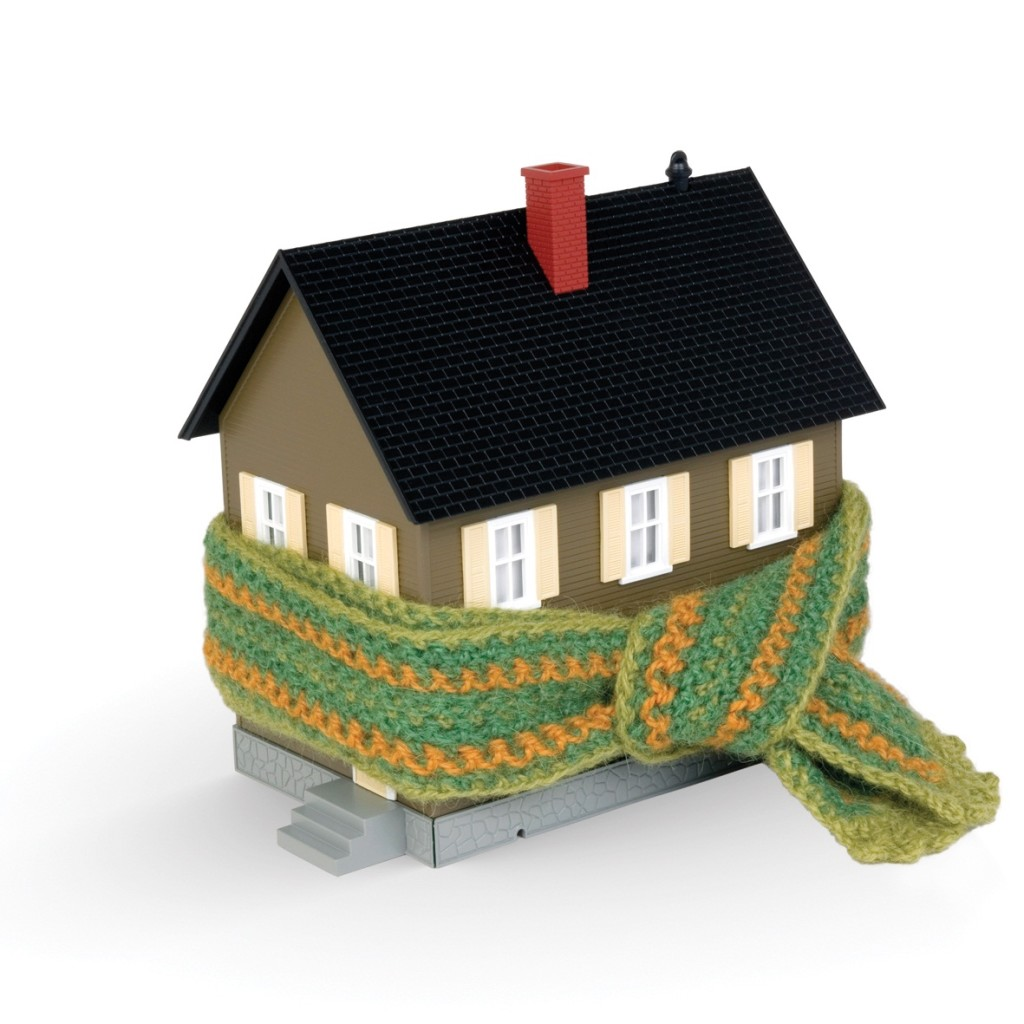

Prep and Protect Your Home for Winter
Even though it seems like just yesterday we were talking about how to stay cool without cranking the air conditioning, it’s already time to prep and protect your home for winter and save some cash in the process.
Using caulking and weather stripping in your home can help to reduce air leaks, which means warm air stays inside, while cold air stays outside. Both products seal air leaks, but they're used in different ways. Caulk is used when you want a flexible seal around cracks or joints (less than 1/4-inch wide), such as around windows and door frames, plumbing fixtures and pipes, and even ceiling fixtures. Weather stripping should be used around movable joints, including windows and doors.
Check for leaks around pipes, electrical outlets and vents. Look closely under sinks, around vents and in closets. Find a gap? Plug it up and the U.S. Department of Energy estimates you'll reduce your heating and cooling costs by up to 30 percent.
Service the FurnaceEven if your furnace is in fine working order, or seems to be, it should be serviced annually. If you haven't had it inspected this year, set up an appointment for a furnace cleaning and tune-up. Also, remember to replace your furnace's air filter about every three months (at the start of each new season), but check them monthly – dirty filters mean your furnace has to work harder. It is also a great idea to install a programmable thermostat so temperatures in your home can be adjusted to your schedule (warm when you are home, cooler when you are gone or sleeping).
Find out what's happening in Johnstonfor free with the latest updates from Patch.
The U.S. Department of Energy and ENERGY STAR suggest having a professional check the leakage rate of your ducts. Is more than 20 percent of the moving air leaking out of your system? Then it's time to seal your ducts. According to the Department of Energy, you can improve the efficiency of your HVAC system by about 20 percent by sealing and insulating the ducts. Heating and cooling costs are the two largest chunks of your home’s energy use.
Insulate, Insulate, Insulate
Add insulation to outer walls, attics, basements and crawlspaces help to keep your house warm in the winter and cool in the summer – and in turn, lower energy costs. Insulation types include fiberglass, cellulose, rigid foam board and spray foam. Get the biggest bang for your buck by adding insulation to your attic – most attics need about 12 to 15 inches of insulation for the best efficiency.
For more information on safe and smart disposal and recycling options, visit us at www.WhereItShouldGo.com