Neighbor News
"Bittersweet Harvest" Exhibit
Bittersweet Harvest explores the bracero program, the largest guest worker program in American history.

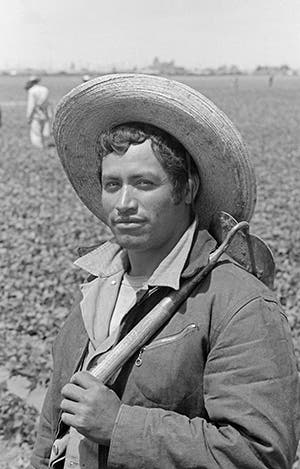
“Bittersweet Harvest: The Bracero Program 1942 -1964”
Free exhibit - Living History Farms Visitor Center
April 2 - May 17, 2015, Open Tuesdays & Thursdays, 10am-3pm
Find out what's happening in Urbandalefor free with the latest updates from Patch.
Bittersweet Harvest, a bilingual exhibition, explores the bracero program, the largest guest worker program in American history. Between 1942 and 1964, millions of Mexican nationals came to the U.S. on short-term labor contracts, which offered them much needed work and economic opportunity. Their dramatic story reveals an important but overlooked chapter in our nation’s history -- which remains highly relevant today.
The exhibition explores the braceros’ contributions to communities in Mexico and the United States, the opportunities that became available to braceros and the challenges that they faced as guest workers during the war years and afterward. Included in the exhibition are 15 free-standing banners featuring oral histories, quotes and photographs by Leonard Nadel, a photographer who, in 1956, exposed employer violations endured by many braceros.
Find out what's happening in Urbandalefor free with the latest updates from Patch.
During April, the Visitor Center and MarketPlace Museum Store will be open, but the rest of the museum will be closed. After we open on May 1, this exhibit will be included for free with general admission.
Photo by Leonard Nadel, 1956, Courtesy Smithsonian National Museum of American History
“Bittersweet Harvest: The Bracero Program, 1942-1964” is organized by the National Museum of American History and organized for travel by the Smithsonian Institution Traveling Exhibition Service. Funding is made possible through the Smithsonian’s Latino Center, which celebrates Latino culture, spirit and achievement in America by facilitating the development of exhibitions, research, collections and education programs.
The local presentation of the exhibition and public programs are supported by Humanities Iowa and the National Endowment for the Humanities. The views and opinions expressed by this program do not necessarily reflect those of Humanities Iowa or the National Endowment for the Humanities.