Politics & Government
Longtime Urbandale Mayor Says Leadership Isn't a Calling, but the Result of Listening to People's Needs
Politics versus public service: "It's not a difference," longtime Urbandale mayor and Polk County Superviosr E.J. Giovannetti says. "It's the difference."


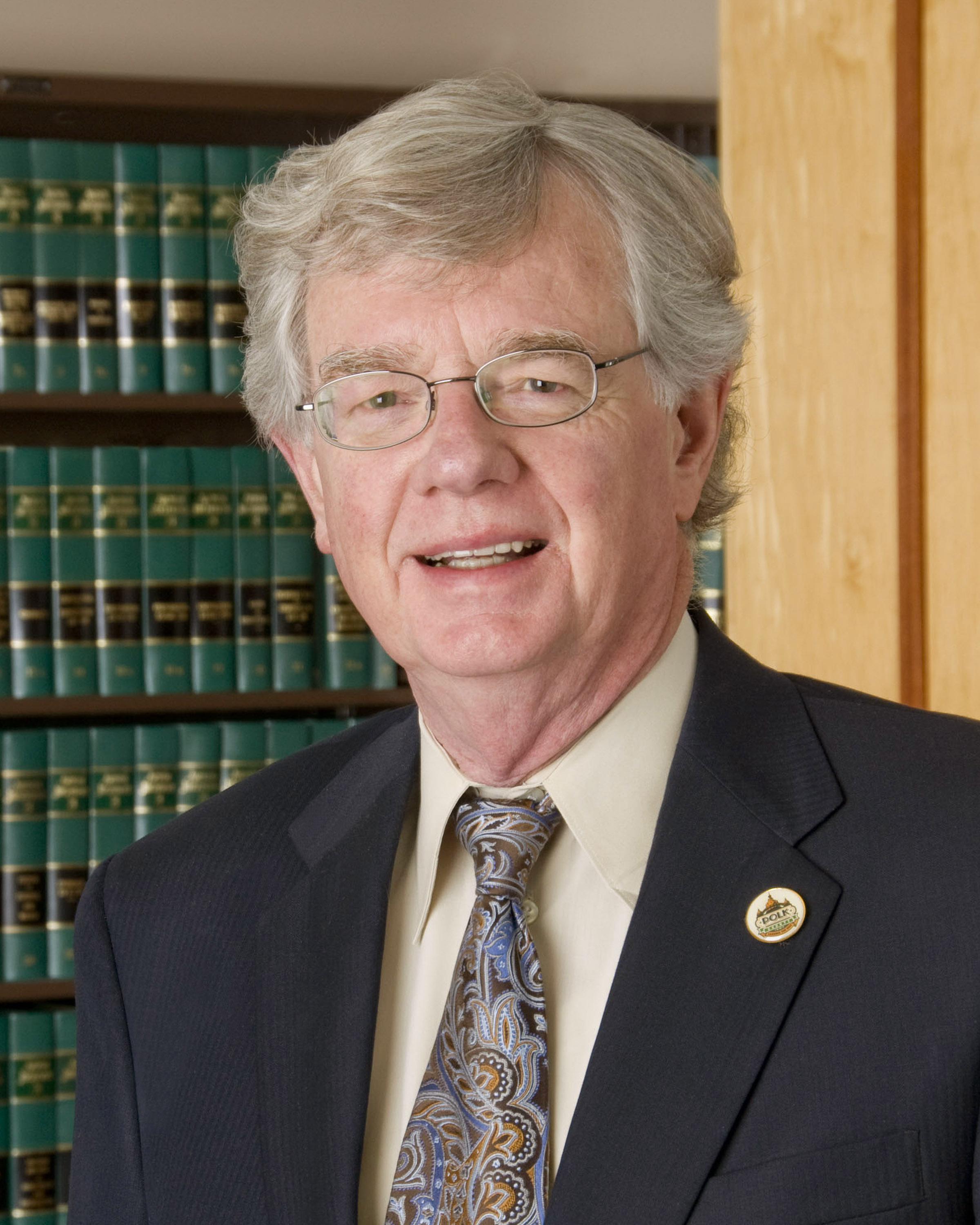
E.J. Giovannetti isn’t actually out of town.
The former Urbandale mayor and Polk County supervisor just tells well wishers he is, his way of saying he would like for the whole “Celebrate E.J.” thing to quietly go away.
It didn’t.
Find out what's happening in Urbandalefor free with the latest updates from Patch.
A $1.87 million shelter house at Walker Johnston Park will be dedicated in his name at a ceremony from 5-7 p.m. Thursday after community leaders convinced him to set his humility aside and let Urbandale residents celebrate his 30-year career in public service, 20 years of it as the city's mayor.
The saving grace, the 72-year-old Giovannetti supposes, is that the celebration is free, not one of those fancy $1,000-a-plate roast-and-toasts inaccessible to the people whose lives he worked as a public official to improve.
Find out what's happening in Urbandalefor free with the latest updates from Patch.
“I’ve always been driven by the fact that people come first,” he says.
Giovannetti returned full-time to his law practice at the Hopkins & Huebner firm after retiring from the Polk County Board of Supervisors when his term ended in January. He admits to going through a postpartum depression of sorts, even though it had been his choice. He stepped aside when he and Supervisor Bob Brownell were tossed into the same district when new maps were drawn in a messy and protracted redistricting process after the 2010 Census.
Since his retirement, he has been called a visionary leader who plotted Urbandale’s course during an unprecedented period of growth, a painstakingly transparent public official, and a leader whose honesty and integrity should be emulated by anyone interested in public service.
Giovannetti scoffs a bit at such effusive praise.
“Who sets out to be a leader?” he asks, prodding for further examination of what the question really means.
The answer is the difference between a public servant and a politician. A public servant works to dilute the politics from decision-making; a politician works re-election prospects into the equation.
“It’s not a difference,” Giovannetti says, “it’s the difference.
“That means doing the right job rather than trying to please people,” he says. “There used to be more accent on the mission, but now the tendency is to think in terms of re-election.”
Busting Stereotype of White Guy at Downtown Law Firm
Giovannetti moved to Urbandale from California in 1967 and “felt like a stranger in a foreign land.” But as he got to know his neighbors, he “found out there were from foreign lands, too, and we all had an interest in maintaining a community as a great place to live, and not just for raising kids.”
He served first on the city’s planning and zoning commission during the embryonic stage of Urbandale’s development. Then in 1977, as development began picking up steam in earnest western Polk County and eastern Dallas County, he was asked to fill in as an interim mayor.
Giovannetti says he knew he was a stereotype – a white male with a job at a downtown law firm – and he worked hard “not to be that perception.”
He took it to heart when a former city manager, Bob Layton, relayed a comment from someone who thought he was “intimidating.” He started going to Little League games and other places where community members gather and still does.
Getting Politics Out of the Way of Good Government
A decade in the Republican minority on the Polk County Board of Supervisors helped Giovannetti better understand the difference between politics and public service. City government is comparatively pure because mayors and councils are elected on nonpartisan ballots in Iowa, he says.
Early into his term as a supervisor, Polk County residents voted down a proposal to create a charter government that would have removed some of the politics from county government service. That wasn’t a popular plan because it removed a layer of government that is often closest to the people, Giovannetti says, but some aspects of the plan had merit.
“We shouldn’t be talking about a merger,” he says, “but we should be talking about reformation of county government, using the non-partisan, part-time model.”
One way that might work: Increase the number of county supervisors to seven, with five elected from districts and two on an at-large basis. All five members of the Polk County Board of Supervisors are elected from districts.
“If you did that, you could maybe get some traction from the cities,” he says. "There might be merit in that.”
Bring Solutions to the Table, Not Agendas
Whether at the city or county level, public service got under Giovannetti’s skin. He misses it – with a caveat.
“I don’t miss the partisan politics or being left out of the discussion because of my party registration,” he says. “The real key in public service, in my opinion, is that you really have to be sensitive to the people you represent – who they are and what they want. You have to build consensus, and you’ve got to be smart enough to get things done without creating division, and make sure you’re aligning with the parties for the right reasons.
“Bring solutions, not agendas,” he continues. “That’s where the sensitivity comes in, and your willingness to work to find what’s best for the whole rather than a special interest.”
That’s another difference between public service and politics.
“In all those years and all the councils I dealt with, nobody talked about who won and who lost,” he says.
“There Are No Dead Ends in Urbandale”
Giovannetti says that one of the things he’s most proud of is that Urbandale retained its personality – “a bit of city, and a bit of country” – as it grew. Today, the city has about 39,500 residents. When he became mayor in 1977, Urbandale’s population was around 17,500, up from 14,400 in 1970 and fewer than 6,000 in 1960.
“People have not forgotten where they came from,” he says. “Personal and public traditions and priorities have been maintained.”
City leaders were able to do that by always considering issues in the broader sense of what’s best for the people who chose to live in Urbandale.
“Any time an issue came before the council, we always asked, ‘How do we address this and reach a decision that is in the best issue of the community as a whole.”
He had some disappointments along the way.
He always wanted to create a Valley Junction-like shopping district in “old Urbandale,” the blocks surrounding 70th Street and Douglas Avenue.
“We worked very hard to preserve Old Town Urbandale,” he says. “You can’t let the core go to hell or you will rot from the inside out. The council always had as paramount goals both the east and the west ends of town.”
There was a problem in creating a destination district where consumers would be encouraged to linger for a while.
“There are no dead ends in Urbandale,” Giovannetti says, adding as an afterthought: “That’s not a bad slogan.”
His love for Urbandale and his habit considering its best interests are revealed again, like pieces of his soul, and you might wonder if this whole idea of retirement will take.
Get more local news delivered straight to your inbox. Sign up for free Patch newsletters and alerts.