Crime & Safety
How to Avoid Car Vs. Deer Crashes on Iowa Roads
October through December is the most dangerous time for deer on Iowa's roads. We've got tips to help avoid a serious accident.


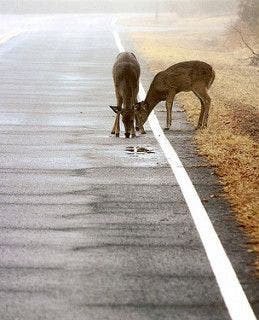
As the weather turns comfy and we sip our pumpkin spice drinks, deer are on the move across Iowa, upping the chances that drivers will crash into the animals on roads.
The odds of a U.S. driver colliding with a deer doubles in October through December, especially in Iowa, which ranks fourth nationwide for the number of car vs. deer crashes, although the state ranked No. 3 a year ago. The odds are 1 in 68 that Iowans will have an up-close encounter with deer on the road, says State Farm insurance. That’s a decrease of 1.4 percent from the previous year.
Deer activity peaks during their breeding season, which occurs from mid-October through November, say wildlife experts. Deer often travel without regard for roads or traffic during this time period. And drivers need to be especially alert from sunset to dawn when deer are more active.
Find out what's happening in West Des Moinesfor free with the latest updates from Patch.
Iowa Department of Public Safety records show that there are an average of 21 deer-vehicle collisions daily in the state, resulting in 600 injuries to drivers and passengers each year. State officials sayd that one out of every nine auto crashes in Iowa involves a deer.
The top five states nationwide where a driver is most likely to have a collision are, in order, West Virginia, Montana, Pennsylvania, Iowa and South Dakota, according to State Farm.
Find out what's happening in West Des Moinesfor free with the latest updates from Patch.
Deer strikes have cause enough damage to patrol cars that the Iowa State Patrol has asked an Iowa State University transportation program for help plotting where most car vs. deer crashes happen. The program will analyze the locations of deer crashes and deer carcasses found along Iowa primary roads to see which highway segments are most prone to deer crashes.
The State Patrol wants to someday have alert systems in their cars to inform officers when they are entering a deer “hot spot.” You could call it a high-tech “Deer Crossing” sign.
Up to now, the state’s only attempt to ward off deer collisions has been car-mounted deer whistles, the success of which is up for debate by many drivers, says Iowa State.
Only 11 states saw a decrease in deer strikes in the past year, according to State Farm's numbers. The biggest increase for the 2015-16 period: Washington, D.C., saw deer strikes jump 50 percent.
You can see the state-by-state data in the interactive map.
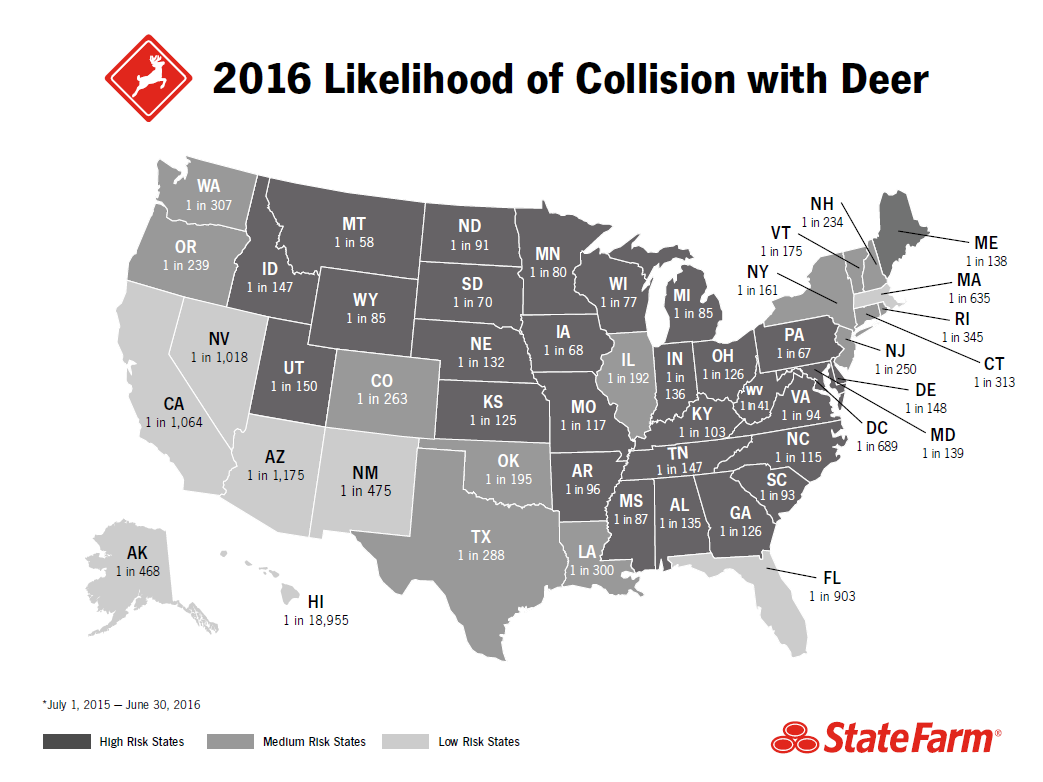
Wildlife and insurance experts warn drivers to stay alert for deer and other wildlife this time of year as these animals seek out food supplies and mates.
Drivers are reminded to:
- Slow down, particularly at dusk and dawn
- If you see one deer, be prepared for more deer to cross the road
- Pay attention to deer crossing signs
- Always buckle up, every trip, every time
- Use your high beams to see farther, except when there is oncoming traffic
- Brake if you can, but avoid swerving, which could result in a more severe crash
- Remain focused on the road, scanning for hazards, including animals
- Avoid distractions, like devices or eating, which might cause you to miss seeing an animal
- Do not rely on products such as deer whistles, which are not proven effective
- If riding a motorcycle, always wear protective gear and keep focus on the road ahead
- Watch the shoulder. Be alert for deer standing along the shoulder as they may suddenly move into the roadway. Slow down and sound your horn to scare them away.
So I Hit A Deer; Now What?
State Farm gives six steps to take if you do end up hitting a deer:
1. Move your vehicle to a safe place: Get it off the road, if possible, and turn on your hazard lights.
2. Call the police: They can make sure traffic gets stopped, if needed, and take down information for your insurance claim.
3. Document the incident: Take photos of everything — the deer, your car, any injuries to you or your passengers. You should also get contact information from any witnesses who saw the crash.
4. Don’t touch the animal: It could be carrying disease, or if it’s still alive, it could get scared and hurt you.
5. Contact your insurance agent: Get the claims process going ASAP.
6. Don’t assume your vehicle is safe to drive: Check it for fluid leaks, tire damage, broken lights or anything else that may have gone wrong during the crash. If you have any doubts, call a tow truck.
»Image from Maryland Department of Natural Resources, public domain
Get more local news delivered straight to your inbox. Sign up for free Patch newsletters and alerts.