Politics & Government
Rep. Chris Hagenow: As Legislature Moves Toward Adjournment, Property Tax Reform Still a Thorny Issue
Legislator says that if Iowa does nothing, taxpayers will be facing a $2.3 billion property tax increase over the next 10 years, most of which will fall to homeowners.


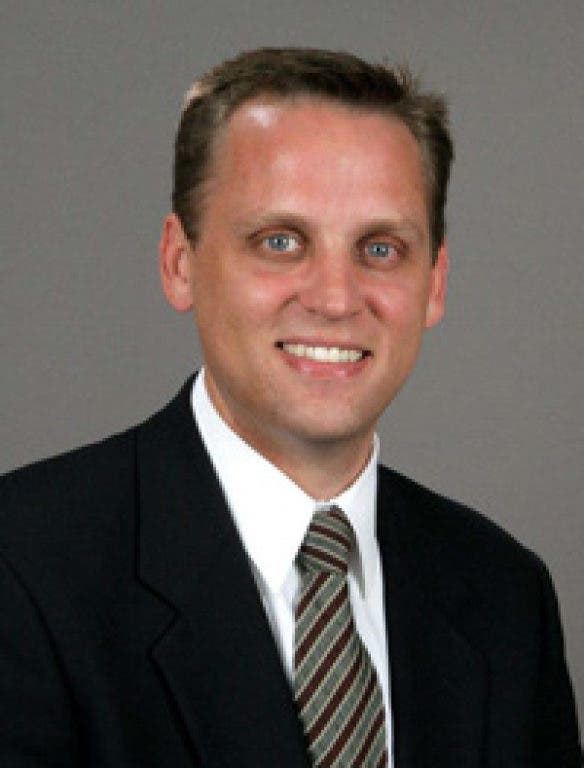
By Rep. Chris Hagenow
We have now passed a key point in the legislative calendar, with the passing of the second legislative funnel. The second funnel is a self-imposed deadline meaning that only bills eligible for further consideration are those which have passed one chamber and subsequently passed a committee in the other.
After the second funnel, the Legislature’s attention turns toward putting together the final details of the state budget, and wrapping up work on a few remaining pieces of important legislation.
With this narrowed focus, we are able to finish work on the state budget and several remaining high-profile bills, most notably property tax reform.
Tell us in comments what you think about commercial property tax reform proposals.
With regard to the state budget, I will not waiver on my commitment to keep spending under control. We must also make sure that government does not spend more than it collects in revenue. These common-sense budget principles have been ignored far too often in government, and the taxpayers are the ones who end up paying.
As we craft the state budget, we need to continue to find saving and efficiencies, while continuing to fund the priority needs of Iowans. The benefits of a responsible state budget are jobs, savings and certainty.
My goal for property tax reform is to provide savings for all Iowans, including individuals and businesses and to provide certainty as people plan for the future. The House has already sent several different proposals over to the Senate, and I am still hopeful that the Senate will choose to act on one.
The time to act is now: If we do nothing on property tax reform, Iowa’s taxpayers will be facing a $2.3 billion property tax increase over the next 10 years, most of which will fall to homeowners.
Right now, the focus of the Legislature should be to make it easier for employers to begin hiring people and to invest in their businesses. To meet this goal, we are working on a budget and property tax reform that will give Iowans financial security and an environment where our economy can flourish.
Small City Audit and Examination Fund
This week, the Government Oversight Committee I chair passed an important bill designed to help prevent fraud within small cities. In recent years, there has been an unfortunate increase in mismanagement of funds within small city budgets, and the bill helps to add additional audits and periodic examination of those smaller city budgets.
Obviously, the vast majority of small Iowa cities do a great job of managing public money, but too often, the lack of oversight, training and resources opens the door for fraud and abuse.
According to the State Auditor’s office there were 32 cases of embezzlement from 2006 to 2011 in cities of fewer than 700 people, which is up from only seven cases in the five previous years.
One example of this abuse comes from nearby Dexter, where that City Clerk misused $131,392. In other cases, city clerks have used city money to purchase whiskey, beer, laptops, grills, pies, cat litter and self-help books for themselves.
Under this bill, 570 of Iowa’s smallest cities would have the opportunity for increased audits and periodic examinations. To pay for these audits or examinations, each city will be required to pay a small fee to a fund the state based on the size of their budget.
The subcommittee members assigned to the bill worked with both the State Auditor and the Iowa League of Cities to amend the bill. The bipartisan amendment to help reach consensus on the bill addresses concerns about the frequency of audits or examinations, limits on the size of the fees paid, and makes sure that fees collected over a set amount be directed toward education and training to prevent fraud.
I feel confident that this bill will be a useful tool to help prevent some of the fraud that is occurring in small city budgets. I am pleased to see the committee work in a bipartisan fashion to make this legislation better for all concerned parties.
Notarial Acts Update
I recently had the opportunity to floor manage SF 2265, updating and re-writing Iowa’s law on Notarial Acts. The bill is based on uniform laws adopted in other states, and will give Iowa laws more uniformity. The practical benefit for Iowans is that their notarized documents will be more easily accepted in other states, and provides the Secretary of State’s Office with new authority to implement a system for secure electronic notarization of documents.
After working with the Iowa State Bar Association and the Secretary of State’s Office, we were able to put together a bill that works for all interested parties. This may seem like a small piece of legislation, but it is another good example of the work here that goes unnoticed to make Iowa business and commerce more efficient.
School Bus Driver Background Checks
Last week the House passed SF 2221 which requires school districts to do background checks on prospective school bus drivers. We already run background checks on others that work with our children, and it makes sense to do the same for children’s bus drivers as well.
SF 2221 also requires districts to re-check their bus drivers every five years after license renewal. The background checks will search the sex offender registry, the child abuse registry, the dependent adult abuse registry and the Iowa Courts Online. This is a common-sense piece of legislation that will help to protect our children’s safety at school.
Iowa Ranks Seventh in Government Openness
A study entitled the “State Integrity Investigation” done by the Center for Public Integrity ranks Iowa seventh among the fifty states on government openness. The study used a list of 330 indicators, covering many topics including transparency and vulnerability to corruption.
Iowa had a total score of 78. New Jersey scored the highest with an 87 and Georgia ranked last with a total score of 49. Iowa’s high marks came because of our laws on transparency and vulnerability to corruption. Iowa received “A’s” for the redistricting process and for the management of the state pension fund. Iowa lost points for laws on open records and civil service management.
Contact Me
As always, I look forward to hearing your comments and ideas. Please feel free to contact me anytime.
Representative Chris Hagenow
State Capitol
East 9th and Grand Ave.
Des Moines, IA 50319
(515) 281-3221
www.chrishagenow.com
chris.hagenow@legis.state.ia.us
Find out what's happening in West Des Moinesfor free with the latest updates from Patch.
Get more local news delivered straight to your inbox. Sign up for free Patch newsletters and alerts.