Schools
UPDATE: Valley Students Overwhelmingly Reject Grinding Ban
Valley High School students like Ron Paul for president, say bullying is a problem, and believe same-sex marriage should be legal nationwide.


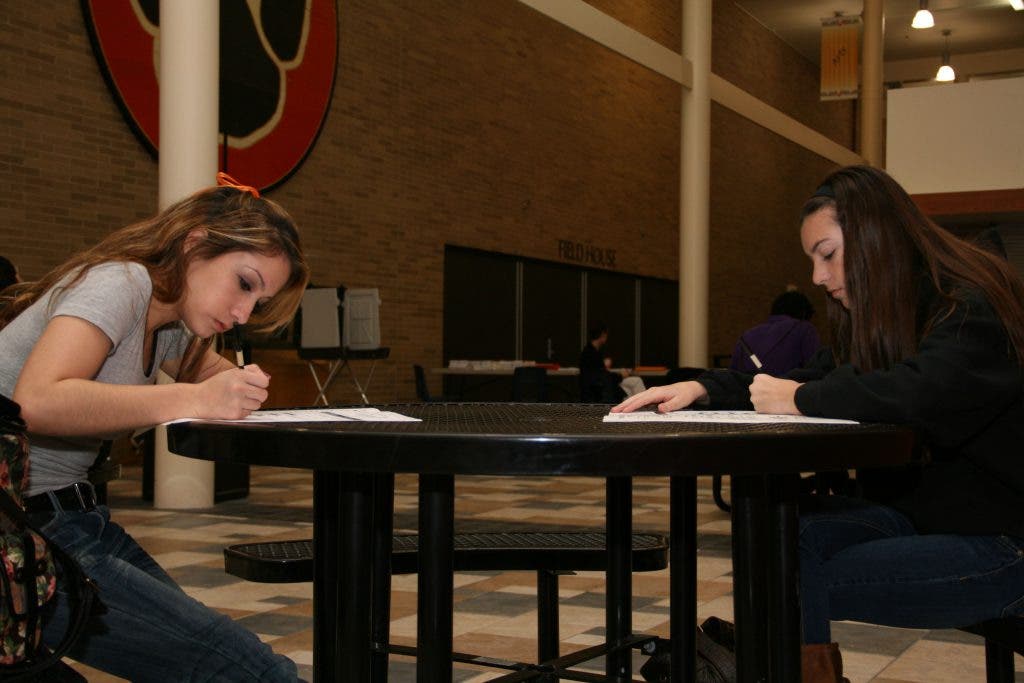


West Des Moines Valley students like Ron Paul for the Republican nomination for president, but overwhelmingly said they wouldn’t attend high school dances if policies were instituted to ban grinding.
Those are some of the results of this week’s mock election, in which the school’s 2,000 students weighed in on their presidential preferences and a handful of school issues — whether a no-grinding policy would limit attendance at high school dances, if they’ve seen or been the victim of bullying, whether they’ve used illegal substances, if they think school policies to deal with such infractions are effective, and if they believe same-sex marriage should be legal in all 50 states.
The results show:
- 313 students said they have attended school or school activities under the influence of drugs or alcohol, compared with 788 who said they had not.
- 537 students said policies dealing with discipline for using illegal drugs or alcohol are an effective deterrent, compared with 553 students who think they are not.
- 688 students said they have been the victim of or have witnessed bullying, compared with 411 students who said they have not.
- 280 students said they would attend a school dance if a no-grinding policy were instituted, compared with 818 who said they would not.
- 755 students said they believe same-sex marriage should be legal in all 50 states, comapred with 341 who said it should not.
Vote totals for president:
- Ron Paul, 326
- Mitt Romney, 264
- Rick Perry, 164
- Newt Gingrich, 120
- Michele Bachmann, 96
- Rick Santorum, 43
Earlier Patch Story Below:
Find out what's happening in West Des Moinesfor free with the latest updates from Patch.
Assistant Principal Dave Maxwell is unabashedly exploiting the Iowa Caucuses as the ultimate teaching moment.
As the school’s 2,000 students voted this week on presidential preferences during a mock election, they’re also weighing in on gnarly school issues — whether a no-grinding policy would limit attendance at high school dances, if they’ve seen or been the victim of bullying, whether they’ve used illegal substances and if they think school policies to deal with such infractions are effective.
“You have to take advantage of the opportunity,” Maxwell said. “This doesn’t happen every day.
The Jan. 3 Iowa caucuses provide two distinct opportunities: the Valley Votes mock election that continues through Friday, and Rock the Caucus on Jan. 3, Caucus Day in Iowa and the first day students return from winter break.
Rock the Caucus is part of Rock the Vote, an initiative founded 20 years ago to increase young people’s participation in elections and help empower them to work for political and social change.
Find out what's happening in West Des Moinesfor free with the latest updates from Patch.
" ... if I see an opportunity to speak to the kids on a broader scale, I’m not going to pass it up."
Maxwell is meeting later today with the five students selected for the role of candidates in Rock the Caucus — Laney Abrahamson, Terae Holmes, Jasmine Au, Ben Weinberg and Maddy Baker — and he’s going to use his full power of persuasion to convince one of them to develop a platform around a grinding policy.
Maxwell views himself as a lobbyist of sorts. He doesn’t want to dictate what issues the Rock the Caucus student candidates will base their campaigns around, “but if I see an opportunity to speak to the kids on a broader scale, I’m not going to pass it up,” he said.
Grinding has been an issues students, parents and school leaders have grappled with around the metro in the past year. It first came up in Johnston last school year, then an Urbandale parent complained about the dance moves at this fall's homecoming dance.
West Des Moines Community Schools are informally discussing a no-grinding policy within the administrative team and a committee of educators and parents, Maxwell said. The matter has not yet come before the school board.
Students, Adults Disagree Over Whether Grinding is Inappropriate
Popular culture greatly influences how students view what’s right and what’s wrong, he said. And in the minds of school officials, who have informally discussed a no-grinding policy among the administrative team and a committee of parents and teachers, sexually suggestive dances are wrong.
“Unless you’ve witnessed it, you don’t understand what grinding means,” Maxwell said. “I want you to imagine 10 couples. The boys form a circle facing each other, and the girls bend over in front of them and shake their groove thing.
“And then imagine them moving from the circle to in front of the stage,” he said. “The guys are lined up in front and could be having a conversation with another guy beside him while the girls are grinding in front of them.
“That’s the visual we see.”
Among the issues Maxwell would like students to discuss is how such a dance objectifies women, and how students represent themselves and are portrayed when they participate in it.
“The line of propriety of what we think is culturally acceptable continues to move,” he said.
“It’s a funny, tricky dance”
Indeed, a handful of student voters queried on the subject of grinding said it’s no big deal and a policy prohibiting it would curb attendance at dances.
“That’s just the dance of this generation,” 16-year-old Isaac Galaviz said.
“Adults are not used to seeing it because it’s not their generation,” Jonathan Bravo, also 16, said. “It’s what young people enjoy.”
“I don’t know if anyone would go to dances if there was a policy like that,” said Tia Rodriguez, 15. “How would do you enforce it?”
In the 1950s, Maxwell said, school administrators put a balloon between couples if they thought they were dancing too closely.
He’s looking for a more effective solution — changing students’ attitudes about what’s acceptable and what isn’t.
After a recent dance, Maxwell and other school officials asked the student council what they thought about the dance. The response was generally that it was a success.
“So I said, ‘Now, let’s talk about the dancing,’” he said. “Forty naive, bewildered eyes were looking back at me.
“This is tough,” he said. “Correcting something they don’t think is wrong, that’s a tough thing to do. It’s a funny, tricky dance you have to learn to do in order to communicate and connect with kids.”
Maxwell said the goal isn’t to limit students’ freedom of expression.
“No. 1, we want our kids to be successful, first and foremost," he said. "We want them to be in a place where they make good decisions, and part of making good decisions is knowing how others are perceiving you.”
That’s what makes ubiquitous Iowa Caucus events the ultimate teaching moment, he said. Students have a significant amount exposure to the democratic process by virtue of living in an early voting state.
Track the vote
Results of the Valley Vote mock election will be posted on the Polk County Auditor’s Office Web site after 3 p.m. Friday.
The mock election is one of 11 taking place in central Iowa under a $50,000 grant from the U.S. Election Commission.
Students used secret ballots, which several said increased their confidence in the process, especially as they voted on issues about grinding, bullying and substance abuse.
Get more local news delivered straight to your inbox. Sign up for free Patch newsletters and alerts.