Community Corner
Photos Of Orangutan Mom And Baby Will Steal Your Heart
The orangutan Lily turned 4 months old, and the Sedgwick County Zoo in Wichita marks a big milestone in her relationship with her mother.


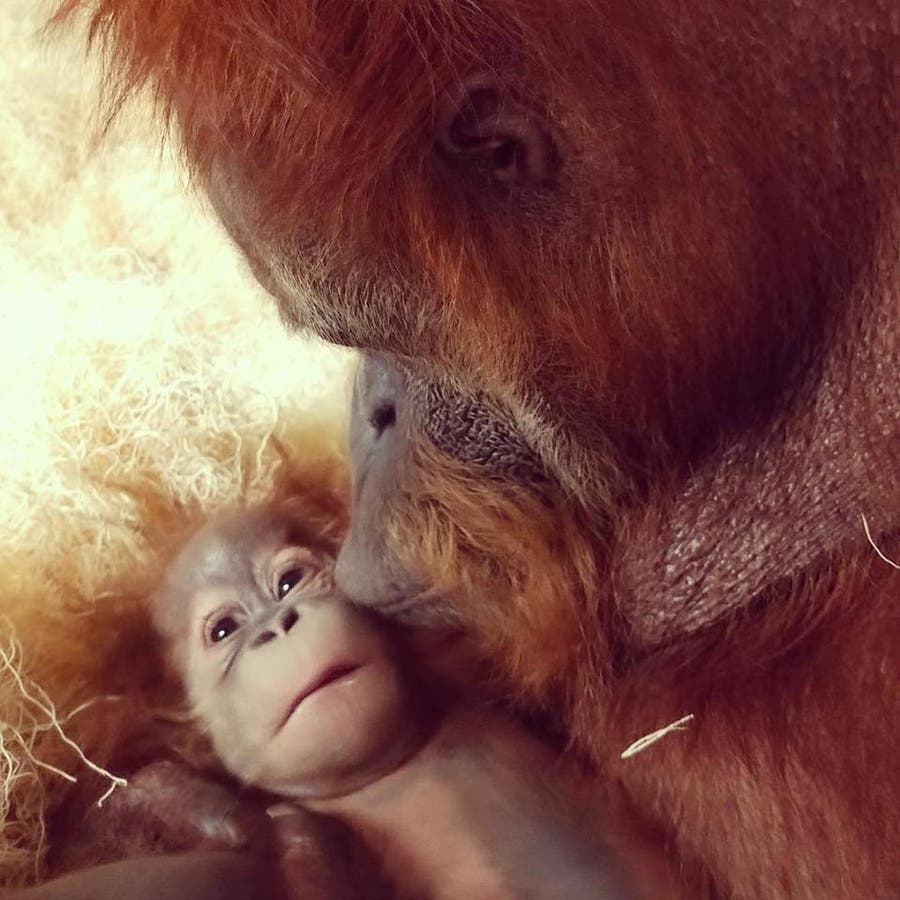


WICHITA, KS — In the animal kingdom, the orangutan is something of a helicopter mom, staying with her young for years to teach the infant the ways of the jungle and how to survive. Photos taken at a zoo in Kansas of the Sumatran orangutan Daisy and her 4-month-old baby, Lily, are a precious illustration of the inextricable bond between wild female orangutans and their offspring.
But it didn't start out that way. Mom Daisy just needed a little help to get to that point with the wee orangutan celebrating her 4-month-birthday Monday at the Sedgwick County Zoo in Wichita. Lily made an unconventional arrival on the morning of Sept. 7 after Daisy encountered complications during labor, and was delivered by a Caesarian section performed by a pair of human doctors, Janna Chibry and Laura Whisler at College Hill OB-GYN.
Her first months were unusual, too. Daisy came to the Wichita zoo from the Birmingham Zoo, where she was raised by humans. “That was in the 1980s, back in a time when apes were managed differently in zoos,” Sedgwick County Zoo spokeswoman Jennica King told Patch.
Find out what's happening in Wichitafor free with the latest updates from Patch.
Today’s management practices favor letting nature take its course — in other words, letting orangutan moms follow their instincts. Because Daisy was raised by humans, she didn’t quite know what to do. Keepers at the zoo provided Lily with around-the-clock feeding and snuggles until Daisy was ready to take over.
Though humans have been doing most of the rearing, Daisy and Lily have been sharing space together for some time and Daisy, the zoo posted on Facebook. The keepers took Lily out of the enclosure for bottles and “snuggles” — a replication of the clininging that naturally occurs with mother orangutans and their offspring.
Find out what's happening in Wichitafor free with the latest updates from Patch.
Something “clicked in her” a couple of weeks ago, King said, and Daisy no longer allows the human “moms” in her enclosure, though Lily does cling to the wire mesh and take nourishment from a bottle. The snuggling, a quite natural interaction between orangutans and their young, is on Daisy’s terms now.
“We still aren’t sure what sparked this change, but it is clear that Daisy’s feelings regarding Lily have changed in a huge way,” King wrote on Facebook. “She isn’t nursing Lily yet, but she is very dependable in bringing Lily to the mesh so we can feed her a bottle.
“We’ll continue training sessions with both mom and baby to help Daisy maintain that maternal behavior consistently. They will continue to be behind the scenes as they bond and learn together. We are so excited to see what the next chapter brings in their story and what other surprises are around the corner.”
Lily is Daisy’s third baby, and the second one born at the zoo in Wichita. In 2011, she gave birth to Kinali, and though he was born naturally, Daisy was ill-equipped to raise him and human caretakers had to step in.
After both births, Daisy and the human keepers has what King called a “shared custody” arrangement. It lasted about seven months with Kinali, but Daisy took over much sooner with Lily and knows what to do, King said.
View this post on InstagramIT’S A GIRL! Sumatran orangutan Daisy delivered a healthy baby girl at 8:14 this morning via C-section. After laboring naturally through the night, Daisy showed signs of complications and the decision was made to intervene. Keepers will care for the baby to provide round-the-clock feedings and snuggles until Daisy has recovered and is able to take over. #sumatranorangutan #ILoveLily
A post shared by Sedgwick County Zoo (@sedgwickcountyzoo) on Sep 7, 2018 at 1:17pm PDT
In Indonesia, the only place on Earth where orangutans are found in the wild, babies cling to their mothers for two years, relying solely on them for food and transportation. Mom orangutans stay with their offspring for about seven years and teach them the basics, like where to find food, what and how to eat, and how to make a new bed every night high in the trees.
And just like human kids, orangutans continue to visit their mothers when they’re out on their own, according to the World Wildlife Fund.
A photo of Daisy and Lily posted on social media Sunday in anticipation of the baby’s 4-month-birthday perfectly encapsulates the bond between orangutan mothers and their offspring.
“We thought about saving this for Lily’s 4-month birthday tomorrow but we just can’t!” the zoo wrote. “The love between mama and baby is just too much for us and we had to give you a little sneak peek.”
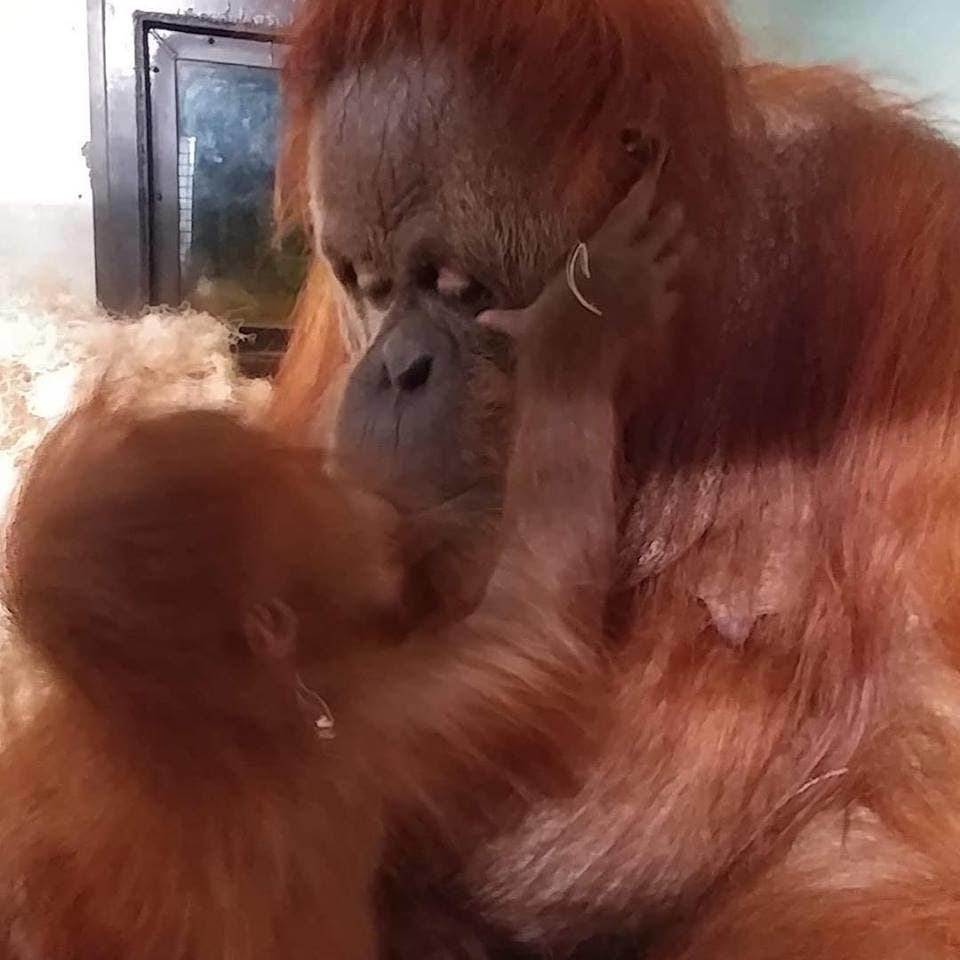
Lily’s father is Panji, who is also the father of Tao’s baby, Mulia.
Daisy was transferred to the zoo in Wichita from Zoo Atlanta, where she also lived for a time, to breed with Panji under what’s known as the Species Survival Plan, which was developed by the Association of Zoos and Aquariums in 1981 to help ensure the survival of species that are threatened or endangered in the wild.
Both species of orangutan — Sumatran and Bornean — are on the brink of extinction, mainly due to widespread habitat loss on the islands where they reside. Both species are listed as critically endangered by the IUCN Red List.
The population of Sumatran orangutans is estimated population of 13,587 mature individuals. The numbers are higher than previously estimated because of improved survey techniques, the International Union for Conservation of Nature said, but Sumatran orangutan numbers are dramatically declining.
The specific number of Bornean orangutans remaining in the wild isn’t known, according to the IUCN. The most recent estimate in 2004 showed 55,000 individuals remaining.
All photos courtesy of the Sedgwick County Zoo, used with permission.
Get more local news delivered straight to your inbox. Sign up for free Patch newsletters and alerts.