Neighbor News
Find Social Media Accounts Phone Number: Step-by-Step Guide
People use phone numbers for much more than calls and messages.
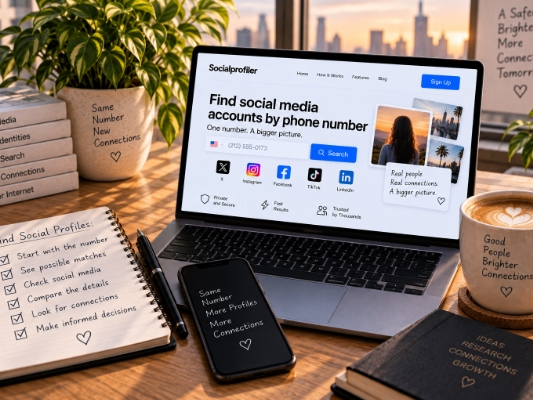
People use phone numbers for much more than calls and messages. A number may be connected to social media accounts, business profiles, messaging services, or other online identities. When information is publicly available, a phone number can sometimes provide a useful starting point for discovering a person's broader digital presence.
The important part is knowing how to approach this kind of search responsibly. If you want to find social media accounts phone number, the goal should be to identify publicly available information rather than access private accounts or uncover sensitive personal details.
Whether you are checking your own digital footprint, verifying information someone has voluntarily shared, or researching a public contact, understanding how phone-based social discovery works can help you search more carefully and interpret results more accurately.
Find out what's happening in New Canadafor free with the latest updates from Patch.
Why Do People Search for Social Media Accounts by Phone Number?
Phone numbers are often used when creating or verifying online accounts. Some platforms allow users to make their profiles discoverable through a phone number, although the availability of this feature depends on the platform and the user's privacy settings.
This means a number may sometimes be connected to a public social profile. In other situations, there may be no visible connection at all.
Find out what's happening in New Canadafor free with the latest updates from Patch.
There are several legitimate reasons someone might perform this type of search. A person may want to check which profiles are connected to their own number, verify a business contact, reconnect with someone they already know, or investigate whether information they have been given is consistent with publicly available sources.
The purpose matters. A responsible search should focus on information that is already publicly accessible and should not attempt to bypass privacy protections.
How Phone-Based Social Discovery Works
When a phone number is used as a search starting point, a reverse lookup service may compare it against information available in relevant databases and public sources.
Potential results can vary significantly. Depending on the number, you might find:
- A name associated with a publicly listed number
- Social media profiles
- Business information
- Public usernames
- General geographic information
- Public directory records
- Other online references
Not every search produces a result. A number may have limited online exposure, or the owner may have restricted discoverability through account privacy settings.
For that reason, a blank result should not automatically be interpreted as suspicious. It may simply mean that the number is not publicly connected to searchable information.
How to Find Social Media Accounts Using a Phone Number
If you want to find social media accounts phone number, Socialprofiler provides a number-first way to begin the search. You can start with a complete 10-digit U.S. phone number without needing the person's name, email address, social-media username, profile URL, password, or contact upload.
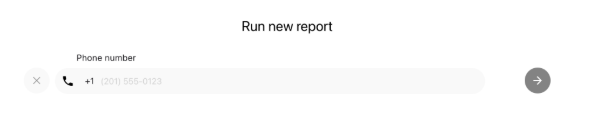
After signing up, Socialprofiler can provide a Free Preview when a potential match is available. The profile photo remains visible, while identifying details such as the account name and direct profile link are blurred. This allows you to assess whether the result appears relevant before accessing the full information.
With the full result, you can review the matched account details and separately check for possible associated profiles on Facebook, Instagram, TikTok, and X.
Any result should still be treated as a possible match rather than definitive proof of identity. Compare it with independent details you already know before drawing conclusions.
What Else Can Socialprofiler Show?
Depending on the information available for a potential match, Socialprofiler reports may also include Top Interests, followed accounts, connections, possible Red Flags, Unusual Aspects, an Executive Summary, and AI-assisted analysis.
These details can provide additional context around a possible match, but they should not be treated as automatic proof of identity.
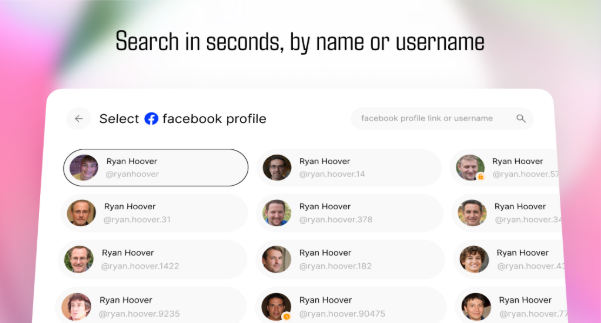
Compare Multiple Details
One of the most useful ways to interpret a reverse lookup result is to look for consistency.
For example, imagine a phone number produces a public profile containing a name and location. You could compare those details with information the person has already shared with you.
Other publicly visible details may include a username, profile photograph, business name, or links to other accounts. Several consistent pieces of information can provide more context than relying on a single matching field.
However, even multiple matches should be interpreted carefully. People can share names, photographs can be reused, and phone numbers can change ownership.
The purpose of a reverse lookup is therefore not to declare an identity with absolute certainty. It is to help organize information that can then be evaluated in context.
Why Privacy Settings Matter
Social media platforms give users different levels of control over how their accounts can be discovered. For example, X explains that users can control whether people who have their phone number or email address can discover their account.
Someone may have used a phone number when creating an account but later changed their privacy settings. As a result, the account may not appear in a phone-based search.
Likewise, some people deliberately keep their phone numbers separate from their public profiles. This can make them much harder to discover through reverse lookup services.
This is an important part of understanding search results. The absence of a social profile does not necessarily mean the person does not use social media. It may simply mean the relevant account is not publicly discoverable through that number.
Avoid Assuming Every Match Is Correct
Reverse lookup databases are not perfect. Information can become outdated, and phone numbers can be reassigned.
A number that once belonged to one person may eventually be given to another. Public directories can also contain old information.
Social media profiles can introduce another layer of uncertainty. Users may change usernames, remove accounts, update profile information, or disconnect a number from an account.
For these reasons, treat search results as supporting information rather than definitive identification.
If a result seems inconsistent, do not immediately assume someone is hiding something. Check whether the information could simply be outdated or associated with another person.
Responsible Uses of Phone-Based Social Searches
There are many reasonable ways to use this type of search.
For example, someone may want to audit their own phone number and see what information strangers could potentially discover. A business owner might check whether a public company number appears correctly in online directories. Someone reconnecting with an old acquaintance may use publicly available information to locate a profile they already know exists.
The key principle is consent, context, and privacy.
A phone lookup should not be used to harass someone, expose sensitive personal information, impersonate another person, or bypass privacy controls.
If information is clearly private or unavailable through normal public channels, attempting to circumvent those restrictions crosses an important privacy boundary.
Protecting Your Own Number Online
Searching for other profiles can also highlight how much information your own phone number may reveal.
Review the privacy settings on your social accounts and check whether strangers can find your profile using your number. If a platform provides a setting that limits phone-based discovery, consider whether the public visibility matches your preferences.
It is also worth checking where your number appears online. Old business listings, public directories, advertisements, and forgotten profiles can continue to expose contact information long after they are no longer needed.
Reducing unnecessary public exposure can make it more difficult for strangers to connect your phone number with other parts of your online identity.
When a Search Produces Unexpected Information
Sometimes a phone lookup can reveal information that you did not expect to find. This can happen because of old accounts, reused numbers, public directories, or information that was previously published online.
If you discover information connected to your own number that you do not want publicly visible, consider contacting the relevant website or reviewing the account's privacy settings.
Do not assume that every result is accurate simply because it appears in a search. Verify the source and consider whether the information is current.
Similarly, if you search someone else's number and find sensitive information, there is usually no reason to share or republish it. Discovering information and having a legitimate reason to distribute it are two different things.
A Practical Approach to Social Profile Discovery
If you want to find social media accounts phone number, the most useful approach is to combine reverse lookup with basic online research.
Start with the number, review potential matches, compare publicly available information, and consider the person's privacy settings. If a result looks promising, verify it using other non-sensitive information rather than relying on one database entry.
Socialprofiler can serve as one part of this process by helping users explore potential social-profile connections associated with a phone number. Its value is greatest when the results are interpreted carefully and used alongside other publicly available information.
Ultimately, phone-based social discovery works best as an information-gathering process, not as a shortcut to certainty. Public profiles can change, numbers can be reassigned, and databases can contain outdated records. A careful approach respects both accuracy and privacy while helping users understand the online footprint connected to a phone number.
Final Thoughts

A phone number can sometimes act as a bridge between different parts of a person's online presence. When those connections are publicly available, reverse lookup tools can make them easier to explore.
Knowing how to find social media accounts phone number can be useful for personal digital-footprint checks, legitimate verification, and public-profile research. The results, however, should always be treated as information that requires context.
Use reputable tools, verify important details, respect privacy settings, and avoid using discovered information in ways that could harm or expose another person. With those principles in mind, phone-based social discovery can remain a practical and responsible way to understand publicly available online information.