
Sports
Aberdeen Native Replaced Battlefields with Basketball Courts, Pt. II
Oregon State assistant coach David Grace recalls moments of fighting the war in Iraq, advice Boo Williams gave him on becoming a coach and how being ejected from a game led him to meet his wife.

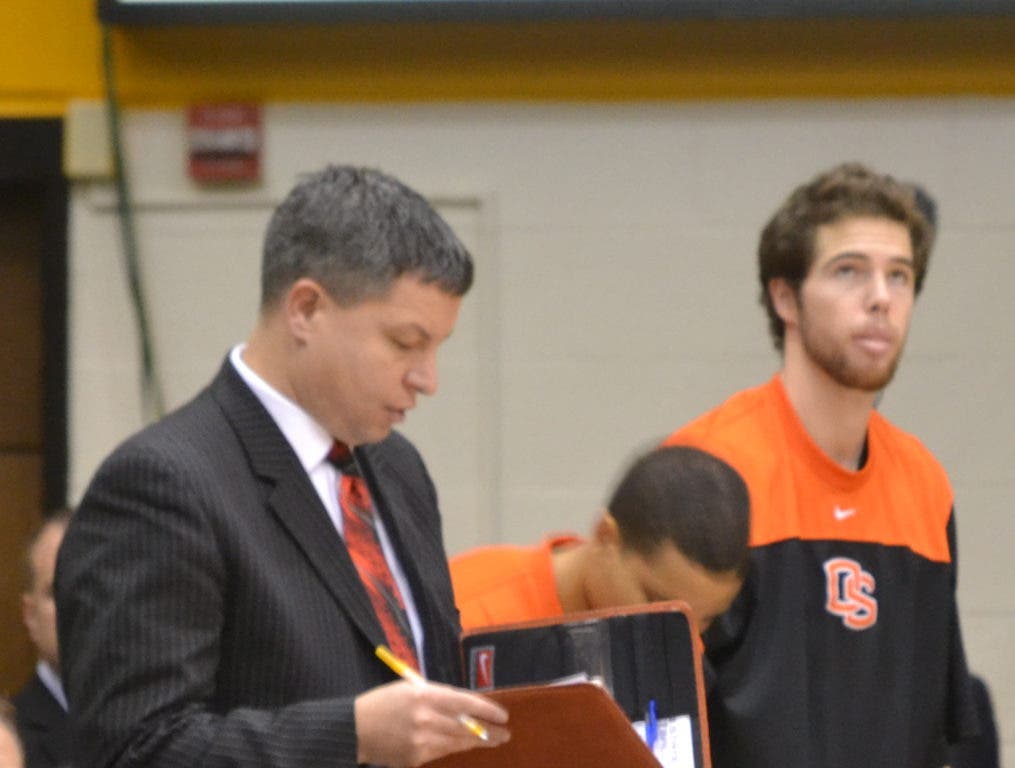
Aberdeen native David Grace served in the Air Force for 20 years, undertaking many operations in Turkey, Georgia, Iraq and in the United States. Whether it was playing, coaching or refereeing, the one thing that remained constant in a life of traveling around the world was his love for basketball.
After a mid-life career change, which included Grace going back to college at the age of 35 while raising his teenaged children, he is now the assistant coach for the Oregon State Beavers.
Sitting courtside before the Beavers game against the Towson Tigers, I met with Grace to talk about serving in the military and coaching basketball. This is the second part of my interview.
Find out what's happening in Aberdeenfor free with the latest updates from Patch.
Patch: What was going through your mind as an 18-year-old joining the military?
David Grace: I was only going to join the Air Force. If I wasn’t able to get into the Air Force, I wasn’t going to go into the military. You’re always nervous of the unknown. I didn’t even know the job I was taking or what it entailed. They gave me a list of what it was, but I didn’t know. But I was adventurous. They were paying me, and I was traveling and playing sports.
Find out what's happening in Aberdeenfor free with the latest updates from Patch.
Patch: You served in Operation Desert Storm. What was it like going into a foreign country to fight a war?
DG: I was scared. When you go to fight a war, you’re afraid of the unknown. In this day and age you can die for a lot of reasons. They don’t shoot bullets. They pour chemicals on you. When I got there it was a whole different world. It’s a Muslim country, so they do a lot of things differently. A lot of people were friendly, but you never know when you go fight a war.
Patch: You served in the Air Force for 20 years. Did you have different positions?
DG: I spent 14 years as a fuel specialist. I was responsible for making sure fuel was on the airplanes. Then my last six years I was promoted in my career field. There were too many tech sergeants in my career field, so they made me cross train—greatest thing that ever happened to me because I got the chance to learn another career. I became a human relations specialist and helped teach people how to work together in the Air Force. We have people from all over the world, and we have to work together.
Patch: Have you ever felt discriminated in your career?
DG: I have experienced discrimination all throughout my life. The way I look, people don’t know what I am. They don’t know if I’m white or if I’m black or if I’m Asian. I’m part Cherokee Indian.
Patch: You played, coached and refereed in basketball games in multiple countries while serving in the Air Force. How did you come to coach with Boo Williams?
I was stationed in Langley, VA, and my new supervisor was an Amateur Athletic Union basketball coach. My supervisor was coaching for Boo Williams’ basketball team, and he asked me to come down and be his assistant coach. I got to meet Boo and that inspired me to be a college basketball coach. Boo had put on a big tournament every year where all the college coaches would come and watch the top players across the country, so I went there and said I can do this. To this day Boo Williams and I are close friends.
Patch: What kind of advice did you receive from Williams on coaching?
DG: I received an assignment to leave for Phoenix, AZ, so at the time my first wife and I went into his office and asked for advice on college coaching or if I was college coach material. He spent time with me and said, 'You can be a college coach you can be an outstanding one, but first you need to finish your degree.' I was 35 at the time. I was never afraid of school it was always a challenge to me. I went through a divorce, got custody of my two children, was still in the Air Force, was coaching high school basketball in AAU and still got my degree.
Patch: Was that the most you have ever juggled in your life?
DG: Yes, it was incredible. I would wake up early. My boss was a great guy, and he’d let me go to work early. I would leave work around 2 p.m., go down to the high school to coach my team. Crystal, my girlfriend at the time, made sure the kids were all right. I’d go home to spend some time with the kids until they went to bed, and then get on the computer and do my homework until about one or two in the morning. And then do it all over again.
Patch: You are married to your wife, Crystal. How did you two meet?
DG: It’s funny how I met her. It’s crazy actually. I was still in the Air Force, and I was a freshman coach at Trevor Brown High School in Phoenix. The summer before the head coach and I were courted to coach at Central High school in downtown Phoenix, but we didn’t go. That season we played them and my freshman team was very good, and we were winning and one of my kids got off the bench and the athletic director came over and said he didn’t like how he was celebrating. My kid didn’t know who he was and talked back and got into an argument. I tried to defuse the confrontation. The athletic director was kind of mad at me because we were beating them. He told me to leave the gym, so I couldn’t even coach in the varsity game. So, I go home after taking the guys back and I’m fuming because I wanted to coach so bad. I go to this little sports bar and my future wife was there, so that’s how we met. We might not have met if I didn’t get thrown out of the basketball game.
Patch: This is your fourth year coaching at Oregon State after coaching at various high schools and colleges. What is it that you like about this program?
DG: I love a challenge—the opportunity to come into a program and change it and make it a winner. The people I worked for in the military said when you get a job go make it better. And that’s what we’ve done with every program I went to. We turned it around and made it a great program.
Patch: You recently attended the Villa 7 Center for Sports Leadership Conference at Virgina Commonwealth University. Do you want to be a head coach?
DG: I want to be a head coach. That was a big step toward that direction to be acknowledged and spend time with athletic directors at Villa 7.
Patch: What makes a good coach?
DG: What makes a good coach is that the kids got to trust you. Once they trust you and they know you love them, they’ll go through a brick wall for you. Then the communication process opens up. Your best coaches are your best communicators.
Get more local news delivered straight to your inbox. Sign up for free Patch newsletters and alerts.