Neighbor News
Local veteran recalls med-evac missions as pilot in 'Nam
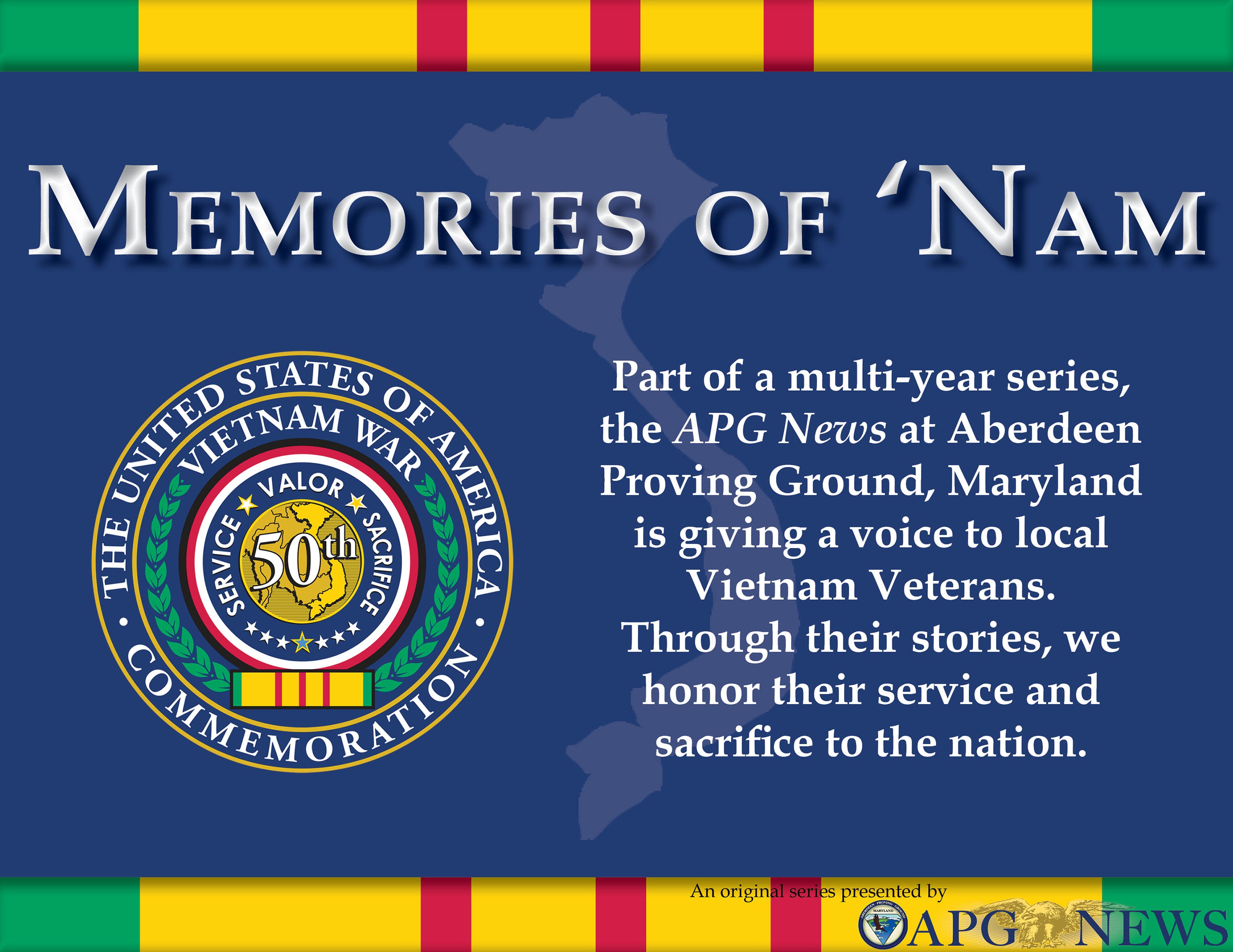
Giving a voice to Vietnam veterans through their stories we honor their service and sacrifice, and offer a long-overdue "Welcome Home."



By Yvonne Johnson, APG News
ABERDEEN PROVING GROUND, Md.-- Wally Mueller likes to say that veterans are victors, not victims.
A native of Guttenberg, New Jersey, Mueller graduated from John Carroll University in Ohio in 1964 and received his commission in the Medical Service Corps. He attended Officer Basic Course at Fort Bragg, North Carolina and a Medical Aviator Course at Fort Sam Houston, Texas where he officially became a “Dustoff” pilot. While there, he met the company commander of the 498th Medical Company (Air Ambulance) who had Mueller assigned to his unit.
Find out what's happening in Aberdeenfor free with the latest updates from Patch.
Mueller arrived in ‘Nam in July of 1966 and served to July the following year, surprising his family with a visit home on the Fourth of July.
“I didn’t have a chance to write and tell everybody I was coming home,” he said. “I walked into the back yard. The whole family was preparing for the celebration. The first thing I told my mother was, “Mom, I didn’t kill anybody.”
Find out what's happening in Aberdeenfor free with the latest updates from Patch.
In fact, a Vietnamese baby was born on his helicopter, he added.
Mueller flew A-Model UH-1H (Huey) helicopters that were outfitted especially for Vietnam.
“They were different from the Korean War Hueys,” he said. “The A model was designed for Medevac. You could actually stack three Army litters in one.”
He said the standard Dustoff crew consisted of a pilot, crew chief and medic. Sometimes they’d get an Infantry Soldier volunteer to “watch out the window on our blind side when the medic was busy working on patients.”
“The toughest part about being a Dustoff pilot was deciding who gets Medevac’d and who doesn’t,” Mueller said.
He recalled one mission when 22 “urgents” were in need of evacuation. “I could only handle five of them,” he said.
Luckily, he observed a much larger Chinook helicopter heading “up the coast.” He radioed the pilot and requested assistance.
“The first thing he asked me was, ‘Is it hot?’ meaning were we under fire,” Mueller said. “It wasn’t and between me and the Chinook we got them all out.”
Mueller said Dustoff crews kept the weapons that were accidentally left on their aircraft and he typically carried a .38 handgun, an M79 grenade launcher and an M2 carbine with extra banana clips [magazines] on him at all times.
“Whenever I walked down the street I got wild looks,” he said. “But in case you got shot down you wanted to have a little something extra to defend yourself with.”
Mueller harbors fond memories of his Dustoff missions as well as the Soldiers he served with.
“Camaraderie was tight,” he said. “We were saving lives and it was a rewarding feeling. We got to the point where we just let the medics do their jobs. We didn’t look back there; we just concentrated on getting out safely. And the appreciation of the Soldiers was incredible.”
He recalled once running into a fellow Vietnam veteran and telling him he served as a Dustoff pilot.
“The guy stopped talking and just hugged me and cried and told me ‘I’m only alive today because one of you came and got me,’” he said.
Mueller remained in the Army long enough to become an instructor pilot but left the service after receiving orders to return to ‘Nam in 1969. He had married by then and his wife was pregnant.
“I got out and entered the business world,” he said.
His wife of 47 years was an American Airlines stewardess when they met and his first job was as a food service manager with American Airlines in Nashville, Tennessee. He stayed there for four years, and then applied for a position at Edgewood with the Maryland National Guard. From 1989 to 2001, he served as the 29th Aviation Brigade property and fiscal officer and was set to retire after 37 years of service when 9/11 happened. He then was tasked to serve as the deputy director of the Maryland Emergency Management Agency in Reisterstown. Mueller retired in 2006 after 42 years of service.
Today, Mueller is an active member of American Legion Post 39 in Bel Air as well as Vietnam Veterans of America Chapter 588. He said he doesn’t think about ‘Nam much except when he sees something about it on TV.
“I’ll always remember but I don’t dwell on it,” he said. “I know how the country came to view the war but I take pride in my service. I feel positive because I know I was doing something good.
“That’s the message I want to bring to people. Not every vet is some poor homeless guy. A lot of us came home and resumed normal lives and some are very successful. That’s the value of belonging to Veteran Service Organizations. Guys come in and talk and all we do is listen. That’s the bond that comes from shared experiences and it’s even stronger for combat vets.
“Whether you served on a ship, in the air or on the ground, you know what it feels like,” he said.
Mueller attends Veterans and Memorial Day programs every year, mostly to be in the company of fellow veterans, regardless of when they served.
“I want to tell people that yes, there are veterans who need help but for every one, there are 10 who are doing just fine. As service members, we were trained to work as a team, overcome obstacles, think outside the box and accomplish the mission,” he said.
He added that combat veterans share an unspoken understanding that they are the ambassadors of the nation’s conflicts.
“We survived,” he said, “and we know we’ve got to go on for our country.”
###
Like any other war, Vietnam produced an array of veterans. When the conflict ended, some veterans opted to continue service in the military while others returned to civilian life. Some returned with life altering wounds - physical and psychological - while too many others, who never came home at all, remain among the Missing in Action.
On the surface, the veterans of the Vietnam War faced the same challenges as veterans of other wars, except for one glaring difference: they were vilified by American society like no other generation before or since.
Today, nearly 50 years after the war's end, the veterans of Vietnam are in their 60s and 70s. The passage of time has cooled the tempest of indignation that shrouded their homecoming and an ambiance of repentant thanks thrives in its wake. Many still do what they can to serve this nation.
This article originally appeared in the "APG News" as part of an ongoing, multi-year series hailing the service members and civilians who served the nation during the war in Vietnam. Giving a voice to local Vietnam veterans, it is through their stories that we honor their service and sacrifice, and offer a long-overdue "Welcome Home."
The "APG News" is the weekly newspaper produced at Aberdeen Proving Ground, an Army installation located in southern Harford County, Maryland, nearly midway between Washington, D.C. and Philadelphia, Pennsylvania. APG is recognized as one of the world's most important research and development, testing and evaluation facilities for military weapons and equipment, and supports the finest teams of military and civilian scientists, research engineers, technicians and administrators.
For more information about the series or the veterans featured, contact "APG News" Editor Amanda Rominiecki at amanda.r.rominiecki.civ@mail.mil.