Community Corner
Use Black History Month to Expand Your Mind, Library
There are numerous books by African American being showcased during Black History Month.

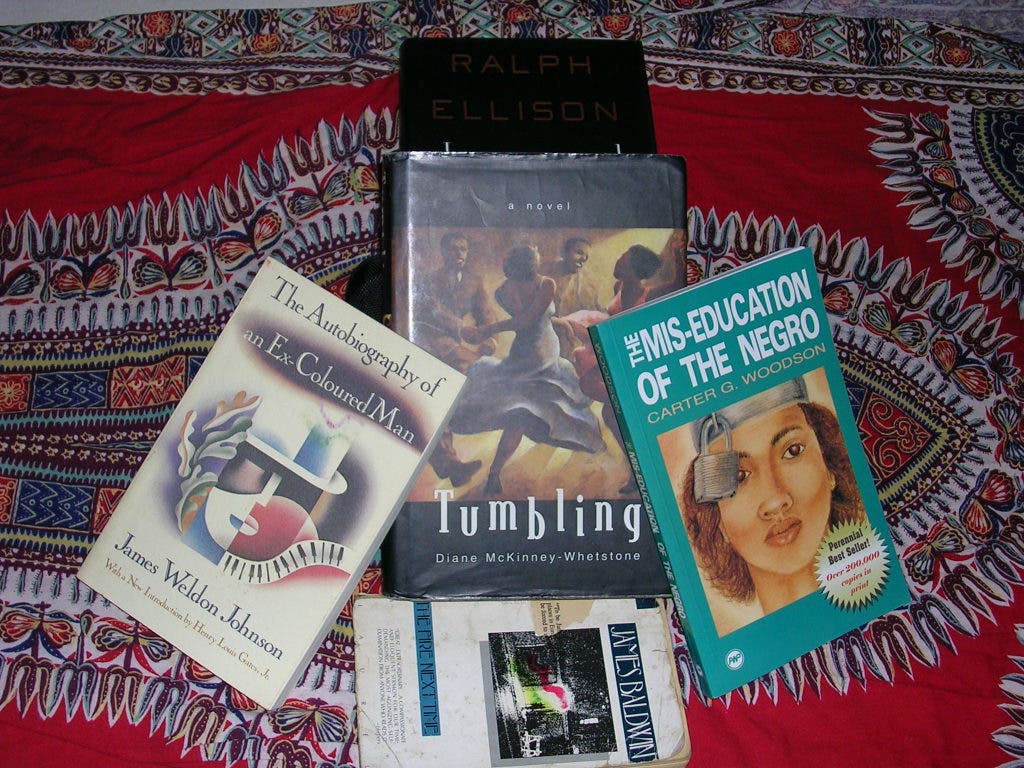

I discovered the writings of James Baldwin during my freshman year at Columbia Union College, now Washington Adventist University.
The College Store set up a special Black History Month promotional display and brought in an array of books by black authors whose work wasn’t required reading for any particular class. The display was no more than a table outside the store draped with an African print and a few books on top, but it was arresting. A small white paperback with blue accents caught my eye.
The book?
Find out what's happening in Aberdeenfor free with the latest updates from Patch.
James Baldwin’s The Fire Next Time.
Reading that book and learning more about its author, I grew mentally by forcing myself to separate people's views on various subjects from their other personal preferences such as religion and sexual orientation.
Find out what's happening in Aberdeenfor free with the latest updates from Patch.
I don’t quite know what drew me to that particular work of nonfiction. Perhaps it was because it looked small enough for me to finish in a hurry without interfering with all of my other coursework. Or it may have just been that it was priced under $10.
Whatever the case, I was still buying books three at a time every week back then: the first, a classic must-have for any collection; the second, something I had been meaning to pick up for a while; and the third, something inexpensive and interesting-looking by an author whose work I was not familiar with.
The Fire Next Time was the latter.
My plan was to read the tiny treasure while I waited — in college it seemed I was always waiting for something: to get into the café, for my next class, for friends.
But when I picked it up, I just didn’t want to put it down. I started it on a Saturday afternoon and finished it on a Sunday morning. Then I started reading it again — while I waited.
That’s because it spoke to my experience as a young African American man from the inner city.
The book begins with “My Dungeon Shook: Letter to My Nephew on the One Hundredth Anniversary of the Emancipation” that originally appeared in The Progressive, a Madison, Wisconsin-based publication.
This piece of prose is written from the perspective of an uncle who has loved his nephew for a lifetime, giving guidance – and perhaps even more important – the assurance that someone understands.
It concludes with “Down at the Cross,” which originally appeared in The New Yorker under the title “Letter From a Region In My Mind.”
In it, Baldwin details the “prolonged religious crisis” he underwent during the summer he turned 14. It describes his awakening, of sorts, to the fact that black men in many instances are either drawn to the church or the streets. Both compete to stake claims to young black men, Baldwin asserts. Both develop leaders. But the outcomes are seldom the same.
“What I saw around me that summer in Harlem was what I had always seen; nothing had changed. But now without any warning, the whores and pimps and racketeers on the Avenue had become a personal menace,” Baldwin writes. “It had not before occurred to me that I could become one of them, but now I realized that we had been produced by the same circumstances.”
When I read that statement, I knew that my personal assessment of inner-city life was not unique, and that someone else, namely a published author who had reached a goal that at the time I still aspired to, understood the world from my perspective.
It was not until after I had read the book twice that I learned of Baldwin’s openly alternative lifestyle. But by that point, I already respected his views — at least on surviving inner-city life.
And it was by weighing the views in his book against his personal sexual preferences that I adopted my current level of tolerance and acceptance for people who don’t think like me. My brother likens it to broccoli-flavored ice cream: I personally wouldn’t choose that, but if someone else does, God bless him. I hope it works out.
By buying one small book during Black History Month, I expanded both my library and my mind.
So, what’s on your reading list for this Black History Month?
(The Monday Morning Quarterback is a column about the joys and complexities of life as seen through the eyes of Mark Tyler, the Local Editor of Aberdeen.Patch.com. Mark can be reached at Mark.Tyler@patch.com or 443- 945-1882.)
Get more local news delivered straight to your inbox. Sign up for free Patch newsletters and alerts.