Community Corner
25 From '25: A Rundown Of The Most-Read Maryland Matters Stories Of The Year
Catfish, park passes and fraud scams? OK. Not for us to question readers, who have spoken on their favorite 2025 stories.
January 2, 2026
We’ve been busy writing for the past year, and it appears you’ve been busy reading: Just under 4.5 million users hit our stories for just under 7.7 million page views in 2025.
Find out what's happening in Across Marylandfor free with the latest updates from Patch.
Maryland Matters reporters, along with a handful of interns over the year, produced more than 1,000 bylined pieces, give or take a few for double bylines. That doesn’t include the hundreds from the D.C. bureau of States Newsroom, from our sister publications and from our news partners.
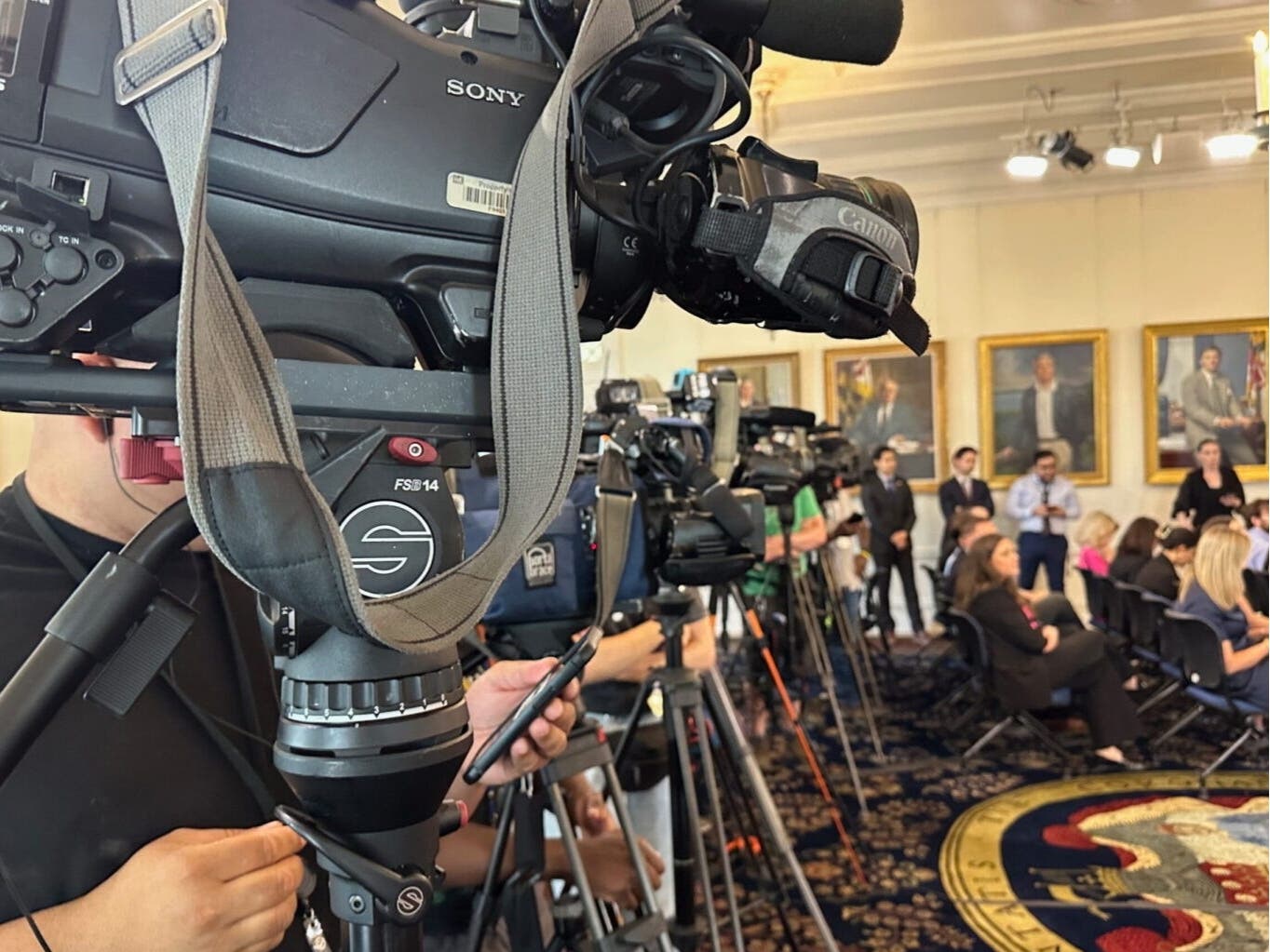
Shutdowns, shakeups, budget fights, chromite: Looking back on 2025 through our camera lens
Find out what's happening in Across Marylandfor free with the latest updates from Patch.
They included politics, policy, courts, crime and personal stories. But what were your favorites from that mix?
It’s a pretty interesting blend of all of the above, with a heavy dose of politics, as you might expect for Maryland Matters, but with the most-viewed, by far, being a couple stories that are more heart-warming than hard-hitting.
This being the start of a new year, we’re presenting the list in reverse, count-down order, starting with the 25th-most popular of our stories from 2025 and counting down to No. 1.
Many are historic, some are silly, some we’ll never see again and a lot will likely be making return appearances in 2026. Take a look and see how you align with your fellow Maryland Matters readers. And thanks for reading.
25. (16,865 views, Feb. 6)
Changes coming to Health Department

Maryland Health Seretary Dr. Laura Herrera Scott. Photo: Bryan P. Sears.
Maryland Health Secretary Laura Herrera Scott will leave the position she has held since the start of the Moore administration to make room for Meena Seshamani, who until recently was deputy administrator at the Center for Medicare and Medicaid Services.
The governor’s office said Thursday that Herrera Scott, who has been secretary since January 2023, will stay until the end of this month, when she will be temporarily succeeded by Deputy Secretary for Health Care Financing Ryan Moran. Seshamani will take over on April 8, pending Senate approval of her appointment.
Herrera Scott’s departure comes as her agency is at the center of a budget storm, with a $200 million cut to the Developmental Disabilities Administration among the biggest single cuts as the state struggles to close a $3 billion gap in the fiscal 2026 budget. That proposal has sparked emotional rallies by members of the disabilities community as well as pushback from lawmakers.
The department last spring also announced that it had underestimated Medicaid expenses by $236 million, sending lawmakers scrambling to find funds in the final month of the legislative session. And Herrera Scott came under fire in December for her handling of complaints at the Clifton T. Perkins Hospital Center, a high-security hospital that has been riddled with complaints of patient abuse and violence. (GO TO STORY)
24. (16,882 views, Feb. 21)

Senate warns of $500 million more in budget cuts, ahead of likely ‘disastrous’ federal action
Senate President Bill Ferguson (D-Baltimore City) said lawmakers are attempting to craft a state budget even as they expect cuts to federal aid before the end of the 2025 legislative session. (Photo by Bryan P. Sears/Maryland Matters)
Senate leaders said the legislature is preparing for as much as $500 million in additional cuts to an already strapped fiscal 2026 budget, as they brace for federal reductions and look to rework Gov. Wes Moore’s tax proposals.
“We do believe in the next couple of weeks we will get a better picture as to the extent of the, honestly, disastrous cuts that are likely going to be shifted to the states ahead of the March 14 shutdown date,” Senate President Bill Ferguson (D-Baltimore City) said during a weekly meeting with reporters.
Ferguson said he is hopeful that when other states start seeing cuts from a Republican-controlled White House and Congress, “be it Medicaid, FEMA, public education — that they speak to their congressional representatives and explain the pain that would be ahead for cost shifts. But we don’t know where that’s going to land yet, and so that’s a big uncertainty.”
In addition to uncertainty about the federal budget, Senate Budget and Taxation Chair Guy Guzzone (D-Howard) said fiscal committees in the House and Senate are looking at a full range of options, which he predicts could include $200-$500 million in cuts to offset likely changes to unpopular parts of the governor’s budget. (GO TO STORY)
23. (18,367 views, Dec. 16)
Legislature overrides Moore’s veto, approves creation of reparations commission

Sen. C. Anthony Muse (D- Prince George’s) applauds after the Maryland Senate voted to override Gov. Wes Moore’s (D) veto of a bill to study reparations for African Americans in Maryland on Tuesday. (Photo by Christine Condon/ Maryland Matters)
It took years to pass — and another eight months to override the governor’s veto — but lawmakers gave final approval Tuesday to a bill that creates a Maryland Reparations Commission.
The bill establishes a 23-member voluntary commission to assess specific federal, state and local policies from 1877 to 1965, the post-Reconstruction and Jim Crow eras, and to examine how public and private institutions may have benefited from policies that led to discrimination. The commission is also charged with recommending appropriate reparations, from a statement of apology to monetary compensation or social service assistance.
The bill had been a priority of the Legislative Black Caucus and its veto in May by Gov. Wes Moore (D), the first Black governor of Maryland, stunned many lawmakers and advocates, in Maryland and nationwide. Legislators immediately vowed an override, which they did by comfortable margins during Tuesday’s special session.
“It’s been a long time coming, and I’m so very grateful that this body saw fit to do that,” Sen. C. Anthony Muse (D-Prince George’s), the lead Senate sponsor, said in a brief interview after the vote. “I think the study will go a long way in revealing some of the things that we’re talking about. I’m happy that it’s happened.” (GO TO STORY)
22. (19,097 views, March 11)
Federal worker protection bill passes House, but not without a scrap

House Minority Whip Jazz Lewis (D-Prince George’s), left, talks about emergency legislation he sponsored in support of recently laid off federal workers in Maryland. (Photo by William J. Ford/Maryland Matters)
About the only thing lawmakers agreed on Tuesday was a bipartisan chorus of boos, after one House member resorted to calling Elon Musk a neo-Nazi during an increasingly contentious 30-minute debate over a bill to protect federal workers.
The Protect Our Federal Workers Act ended up passing the House, but not before the debate strayed to support for farmers, the state’s reliance on the federal government, President Donald Trump – and Musk.
“Right now, Republicans have empowered an unelected neo-Nazi with no security clearance or Senate confirmation to essentially determine what cuts should be made and who should be fired,” Del. Gabriel Acevero (D-Montgomery) said of Musk. “That’s the reality of it.”
It was not long after that that the House suspended debate to move to a vote.
House Bill 1424 would reallocate state funds to assist federal workers affected by Trump-directed layoffs and expand the authority of Attorney General Anthony Brown to pursue related litigation. It was portrayed as necessary by Democrats and an overstep by Republicans, who said Democrats were focusing too much on laid-off federal workers, and not enough on other workers in the state. (GO TO STORY)
21. (19,715 views, May 21)
Vehicle registration costs set to go up July 1
Maryland motorists will have to dig a little deeper after July 1 when they renew their vehicle registrations.
The cost of registering a passenger vehicle will increase 60-75% under new rates that take effect on July 1. The new fees, passed as part of a budget compromise between the House and Senate, include changes to weight classes of vehicles.
“As directed by state law, the MVA is required to adjust vehicle registration fees that will help provide critical revenue for the Transportation Trust Fund, which ensures all of the state’s infrastructure is in a state of good repair,” Motor Vehicle Administrator Chrissy Nizer said. “In order to make these new fees as affordable as possible, the MVA is now offering customers the convenient option to choose either a one or two-year registration at time of their renewal.”
The new fees and a coming surcharge on electric and hybrid vehicles are part of an effort to close a $3 billion projected gap in highway and transit spending. Lawmakers said earlier this year that projects would be delayed unless the state modernizes how it pays for transportation projects.
Currently, owners of passenger cars weighing up to 3,700 pounds pay $137 every two years. Effective July 1, the registration fee for a passenger vehicle up to 3,500 pounds will be $221 every two years, or $110.50 annually. (GO TO STORY)
20. (20,753 views, May 8)
Bumps AHEAD: Trump administration evaluating Maryland’s authority to set Medicare rates

A look at Western Maryland Hospital Center in Washington County. (Photo by Hannah Gaskill/Maryland Matters).
The Trump administration has signaled an interest in reining in Maryland’s ability to set rates for Medicare services – an authority the state has held for about 40 years.
Maryland’s system, unusual among states, gives the state significant say over the costs of health care services across different coverage plans to keep costs low and consistent. The state hopes to have a similar authority as it transitions into a federal program called the States Advancing All-Payer Health Equity Approaches and Development, or AHEAD, model.
But advocates worry that the feds’ apparent interest in changing who sets Medicare rates could disrupt health care payments for consumers, governments and providers.
The state’s ability to set Medicare rates has been in place for about 40 years under a waiver granted by the Centers for Medicare and Medicaid Innovation (CMMI).
In the time since, the state’s health care system has evolved and the Maryland Health Services Cost Review Commission now determines the rates for care across all hospitals in the state, so that health care service costs are similar whether someone has private insurance, Medicare or Medicaid. (GO TO STORY)
19. (21,005 views, Oct. 3)
Justices asked to decide when a cell phone ‘touch’ becomes reason for a traffic stop

Maryland Supreme Court held oral arguments on two cases Oct. 3 at Easton High School in Talbot County. (Photo by William J. Ford/Maryland Matters)
Maryland’s highest court was asked Friday to determine how much a driver has to be handling a phone before police have sufficient reason to pull the driver over for using a cell phone while driving.
The case stems from Michael Eugene Stone’s 2023 stop and subsequent arrest on drug charges in Hagerstown, after police saw him “touch” or tap the screen of his dash-mounted phone in a way they said looked like he might be texting or making a call.
After stopping Stone for “using the phone while driving,” the officers discovered that he was driving on a suspended license, and in a subsequent search of him and his car they found drugs, drug paraphernalia and brass knuckles.
At trial, Stone tried to get the search evidence suppressed, arguing that police did not have the reasonable suspicion needed to stop him in the first place. The trial judge disagreed and let the evidence be submitted, but the Appellate Court of Maryland reversed that ruling in January, saying the officers had not shown they had reason to make a stop. (GO TO STORY)
18. (22,083 views, Dec. 16)
Peña-Melnyk elected unanimously as House speaker, making history in the process

House Speaker Joseline Peña-Melnyk speaks to reporters following her election to the top spot in the House Photo Bryan P. Sears/Maryland Matters)
Maryland lawmakers made history Tuesday, electing the first Afro-Latina and the first immigrant to serve as House speaker.
Del. Joseline Peña-Melnyk (D-Prince George’s and Anne Arundel) is the 109th person to serve as speaker of the House of Delegate but just the second woman of color in the job, following her predecessor, Del. Adrienne Jones (D-Baltimore County). Her rise to the speaker’s rostrum caps a nearly two-decade career in Annapolis, but got its start in an unlikely place: a small home with a leaky roof in the Dominican Republic.
“My journey did not begin in these chambers,” Peña-Melnyk said. Instead it began “in a small wooden house with a thick tin roof, one that had holes where the rain will come through…. That’s how I grew up.”
She said the family used corn husks and newspaper for toilet paper and often had little or nothing to eat. “Those memories are not shared for sympathy,” she said. “They are reminders of where I come from and the resilience that hardship can forge.”
The memories are also the foundation of what her legislative colleagues — Democrats and Republicans alike — said is Peña-Melnyk’s empathy for others and her desire to work hard to improve the lives of her constituents. (GO TO STORY)
17. (23,152 views, June 6)
Maryland launches new loan program for laid-off federal workers

Rep. Jamie Raskin (D-8th) addresses a crowd of hundreds outside NOAA’s Silver Spring headquarters Monday, just days after the Trump administration cut hundreds of NOAA jobs. (Photo by Jack Bowman/Maryland Matters)
Marylanders affected by federal layoffs this year can now apply for an interest-free state loan to help them pay the bills in the short term, according a press release Thursday from the state Department of Labor.
The Federal Emergency Loan Program is directed at the thousands of Maryland residents who have lost jobs in the federal government so far since the Trump administration began slashing the federal workforce to cut down federal spending.
The loan program was created this year under the new Protect Our Federal Workers Act, sponsored this year by Majority Whip Jazz Lewis (D-Prince George’s) and signed into law in April. The law expands the use of two current employee-assistance funds so they apply to federal workers laid off as the Trump administration rushes to slash the size of government. It also expands the authority of the attorney general’s office to take legal action on behalf of laid-off federal workers in some instances, and it creates an expedited state hiring program for workers who lost jobs due to administration cuts.
The program offers a $700 interest-free loan for residents who qualify. Those residents must have been terminated from a federal job since Trump took office, in a mass layoff, relocation, or closure of a unit of the federal government, or in a similar situation beyond their control. (GO TO STORY)
16. (23,408 views, Sept. 27)
Fish fry: Maryland uses electrofishing to glimpse blue catfish invasion

Lena Sawyers, a biologist at the Maryland Department of Natural Resources, holds a flathead catfish captured during an electrofishing demonstration on the Potomac River on Sept. 10, 2025. (Photo by Christine Condon/ Maryland Matters)
There is no bright flash or loud bang, no sharp crackling sound. But the rushing waters of the Potomac River have just been electrified.
And for a moment, nothing changes.
But suddenly, they rise to the surface one by one, writhing briefly before they lie still — dozens and dozens of invasive blue and flathead catfish, previously hidden in the gray-blue depths beneath the Woodrow Wilson Memorial Bridge, connecting Maryland’s Oxon Hill to Virginia’s Alexandria.
The fish, with their white bellies and small fins pointed skyward, aren’t dead — just stunned. But the biologists aboard the small Maryland Department of Natural Resources jon boat only have a a few minutes before the fish come to their senses and descend once more.
In that time, the small group of scientists can’t hope to collect every fish — at least a hundred in all — in their handheld dip nets, even though extricating the invasive species from the Chesapeake Bay is the ultimate goal.
This experiment in electrofishing, as it’s known, is more to give scientists a snapshot of what is normally concealed: Just how many of the whiskered invaders lurk in one stretch of the Potomac, in a roughly 50-yard radius surrounding the tiny motorboat delivering the shock. (GO TO STORY)
15. (23,449 views, July 4)
Two men indicted for $86,000 fraud scheme in Prince George’s

Prince George’s County State’s Attorney Tara Jackson talks about the indictment of Zheng Hui Xie and Jianwei Wang, on screen, who scammed a 59-year-old county resident of $86,000 (Photo by William J. Ford/Maryland Matters)
Prince George’s County State’s Attorney Tara Jackson announced indictments Thursday of two men charged with defrauding a 59-year-old county resident out of $86,000.
Jackson and county police said Zheng Hui Xie, 30, of Flushing, New York, and Jianwei Wang, 27, of Monterey Park, California, impersonated Federal Trade Commission officials in order to convince the resident, who was not named, that there had been fraudulent activity on her Apple ID and that several accounts were compromised.
The resident received a text message on April 28 about a large purchase made on her account, and called a number provided. The person who answered claimed to be with a fraud department, and transferred the woman to an individual who claimed to be an FTC agent.
On two separate occasions, the resident was asked to withdraw money from her bank in order to secure her money. She handed the money over to the fake agents who came to her home. When the resident received another phone call May 15 from an unknown number, and was told to withdraw $24,000, she contacted police. On May 23, investigators with the Prince George’s County Police Department’s Financial Crimes Unit arrested Xie and Wang. (GO TO STORY)
14. (23,603 views, March 31)
Senate Republicans score budget win as spending plan clears preliminary hurdle

Senate Budget and Taxation Chair Sen. Guy Guzzone (D-Howard) said a spending plan for fiscal 2026 also resolves 90% of a projected $3 billion deficit for fiscal 2027. (Photo by Bryan P. Sears/Maryland Matters)
Maryland Senate Republicans scored a victory in Monday’s budget debate, winning an amendment that dedicates a new per tire fee to state highways and bridges.
It was a rare win for the minority party in floor debate, as the Senate gave preliminary approval to a $67 billion budget for fiscal 2026 that includes a tax and fee package that will raise an estimated $1 billion.
While Republicans protested the new tire fee — $5 per tire — they were able to convince Democrats to dedicate the money specifically to state highway projects instead of the Transportation Trust Fund, which goes to transit as well as roads.
“I think that was an amendment that did make a lot of sense,” said Senate Minority Leader Stephen S. Hershey Jr. (R-Upper Shore). “You know, the $5 tire tax is new. They talked about it going to the Transportation Trust Fund. We just wanted to make sure that it actually goes to roads and bridges.”
On Monday night, Budget and Taxation Chair Sen. Guy Guzzone (D-Howard) stepped in before the amendment could be rejected by budget subcommittee leaders. “I can see the nexus on this one, so I’m going to suggest we support this one,” Guzzone said, as he quickly called for a roll call vote. (GO TO STORY)
13. (26,333 views, Jan. 20)
Disabilities community ‘distressed,’ ‘scared’ by proposed $200 million cut to state services
Disability advocates fear that new rules under the Developmental Disability Administration will create hurdles for those who self-direct disability services. Nov. 19, 2024. Photo by Danielle J. Brown.
Advocates are reeling at recent proposals to cut $200 million from a state agency that administers resources for people with developmental disabilities — cuts that advocates call inhumane and harmful for the people who need those services.
“We are deeply distressed by the nature of a number of these proposals,” said Laura Howell, CEO of the Maryland Association of Community Services, who said the plans “are absolutely going to hurt people.”
The fiscal 2026 budget unveiled last week by Gov. Wes Moore (D) calls for a $200 million cut from the Developmental Disabilities Administration, one of the tough choices Moore said state officials and lawmakers face as they grapple with a $3 billion budget shortfall.
“We will be advocating strenuously in the General Assembly to try to find a way to reverse some of this, if not all of it,” Howell said. “I think it’s going to be a really tall order, given the size of the cut.” (GO TO STORY)
12. (27,442 views, March 31)
$7 million payment to address issues in Prince George’s schools audit
Prince George’s County school officials said in the audit that they have taken steps to address problems identified. (File photo by Danielle E. Gaines/Maryland Matters)
A Prince George’s County substitute teacher was paid more than $7 million in 2022 — and two months passed before the school system recouped the funds.
That was the most remarkable finding in a new legislative audit of the county school system, which described a number of ongoing issues with the system’s payroll, procurement and human resources procedures.
The Maryland Department of Legislative Services audit also found that the school system failed to consistently complete a screening process for employees who have contact with children, and that it failed to investigate 9,376 missing items identified in a 2023 inventory, which were valued at about $6.3 million.
The audit said the 2022 overpayment occurred when a school system employee mistakenly entered the teacher’s identification number in the “hours” field, leading to the teacher being paid for approximately 73,000 work days, rather than three. School system officials didn’t realize the overpayment had occurred for more than 50 days, but recovered the funds within a few days, the audit said. (GO TO STORY)
11. (32,188 views, April 3)
House rejects GOP amendments, gives final approval to bill creating Reparations Commission
Del. Aletheia McCaskill (D-Baltimore County) gets a hug from Del. Bernice Mireku-North (D-Montgomery) after the House of Delegates approved a bill to create a Reparations Commission. (Photo by William J. Ford/Maryland Matters)
It’s done.
The House of Delegates gave final approval Wednesday evening to a bill that would create a Maryland Reparations Commission, sending the measure to the governor for his signature.
The 101-36 party-line vote would make Maryland one of the few states in the nation with a statewide body to study the inequality endured by African descendants. California became the first state in 2020 to pass legislation; then Illinois in 2021 and New York in 2023.
If approved, the commission would assess specific federal, state and local policies from 1877 to 1965, the post-Reconstruction and Jim Crow eras. Those years “have led to economic disparities based on race, including housing segregation and discrimination, redlining, restrictive covenants, and tax policies,” according to the bill.
The commission would also examine how public and private institutions may have benefited from those policies, and would recommend appropriate reparations, which could include statements of apology, monetary compensation, social service assistance, business incentives and child care costs.
Passage Wednesday followed 90 minutes of sometimes emotional debate and attempts to amend the bill, which could have blocked its passage with just five days left in the General Assembly session. (GO TO STORY)
10. (34,972 views, July 30)
Weeks after his release from prison, Franklin hired back to Prince George’s council job by Hawkins
Prince George’s County Councilmember Calvin Hawkins gives remarks before supporters Dec. 11 at Homewood Suites by Hilton in Largo. (Photo by William J. Ford/Maryland Matters)
At-large Prince George’s County Councilmember Calvin Hawkins II believes in second chances.
He’s led a career marked by overcoming past mistakes, and now he hopes to play a role in a “comeback story” for an old colleague: former At-Large Councilmember Mel Franklin, whom he hired as his new chief of staff earlier this summer.
Franklin’s hiring comes weeks after he was released early from a one-year sentence for a criminal scheme to steal campaign funds to cover personal expenses — and the efforts taken to hide his actions. He resigned from the council last year before later pleading guilty to charges of felony theft and perjury, and was sentenced in November to five years in prison with all but one suspended and three years probation.
Hawkins (D-At Large) did not respond to multiple requests for an interview, but said in a statement Tuesday that he chose to hire Franklin after speaking with him recently and finding that “his contrition was sincere and evident…. His call to serve still shone brightly,” Hawkins’ statement said. “In that moment, I was moved to offer him the role as my Chief of Staff.” A county council spokesperson said Franklin started on July 14 at a salary of $72,000. (GO TO STORY)
9. (36,458 views, Aug. 6)
A county worker was fired for ‘gross negligence.’ Now, he’s nominated to lead his old agency.
Prince George’s County Executive Aisha Braveboy (D) speaks at her swearing-in celebration on June 19, 2025. (Photo by Lauren Lifke/Maryland Matters)
To lead the Prince George’s County Department of the Environment, County Executive Aisha N. Braveboy (D) is turning to someone who was fired from that very department a decade ago.
Samuel Belsham Moki was terminated from the agency in February 2014 for “gross negligence,” after county officials determined that he failed to manage the county’s stormwater pollution management program, which led to the county having to pay thousands of dollars in fines.
Moki challenged the termination before a county personnel board and then in circuit court and in the court now known as the Appellate Court of Maryland. At every turn, judges upheld his firing as justified.
Braveboy acknowledged that “questions have been raised” about Moki’s appointment. But in a news release Wednesday — issued after Maryland Matters inquired about the appointment — she argued that Moki is a “distinguished” former county employee, listing his academic degrees, including a doctorate in political science, and his prior roles with county government. He took on the role in an “acting” status on June 26. (GO TO STORY)
8. (38,053 views, Feb. 27)
Poll: Majority of Marylanders say they have considered exiting the state
A majority of Marylanders told a UMBC pollster they have considered moving out of the state, which many consider a difficult place in which to open or run a business. (File photo by Angela Breck/Maryland Matters)
A majority of Marylanders said they have considered moving from the state in the near future even though they believe it is a good place to raise children, according to a poll released Thursday.
Many of those participating in the survey by the Institute of Politics at the University of Maryland, Baltimore County, expressed concerns with the state’s business climate, job market and friendliness toward retirees. The poll highlights a potential problem as Gov. Wes Moore (D) attempts to focus on growing the state’s economy.
“For a majority of Marylanders, the state is a great place to live and raise a family,” said Mileah Kromer, a pollster and director of the Institute of Politics.
Many who responded rated Maryland favorably on questions about family, health care and education. A majority of respondents — 56% — said Maryland is a good or excellent place to raise a family. Another 27% said it was a fair place to raise a family and 16% rated the state as poor. (GO TO STORY)
7. (40,122 views, July 8)
Another federal judge orders AmeriCorps to reinstate workers, restore funds
An AmeriCorps member works in Philadelphia in this 2014 file photo. (Photo courtesy AmeriCorps)
A second federal district judge in Maryland has ordered the Trump administration to reinstate AmeriCorps workers who were laid off without notice in April and to restore $400 million in funding and grants to nonprofit organizations.
The preliminary injunction handed down Monday by District Judge Matthew Maddox comes a month and two days after a similar ruling in a separate AmeriCorps case in Maryland by U.S. District Judge Deborah Boardman — whose ruling is quoted heavily by Maddox.
Both judges blocked moves by the Trump administration and the Department of Government Efficiency (DOGE) to shut down AmeriCorps programs, including the National Civilian Community Corps (NCCC), Volunteers in Service to America (VISTA) and various state and private grant programs.
Boardman ruled in favor of 24 states and the District of Columbia that sued to block the DOGE cuts. Maddox ruled in favor of a number of nonprofits from around the country, members of an AmeriCorps labor union and three AmeriCorps service members. (GO TO STORY)
6. (51,718 views, Sept. 16)
Health Department police captain charged with attending classes while on duty
The Baltimore County Circuit Courts Building in Towson. Photo by Bryan P. Sears.
A Maryland Health Department Police captain faces criminal charges, including theft and two counts of misconduct in office, related to college classes she attended when she was supposed to be working.
According to documents filed in Baltimore County Circuit Court, Capt. Astarte Hunt attended classes at the University of Maryland, Baltimore County from January to May 2025. During that time, she was assigned as an officer at Spring Grove Hospital, located in Catonsville near the university.
Prosecutors allege that Hunt, a nine-year veteran of the department who earns $120,140 annually, attended two psychology classes on Tuesdays and Thursdays in the spring semester, during hours that she was supposed to be working. Hunt is accused of falsifying time sheets and claiming she was working when she was attending those classes.
She faces one count of misconduct in office for attending those classes while providing timecards that said she was working the hours she was in class. She is also charged with theft related to the more than $5,100 in pay she received due to falsifying those timecards. (GO TO STORY)
5. (52,402 views, March 20)
Budget agreement could generate more than $1 billion in new revenue
House Speaker Adrienne Jones (center), Gov. Wes Moore and Senate President Bill Ferguson deal for a budget framework as the legislature enters the last 18 days of the 2025 session. (Photo by Bryan P. Sears/Maryland Matters)
A compromise spending plan for the coming budget year includes more than $1 billion in tax increases, including a proposal to let local governments increase the maximum local piggyback tax rate.
The revenues were unveiled Thursday by the governor and legislative leaders as part of a broad budget “framework” that will guide negotiators in the next few weeks, as they rush toward the end of the session.
The new revenues, coupled with an estimated $2.5 billion in budget cuts, are designed to cover a projected $3 billion deficit in the fiscal 2026 budget, and leave a reserve for fiscal 2027. The budget will also include “federal government spending triggers” that would activate in response to likely federal budget cuts.
Topping the list of new taxes unveiled Thursday is nearly $500 million from a 3% sales tax on data and IT services, according to budget documents shared with Maryland Matters. The tax, originally proposed as a business-to-business tax, would apply to anyone who uses such a service. (GO TO STORY)
4. (67,627 views, Feb.25)
Moore changes tone after encounter with Trump
A meeting last week between President Donald Trump and the nation’s governors left Gov. Wes Moore (D) “disheartened.” (Photo by Joe Raedle/Getty Images)
Maryland Gov. Wes Moore appears to have dismissed any possibility of working with President Donald Trump after a meeting at the White House with the National Governors Association.
In a meeting with reporters Monday, Moore said an interaction between Trump and the roughly four dozen governors in attendance ended any thoughts he may have harbored about working with the president. The first-term Democrat said Maryland and other states must rise to the threat of massive layoffs and slash-and-burn federal budgeting coming from the administration.
“I come back from Washington with no illusion about what kind of partnership that this administration is trying to forge with our nation’s governors,” Moore told reporters, “and … with a clear understanding that if this first month is any indication of where things are going, we as lawmakers had better take this moment seriously and make sure that we’re moving forward.” (GO TO STORY)
3. (90,607 views, May 19)
‘We had to do something’: Maryland rolls out mandatory reservation system for two state parks
Visitors take in Greenbrier State Park in Washington County during an event called “Es Mi Parque” in 2019. (Photo Courtesy of the Maryland Department of Natural Resources)
At Greenbrier State Park in Western Maryland, the line of cars sometimes started forming as early as midnight, with visitors desperate to secure a coveted spot beside the park’s popular lake after the sun came up.
On the busiest days, the line could stretch a few miles from the park entrance as more and more cars arrived, said Tim Hamilton of the Maryland Park Service. The resulting traffic is just one of the reasons why the park service will begin requiring advance reservations from all Greenbrier visitors on weekends and holidays from Memorial Day to Labor Day, Hamilton said.
The reservation website rolls out Monday, and reservations will be required starting next weekend for the Memorial Day weekend — both at Greenbrier and Sandy Point State Park, which hosts a popular swimming beach on the Chesapeake Bay Bridge in Anne Arundel County.
Some time later this summer, the reservation requirement will expand to include Point Lookout, Newtowne Neck and North Point State Parks. Hamilton starts the story in 2019, when there were 14.9 million visitors to Maryland state parks, which “shattered” all previous records. But another storm was coming. (GO TO STORY)
2. (256,411 views, Dec. 24)
Federal court says Social Security can’t dismiss complaints of fibromyalgia sufferers
An Anne Arundel County resident fought for over a decade to receive disability benefits due to her fibromyalgia. (Photo by Fiordaliso/Getty Stock Images)
Their complaints are often ignored or brushed aside, but fibromyalgia sufferers see some hope in a recent court ruling that Social Security Administration officials were wrong to discount an Anne Arundel County woman’s description of the suffering the condition caused her.
Crystal Hultz was first denied Social Security disability benefits back in 2014. Throughout her many attempts to challenge the decision, administrative law judges believed her subjective testimony was not properly supported by medical evidence.
But in a Dec. 15 opinion, a three-judge panel of the 4th U.S. Circuit Court of Appeals ruled that in cases where there are no objective medical tests or markers to identify debilitating conditions, like fibromyalgia, subjective testimony must have more weight.
“This case is about crediting a patient’s accounts of the chronic, debilitating, and little-understood illness fibromyalgia,” Circuit Judge Roger L. Gregory wrote in the opinion. (GO TO STORY)
1. (363,653 views, Oct. 1)
Hidden no more: Butterflies on licenses, ID cards alert police to hidden disabilities
Eric Carpenter-Grantham stares at a replica of a new MD driver’s license with his picture and the butterfly symbol that represents a hidden disability. (Photo by William J. Ford/Maryland Matters)
Several people showed up at Motor Vehicle Administration offices Wednesday to get new identification cards with a special butterfly logo, but it’s hardly surprising that the first one went to Montgomery County resident Eric Carpenter-Grantham.
After all, “Eric’s ID Law,” which allowed for the creation of the new cards, is named after Carpenter-Grantham.
The law requires that the MVA add the butterfly logo above the words “hidden disability” on cards for those who request it, like Carpenter-Grantham, who has high-functioning autism. The logo is meant to help police identify Marylanders with developmental or intellectual disabilities that are not immediately noticeable.
Dozens of elected officials, disability advocates and other supporters traveled to the MVA’s White Oak location to celebrate “Eric’s ID Law” that went into effect Wednesday. (GO TO STORY)