Politics & Government
Advocates ‘Thrilled' By State Decision To Cap Spending On Diabetes Drug Jardiance
'Upper payment limit' is the first set by Prescription Drug Affordability Board, after almost seven years of study with starts and stops.
April 16, 2026
Health care advocates on Wednesday hailed recent steps to limit how much state health plans will pay for a popular a Type 2 diabetes drug, a move that could save state and local governments an estimated $320,000 a year.
Find out what's happening in Across Marylandfor free with the latest updates from Patch.
That’s a drop in the bucket compared to the recently approved state budget of $70.8 billion, but it’s the first step toward millions in potential savings as the Prescription Drug Affordability Board takes up more high-cost drugs to negotiate lower costs in the future, advocates say.
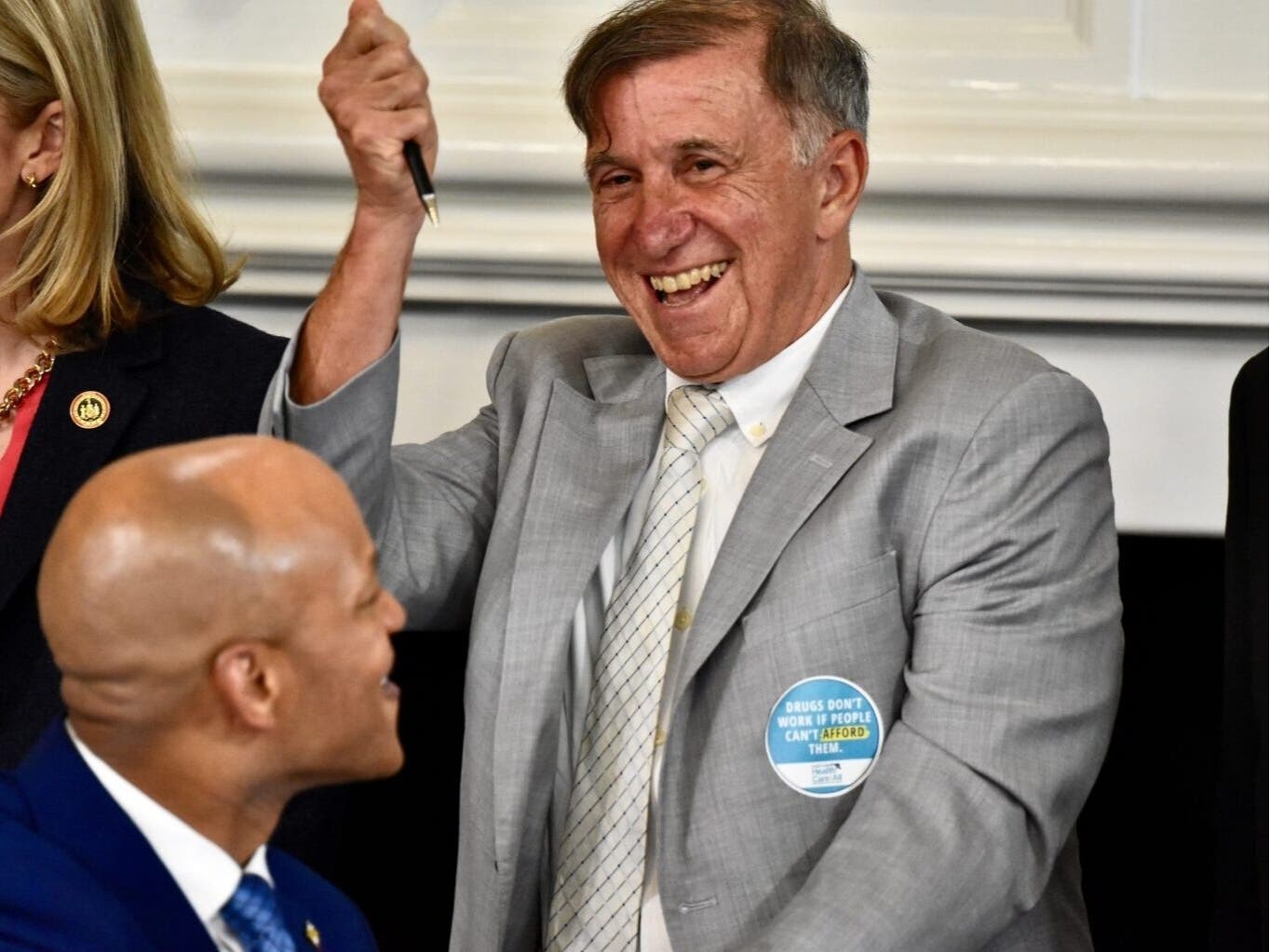
“It is a tremendous step forward,” said Vincent DeMarco, president of Maryland Health Care for All, after an event celebrating the board’s recent decision to set an “upper payment limit” on a high-cost drug – a goal it’s been working toward for about seven years.
Find out what's happening in Across Marylandfor free with the latest updates from Patch.
“Basically, we’re thrilled,” DeMarco said. “We wish it had been sooner.”
On Monday, the board agreed to place a limit on how much the state is willing to pay for Jardiance, a brand name for the drug empagliflozin, used in the treatment of Type 2 diabetes and other conditions, on state health plans.
Maryland board moves to set ceiling on what the state will pay for Jardiance, Farxiga
The proposed rule setting the upper payment limit is subject to a 30-day public comment period, after which it can take effect on Jan. 1, 2027.
It’s the first time the board has agreed to lower the cost of a prescription drug since it was created through 2019 legislation.
“We pass many bills in the General assembly, hundreds of them every session,” House Speaker Joseline Peña-Melnyk (D-Prince George’s and Anne Arundel) said at Wednesday’s news conference at the Episcopal Diocese Center in Baltimore. “The creation of the Prescription Drug Affordability Board is the one that I am most proud of.”
Peña-Melnyk was the lead sponsor of the 2019 bill that created the board. Also at the press conference was Del. Bonnie Cullison (D-Montgomery), who defended the bill on the House floor in 2019, and who last year championed a bill to expand PDAB’s authority.
The board was slow to launch, in part due to a veto from then-Gov. Larry Hogan (R) amid pandemic-induced economic uncertainty in 2020, which delayed the board’s formation.
After Gov. Wes Moore (D) allocated funding for the board’s operation in 2023, it went through lengthy rule-making to create the “cost review” process for targeted drugs. In 2024, the board selected six drugs to undergo the cost review and determined that Jardiance and another Type 2 diabetes drug, Farxiga, were “unaffordable” and subject to cost reduction efforts.
The board was planning to set a payment limit on Farxiga, but held off after the recent approval of a generic alternative.
“I think it shows that the PDAB is not a knee-jerk operation,” DeMarco said. “When facts change, they will adapt to it.”
That said, the decision to hold off on Farxiga could push back an expansion of PDAB’s authority granted under the 2025 law. It would allow the use of upper payment limits on those drugs for all Marylanders, not just those on state plans, but that can only occur a year after the board has successfully implemented upper payment limits on two drugs.
If the board is able to place a payment limit on a second drug with the same launch date as the Jardiance limit, then the earliest the board’s authority would expand to all state plans is 2028.
Steve Ports Consulting, commissioned by Maryland Health Care for All, estimates that the $320,000 in Jardiance savings for state health plans could balloon to between $9 million and $16 million a year once expanded out to all Maryland health plans.
A future target for cost reduction efforts is Ozempic, the brand name for semaglutide, the popular weight-loss drug that was developed for Type 2 diabetes. The consulting group estimates that cost reduction efforts on Ozempic would save $5.8 million a year just on the state health plan — expanded statewide, it could save $113 million to $165 million a year.”
Lawmakers appreciate progress on effort to lower drug costs, but want to see more
But savings to the state have yet to be seen, and critics of the board are uncertain if Marylanders will see savings in their health care costs as a result of its actions. Others worry that the board’s actions will reduce access to life-saving drugs and cause supply issues.
The Maryland Tech Council released a statement warning that setting payment limits introduces significant uncertainty into Maryland’s life sciences economy, and urging the board to focus more on other ways to reduce costs.
“While tech incubators, centers of innovation, universities and elected officials are working hard to increase the state’s competitiveness, Maryland’s unelected PDAB is putting Maryland’s future as a life sciences leader at risk,” according to the council’s statement, released Monday. “Policies that may alter reimbursement structures or limit market viability can have a chilling effect on investment particularly for early-stage and mid-sized firms that drive much of Maryland’s innovation economy.”
But advocates and lawmakers supporting the board still see the potential to bring down the rising cost of health care.
“This is very difficult to do, and there’s a lot of opposition from Big-PhRMA that we have to overcome, and of course the delays by Hogan,” DeMarco said Wednesday afternoon. “We all would have wanted this to happen sooner. But considering the obstacles, we’re thrilled to be here, and soon Marylanders will be seeing the savings and the benefits.”
Maryland Matters is part of States Newsroom, a network of news bureaus supported by grants and a coalition of donors as a 501(c)(3) public charity. Maryland Matters maintains editorial independence. Contact Editor Steve Crane for questions: scrane@marylandmatters.org. Follow Maryland Matters on Facebook and Twitter.