Politics & Government
Bill Aims To Close Maryland's Shortage Of School Psychologists
The committee also discussed revisions to the Blueprint education reform plan.
Teachers are not the only professionals in short supply in Maryland schools, which have half the number of school psychologists recommended by a national advocacy group, lawmakers were told Wednesday.
To remedy that, lawmakers are considering companion bills in the House and Senate that would make Maryland part of a multistate compact with comparable licensing standards and reciprocal license agreements for school psychologists.
Find out what's happening in Across Marylandfor free with the latest updates from Patch.
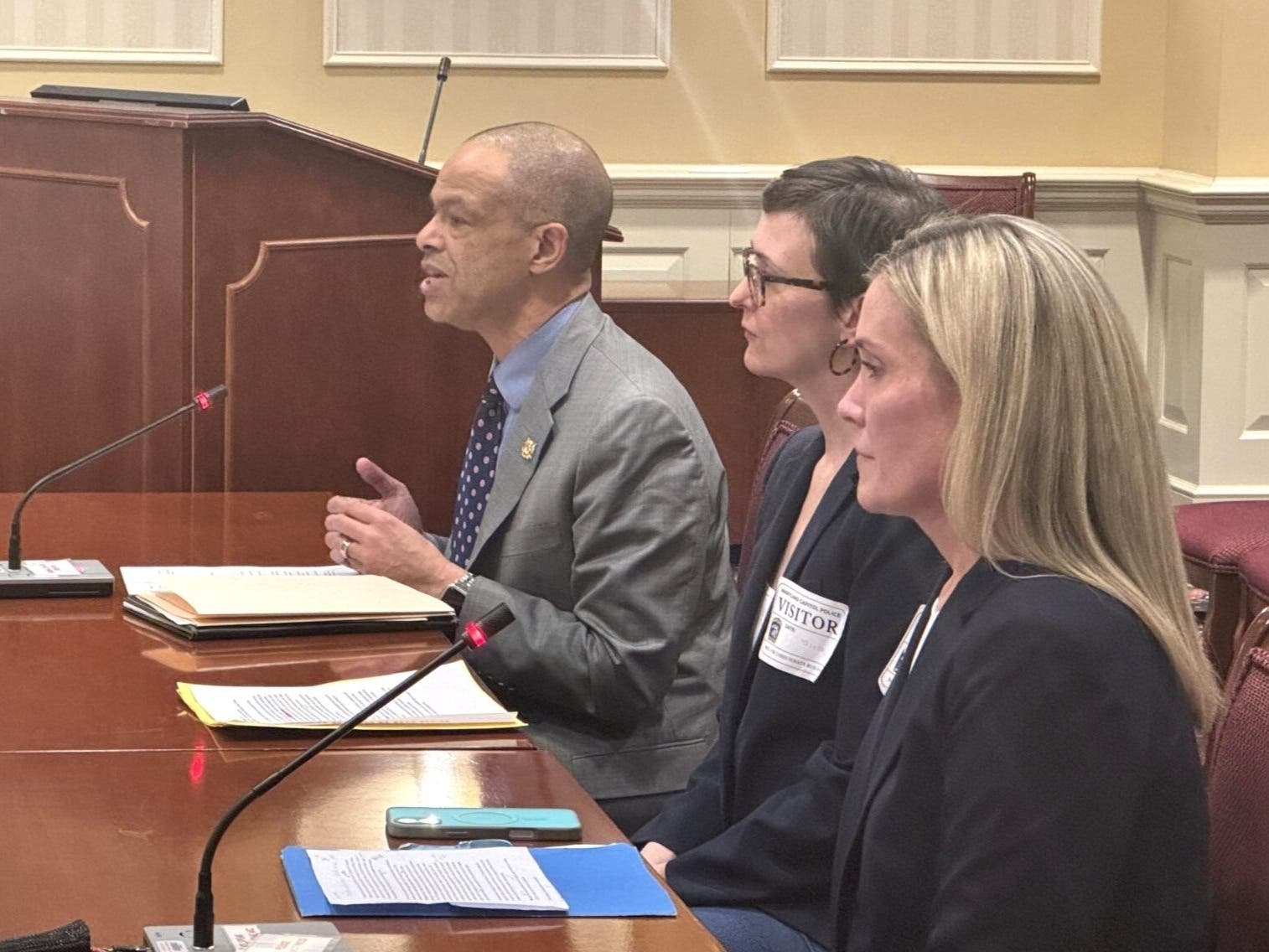
“This compact will open up our opportunity to reach a broader number of school psychologists that we can then bring to Maryland,” said Sen. Malcolm Augustine(D-Prince George’s). “There’s really broad agreement that this is something that we should do.”
Augustine was testifying Wednesday before the Senate Education, Energy and the Environment Committee in support of Senate Bill 238, which he sponsored. A House version of the bill, sponsored by Del. Bernice Mireku-North (D-Montgomery), was heard last week by the Ways and Means Committee. Both measures are a priority of the Legislative Black Caucus of Maryland.
Find out what's happening in Across Marylandfor free with the latest updates from Patch.
Besides making easier for school psychologists to be licensed in and move between states in the compact, the bill would also facilitate the relocation of military spouses who are licensed to provide school psychological services.
The National Association of School Psychologists recommends a ratio of one psychologist for every 500 students. In Maryland, the ratio in the 2024-25 school year was one for every 1,037. Maryland was one of 10 states with a ratio of one psychologist for between 1,001 and 1,500 students — and that was middle of the pack, according to the association’s dashboard. Eleven states fell between 1,501 and 2,000 students per psychologist and eight Southern states had more than 2,000 students for every psychologist.
“Many people don’t realize that school psychologists are trained solely and specifically to function as mental health supports in the public education system,” said Laura Grubb, a school psychologist for Baltimore City Public Schools, who was testifying in support of Augustine’s bill.
“We know how to support and intervene at the schoolwide, classwide, small group and individual level and social, emotional, behavioral and academic areas,” said Grubb, who is also legislative chair of the Maryland School Psychologists’ Association.
The fiscal note on Augustine’s bill said it would cost the state Department of Education about $30,000 in fiscal 2027 to enhance the state licensure system as part of the compact if the bill passed, and another $7,000 a year after that for an annual fee to participate in the compact.
Sen. Mary Washington (D-Baltimore City and Baltimore County) asked what qualifications are required to become a school psychologist. The bill’s note says Maryland requires a master’s degree or higher in school psychology from a state-approved program, or a valid professional certificate in school psychology from another state “with appropriate verification of at least 27 months of satisfactory performance as a school psychologist during the past seven years … for a comparable Maryland certificate.”
Christa Kulp, a school psychologist at Virtual Academy in Anne Arundel County, said after the hearing that hers is a challenging profession. Not only do school psychologists have to handle mental health and behavioral evaluations, they are also responsible for crafting Individualized Education Programs, or IEPs, for students with special needs, and many psychologists are split between several schools.
“When you’re spreading us that thin, we’re not making good evaluation decisions,” Kulp said. “These are our children. We’re deciding the trajectory of their future with quick decisions.”
No one testified against the measure Wednesday, and Sen. Brian Feldman (D-Montgomery), chair of the committee, said there was no written opposition to the bill.
Blueprint revisions
The committee also took testimony Wednesday on a bill that would tweak the Blueprint for Maryland’s Future education reform plan. Senate Bill 311 was submitted at the request of the Blueprint’s Accountability and Implementation Board, known as the AIB.
Blueprint board backs legislative priorities that mirror state Board of Education’s priorities
The bill would change the policies on dual enrollment, which lets high school students take college courses locally with the tuition paid by their school district. It would extend the AIB’s authority over dual enrollment programs from fiscal 2027 to fiscal 2030, and it would require school districts to offer a minimum number of dual-enrollment courses.
The bill would also extend the time for a teacher who wants to become a principal to receive National Board Certification, from July 1, 2029, to July 1, 2034. AIB Executive Director Rachel Hise said the additional time not only gives teachers more time to get certified, it also gives the board extra time to research the value of that certification for teachers.
“The revisions in this bill represent modest adjustments to the Blueprint that I think are necessary and important,” said AIB board chair Isiah “Ike” Leggett. “Not only to continue our progress, but to ensure more efficiency and effective implementation.”
Tyler Love, a professor and director of career and technology education at the University of Maryland Eastern Shore, asked that the bill be amended to change the qualifications for members serving on the state’s Career and Technical Education Committee, which is within the Governor’s Workforce Development Board. The law currently requires that one of the committee members be “experts in CTE programming,” but Love believes th seat should be held for CTE educators.
“Experts in CTE programming is too broad and not being used to involve our teacher educators in the state,” Love said.
A House version of the Blueprint bill will be heard Feb. 24 before the Appropriations Committee.