Politics & Government
As Budget Wraps Up, Restoration Of Disability Services Funds Looking Unlikely
House and Senate budget negotiatorss need to address another $40 million in DDA deficiency spending.
March 27, 2026
A final spending plan for fiscal 2027 will likely not include additional money for developmental disabilities services, legislative leaders said Thursday.
Find out what's happening in Across Marylandfor free with the latest updates from Patch.
A final spending plan for fiscal 2027 will likely not include additional money for developmental disabilities services, legislative leaders said Thursday.
The House of Delegates gave final approval Thursday to its version of a $70.8 billion budget, which will go to a conference committee Friday to resolve small differences with a Senate plan passed a week ago.
Find out what's happening in Across Marylandfor free with the latest updates from Patch.
Included in both budgets is a $126 million cut to the Development Disabilities Administration — less than the $150 million requested in Gov. Wes Moore’s (D) original budget proposal, but still stinging to advocates, as it follows $164 million in cuts to the DDA last year.
And while the program over all is receiving an increase in funding — albeit a smaller than anticipated — there will be some pain. Many of the cuts fall to programs in for individuals in self-directed care.
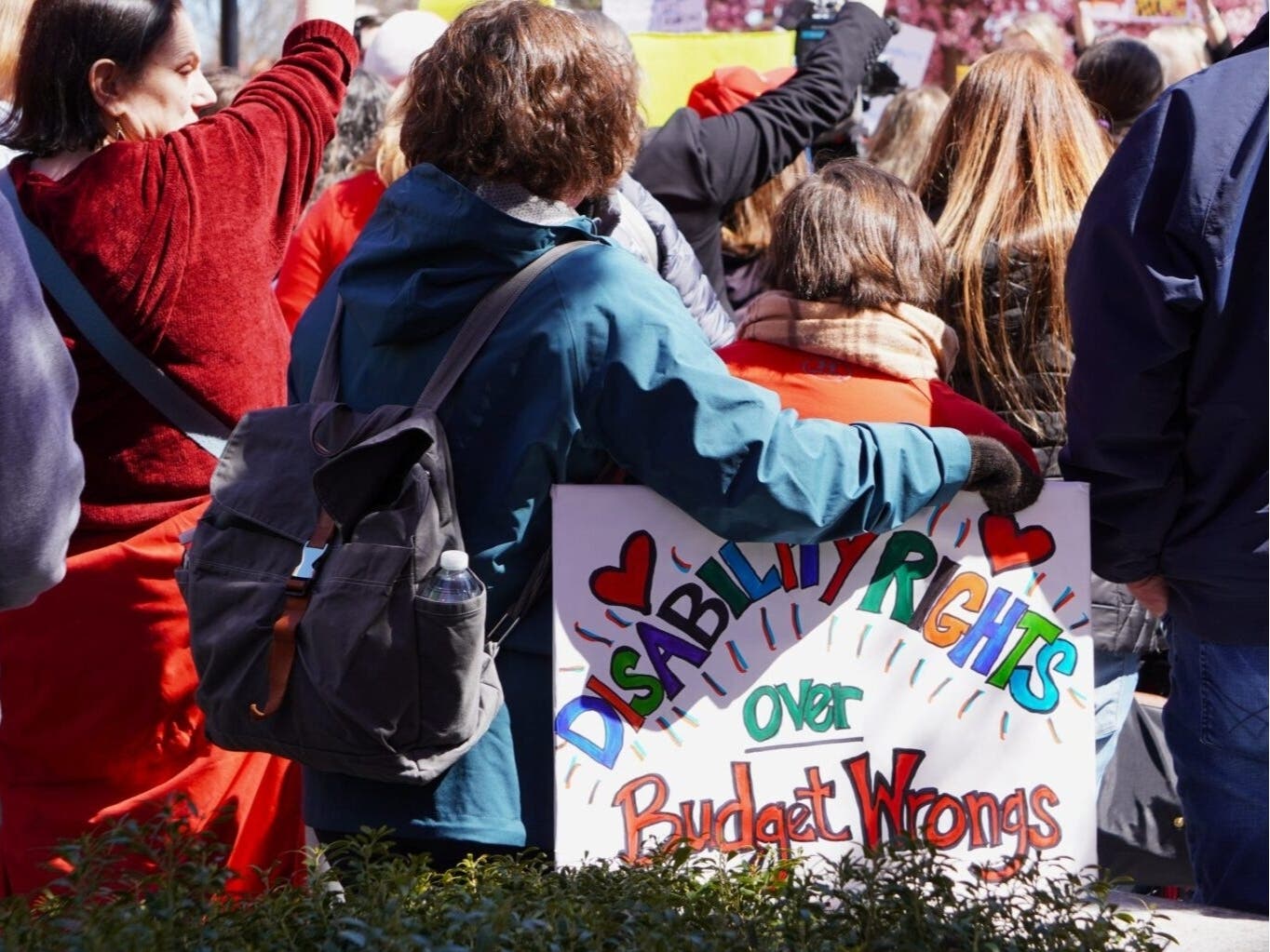
Advocates traveled to Annapolis this week to push for restored funding as the House wrapped up budget debates.
A last-ditch amendment offered Thursday by a Republican delegate offered hope of restoring a portion of the cuts to the programs.

Del. Lauren Arikan (R-Harford). (File photo by Bryan P. Sears/Maryland Matters)
“I didn’t vote for any restoration of any funding for issues that typically you might have thought I would, and there’s one reason why you do that, and the reason is because this budget, very sadly, has a massive, massive cut for the folks in our state who can very much least afford it, and who are really the only people that I think you should all agree are the folks the government should officially be helping the people with severe disabilities,” said Del. Lauren Arikan (R-Harford), who sponsored the amendment.
Arikan’s amendment proposed restoring about $150 million in cuts made by the Senate and preserved in the House version of the budget.
To pay for the one-time infusion of cash, Arikan’s amendment pulled money from a number of programs. The bulk of it, more than $73 million, came from zeroing out aid to students in private colleges through the Sellinger program.
Additional money came from large reductions in state aid to the Business Enterprise Administration and for stem cell research, as well and zeroing out nearly $6 million from the Maryland Zoo in Baltimore.
Del. Emily Shetty (D-Montgomery) said the program continues to face challenges from exponential growth that could put federal funding at risk. If not for those concerns, she said she’d push to find money needed to carry the program for a year.
“If it was just about money, I know I would…. I would just be like, ‘Hey, take all the money for the projects in my district,'” Shetty said. “If it’s a one-time thing that we need to take, you know, economic development, if you need to, just for one year, one year. That we could keep these families sustained for one more year.
“The challenge is that it is a structural challenge in order to keep 18,000, 19,000 people on the program,” Shetty said.
Maryland receives federal funding for the program under a special Medicaid waiver agreement. Under the agreement, costs must remain under $217,000 per person annually. That target is the current cost of an institutional setting.
But over the last five years, the cost of the program has increased by 200%, with much of the growth coming in the more self-directed care category, often used by those at greatest medical need.

Del. Emily Shetty (D-Montgomery). (File photo by Bryan P. Sears/Maryland Matters)
“It’s the average. And over time, average has gone up significantly, so much so that we are 18% of our budget away from losing federal support,” Shetty said.
The consequence of exceeding the target would be severe. Shetty said all 19,000 people would lose services under the program.
“None of us want to see that, none of us,” she said.
The budget moved one step closer to completion when the House voted to pass it 114-22.
House and Senate fiscal leaders are scheduled to meet Friday to iron out a final compromise plan during a conference committee. That plan will also have to incorporate an expected supplemental budget request from Moore.
That request is expected to contain more bad news from the DDA. House Appropriations Chair Ben Barnes (D-Anne Arundel and Prince George’s) said negotiators will have to address an additional $40 million in deficiency spending in the agency, on top of $350 million earmarked this year to cover two years of spending more than initially budgeted.
The conference committee could wrap up its work by the end of the day Friday. The compromise plan would likely be back before the House and Senate early next week for final approval.
Barnes said the differences between the House and Senate plans “are minor.”
“We’re always going to have some differences but it’s more of a traditional budget year than you’ve seen in years of old where we’re not going to be a big disagreement on any major item with the understanding that the differences are small,” Barnes told reporters Thursday.
The House version made cuts to the More Jobs for Marylanders program and the state’s Sunny Day Fund, used for attracting and retaining businesses that the Senate did not make.
“I think those were programs that have not shown to get the bang for the buck that we had hoped,” Barnes said.
The House also removed a provision added by the Senate regarding when a vehicle becomes eligible for historic license plates. The House also saved money by putting a cap on a service-year program favored by Moore.
Barnes said the service year program was “just a program that showed growth in a tough budget year … those will pretty quickly be negotiated.”
Maryland Matters is part of States Newsroom, a network of news bureaus supported by grants and a coalition of donors as a 501(c)(3) public charity. Maryland Matters maintains editorial independence. Contact Editor Steve Crane for questions: scrane@marylandmatters.org. Follow Maryland Matters on Facebook and Twitter.