Politics & Government
Could Maryland Leave The PJM Grid? This Bill Would Study It.
Amid high electricity prices, Maryland could join other states to form a new grid, the bill sponsor suggests.
February 4, 2026
Amid high energy bills in Maryland and throughout the region, many Maryland officials have heaped blame on PJM Interconnection, the operator of the region’s electrical grid.
Find out what's happening in Across Marylandfor free with the latest updates from Patch.
Would it make any sense for Maryland to leave it? A bill before the House Environment and Transportation Committee would study that very question.
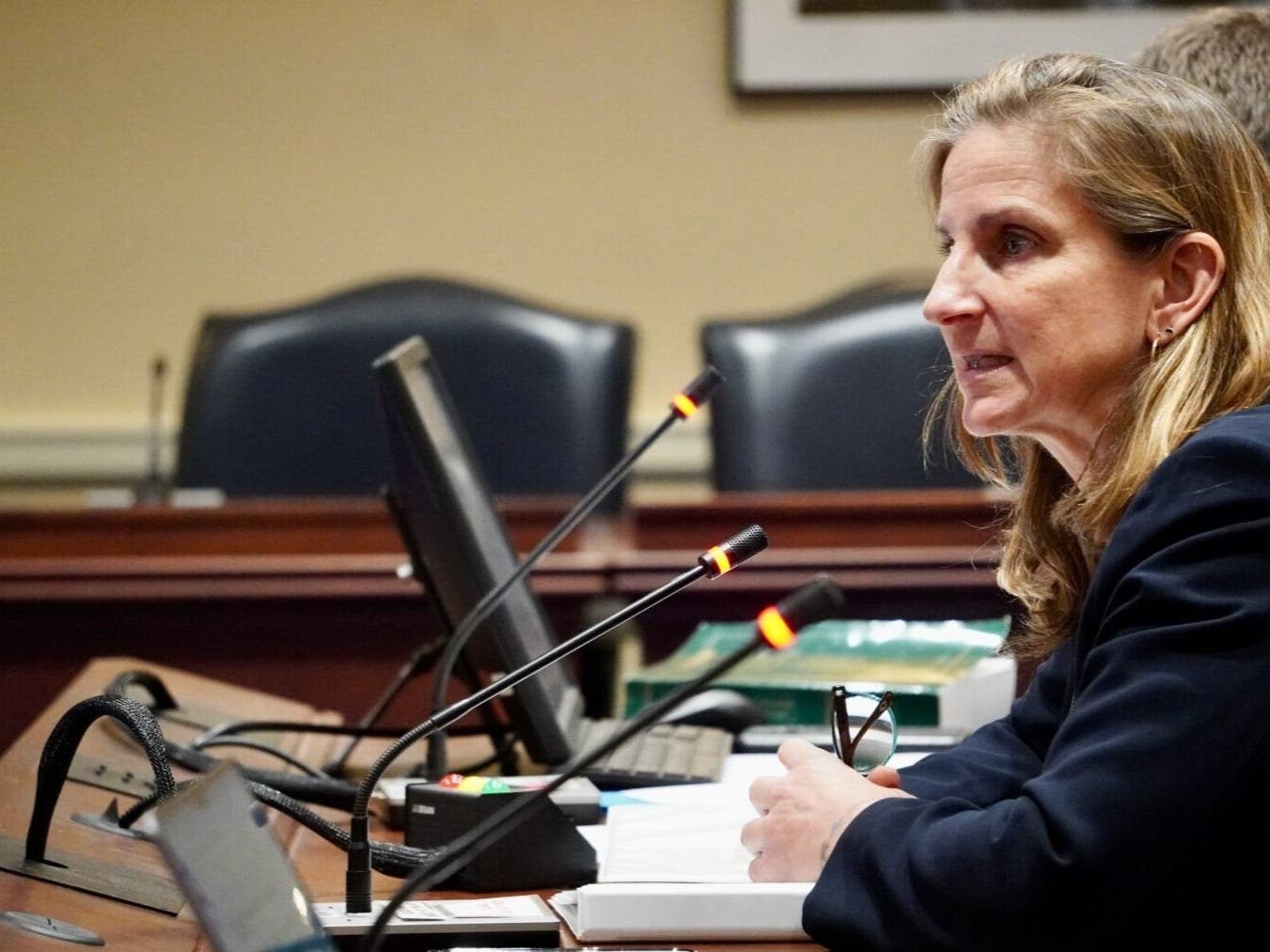
Del. Lorig Charkoudian (D-Montgomery) concedes it is “somewhat unrealistic” that Maryland, a state that routinely imports a considerable chunk of its power from other states, would leave the PJM grid. But she noted that Maryland wouldn’t go it alone. Other PJM states would probably have to band together with Maryland to form a new grid, Charkoudian said, or Maryland could join a different existing grid.
Find out what's happening in Across Marylandfor free with the latest updates from Patch.
In short, Maryland should be a part of a regional transmission organization, to take advantage of the most economic power, Charkoudian said. The question is whether it should be PJM.
“When you have a regional transmission organization that is as broken as PJM is, it’s irresponsible not to at least ask that question,” Charkoudian said during a hearing Tuesday before the committee.
At the core of Charkoudian’s complaints sit PJM’s capacity market auctions, during which the grid operator procures energy for future years. In 2024, the clearing price for PJM’s auction jumped 800%, partially because demand from data centers was beginning to outpace supply. That cost reached customers in 2025, increasing monthly bills $4 to $21, depending on the region of the state.
Climate groups, caught by surprise last year, fight to protect Maryland energy fund in 2026
At the same time, PJM’s line for new energy generators to hook up to the grid has been backlogged, preventing many energy generators, largely renewable projects such as solar and battery storage, from supplying power to the region.
High clearing prices in the auction are supposed to send a signal to energy generators that more power is needed, said Emily Scarr, senior adviser at Maryland Public Interest Research Group. But subsequent auctions have continued to clear at high prices, repeatedly hitting an artificial cap that PJM installed at the request of governors in the region.
“If projects are already proposed and waiting in the queue, and PJM is standing in the way, the whole system is broken and all it does is reward legacy power plants and utilities at the customers’ expense,” Scarr said in Tuesday’s hearing.
PJM officials say they are working to clear the queue and reform their procedures.
“Despite what you may have heard, our interconnection queue is open, and PJM has been processing the connection of new and mostly renewable resources to connect to the grid at record pace,” PJM Executive Director Jason Stanek said during a recent panel before lawmakers. “We soon hope to turn around requests in a period of one to two years or possibly sooner.”
In a statement Tuesday, PJM spokesman Jeffrey Shields said the grid operator is “confident that any credible study will show PJM’s true value to Maryland.
“PJM provides approximately $5 billion annually in efficiencies and savings to the 13 states in its footprint, as well as the District of Columbia,” Shields wrote. “And it is also difficult to put a price tag on PJM’s commitment to keep the power flowing at all times, as it did in coordination with Maryland utilities during the historic, extreme cold that we all experienced last week.”
Maryland isn’t the only state talking about leaving PJM, the nation’s largest electric grid. New Jersey passed a bill last year requiring a study of PJM’s capacity market, for instance.
The idea has even been floated by Pennsylvania Gov. Josh Shapiro (D), whose state exports the most power to the grid.
“If PJM refuses to change, we will be forced to go in a different direction,” Shapiro said last September.
All of the PJM governors recently joined together, with President Donald Trump (R), to propose changes for the way that PJM addresses costs associated with data centers.
Charkoudian’s bill also suggests other study ideas that “don’t quite get all the headlines,” she said. That includes a few ideas for staying in PJM, but essentially bypassing the capacity auction. The study would assess the benefits and costs of all of the approaches, to determine whether any are worthwhile, Charkoudian said.
“There’s advantages and disadvantages to any of these approaches,” she said during Tuesday’s hearing. “I’m not necessarily saying I’m sure that once we get these results, we’re going to go with any of them. We might decide we won’t go with any of them. But when we’re facing a situation where we have such a broken system at PJM, at the very least we should get an understanding of if these other directions are valuable and preferable for Maryland ratepayers. And that’s what this bill will do.”
The bill was supported Tuesday by Maryland People’s Counsel David Lapp, who represents utility ratepayers, and other affordability and climate advocates.
Should data centers pay up front or build their own power plants?
“We participate in many of PJM’s hundreds of meetings each year and we experience daily PJM’s indifference to the customers that it is supposed to serve,” Lapp said Tuesday. “PJM disregards objective facts to blame states for problems arising from its own mismanagement — mismanagement that is driving up cost for Maryland customers.”
Jamie DeMarco, a lobbyist representing the Chesapeake Climate Action Network, argued that PJM is failing Marylanders “not by accident, but by design.” That’s because, under its current governance structure, PJM is “accountable to its members” — largely for-profit power companies, DeMarco said.
“Those entities serve on PJM’s board and they are being very well-served. Their needs are being met, and they’re making record profits as a result,” DeMarco said.
The fiscal note for the bill estimates that the study could cost about $600,000, because neither the Maryland Public Service Commission nor the Maryland Energy Administration have the “necessary software, databases, or staff expertise to conduct the required studies without outside assistance.”
But Del. Dana Stein (D-Baltimore County) noted that testimony from MEA indicates it is already studying some of the issues in the bill, as part of a multiagency effort to evaluate energy costs.
Charkoudian said that could mean a study might cost less than $600,000. And she argued that the legislature should still pass the bill, so that it receives a formal study with the information.
“As someone who’s been trying to raise the flags about PJM since 2020, I’m thrilled that all of a sudden we’re at a point that everyone’s paying attention, but I’m also heartbroken,” Charkoudisand. “Because it means it’s gotten that bad.”