Politics & Government
Energy Bill Heads To Moore's Desk On Session's Final Day
Moore is expected to sign the 'crown jewel' of the session.
April 14, 2026
Lawmakers approved a major energy bill in the waning hours of the legislative session Monday, what one legislative leader called “the crown jewel” of the 2026 session, a bill they hope will put money back into constituents’ pockets.
Find out what's happening in Across Marylandfor free with the latest updates from Patch.
Lawmakers, who face reelection this fall, leave Annapolis hoping the Utility RELIEF Act will do enough to ease concerns about sky-high utility costs, even though consumers may not see many of the effects on their bills for months — or in some cases, years.
“It puts money in people’s pockets now, while reforming the system to ensure that we have rate relief and a stronger grid down the road,” House Speaker Joseline Peña-Melnyk (D-Prince George’s and Anne Arundel) said as the bill was speeding toward final passage.
Find out what's happening in Across Marylandfor free with the latest updates from Patch.
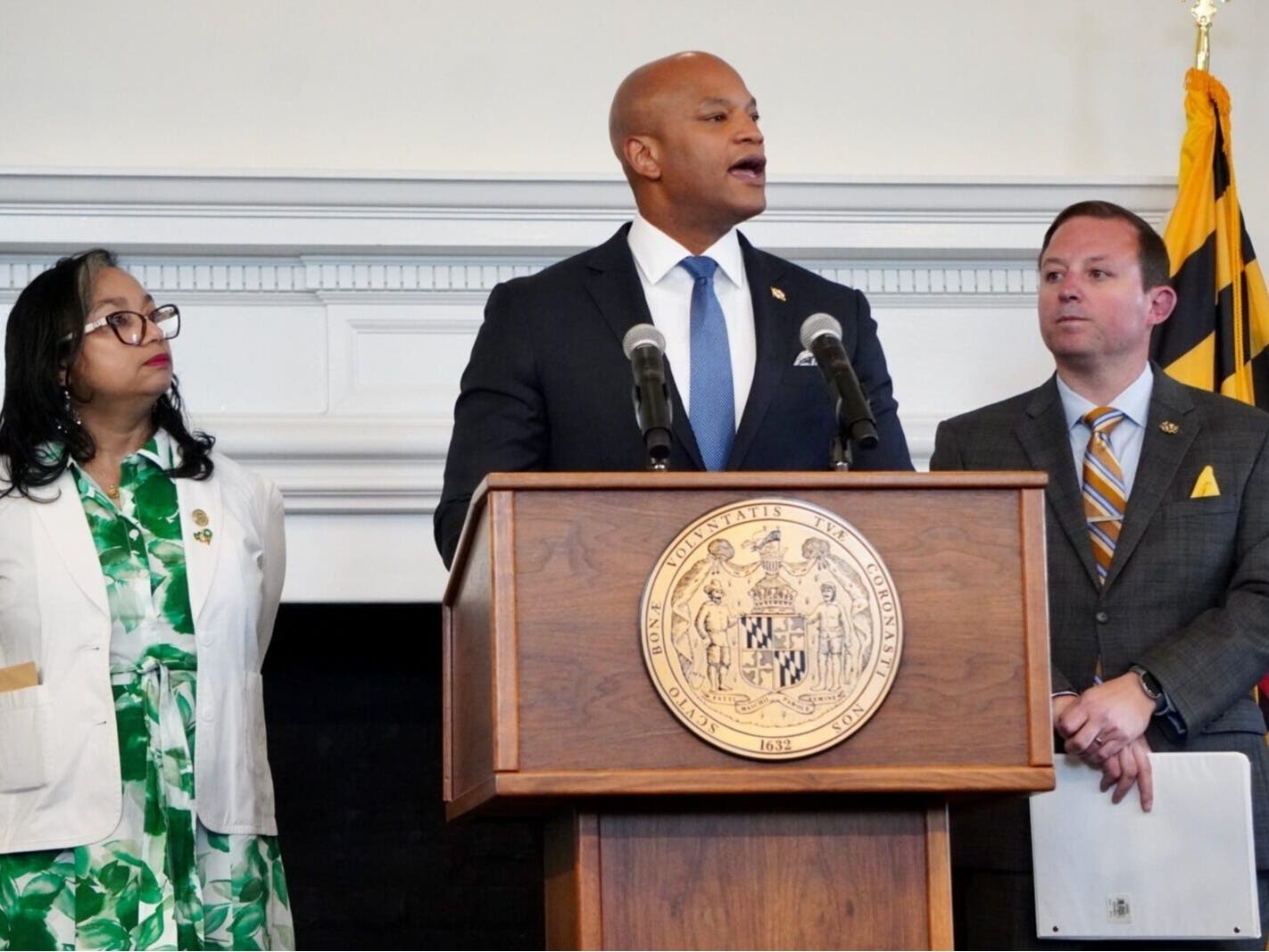
Gov. Wes Moore (D), who joined a news conference Monday with Peña-Melnyk and Senate President Bill Ferguson (D-Baltimore City) supporting the bill, is expected to sign the legislation. It will take effect immediately afterward.
The bill is currently expected to provide about $150 in annual relief for the average Maryland household. But that estimate only includes one small — but controversial — piece of the bill: The temporary cuts to an energy efficiency surcharge on electric bills.
Those cuts will take effect in 2027, but ratepayers could see savings sooner, since lawmakers also pulled $100 million out of a state fund to pay for the energy efficiency program called EmPOWER Maryland, reducing the amount that must be paid by ratepayers.
Signs of Sine Die: Colorful hats, even more colorful barbs, a tuba, farewells and more
The program will return to today’s levels by 2036, but environmentalists have argued that the slowdown is a bad idea, since fewer investments in more efficient technologies will increase energy demand. Home HVAC and weatherization contractors also pushed back hard.
A host of other provisions in the bill will save consumers’ tens of millions — if not hundreds of millions — at least eventually. The bill curtails costs that utilities have been passing onto ratepayers, sets new limits on utilities’ requests for rate increases, forces more data centers to pay a special tariff for their electric system demands and more. It also sets up a new state funding stream for solar generation projects paired with battery storage devices.
But estimating exactly how much these different measures will save is a tall order, in part because it involves predicting the future of complex energy markets.
“There’s a lot of medium- and long-term benefits in this bill. No one can sit here today and tell us how much our ratepayers are going to save by having more generation in the state of Maryland, as this bill will bring about,” said Del. Marc Korman (D-Montgomery County), the chair of the Environment and Transportation Committee.
Impoverished Marylanders are expected to save more, because lawmakers also put $37 million toward “accelerating” a new program to cap electric rates for low-income Marylanders at 6% of their income. Because of the influx of cash, the remaining ratepayers won’t have to pick up the tab for the program.
That policy change could result in $1,400 per year in savings for low-income families, Ferguson said Monday.
Nevertheless, Republicans have seized on the $150 estimate, arguing that the bill doesn’t go far enough to trim excessive bills. They’ve argued that lawmakers should have walked back the state’s increasing renewable energy commitments, because ratepayers are paying to bolster those projects.
“What we really needed was energy policy reform, not relief,” said Senate Minority Leader Steve Hershey (R-Upper Shore), during Monday afternoon’s Senate debate about the bill. “We had the opportunity over 90 days to really do something different, because we missed the boat last year. We didn’t do enough last year. And people are going to come back and their rates, I can guarantee, will be no lower when we get back here next January than they are now.”
Republicans have also said that Democrats failed to meaningfully stimulate new electric supply, which could help to reduce prices, particularly from natural gas and nuclear energy.
But the final bill did ultimately receive a handful of Republican votes between the two chambers, from lawmakers who argued that some savings was better than no savings at all.
“I’m given a choice here, and that is it simply whether or not there is some — even if a little bit — of relief for the constituents I represent who, because of this body, because of this governor, have been forced to pay more in taxes, more in fees,” said Del. Nino Mangione (R- Baltimore County), one of the Republicans to vote for the bill. He is leaving the House to run for Baltimore County Council.
The bill wasn’t unveiled until more than halfway through the session, when House and Senate leadership stood side-by-side with Moore, and announced they’d fashioned a bill that they could all agree on.
But as the session wound down, that unity appeared to falter. The Senate reined in some of the provisions that were the most aggressive against the utility companies in Maryland, drawing ire from environmentalists and consumer groups. The chamber also tossed several unexpected Republican amendments into the bill.
Late last week, key lawmakers announced they’d reached a compromise. That deal erased all but one Republican amendment from the Senate: A requirement that transmission line builders notify all landowners when they are building a line, as well as owners of adjacent properties.
A big part of the debate was over “forecast test years,” a procedure by which utilities can ask for rate increases by forecasting future spending, rather than pointing to funds they have actually spent.
The House banned the practice, arguing that utilities were creating long shopping lists and ultimately costing ratepayers more money. But the Senate merely asked the Public Service Commission to study the practice, which has been in use for about six years, through a pilot program the commission is already evaluating.
In the final bill, the forecasting practice is paused until April 1, 2027, while the PSC conducts a formal proceeding considering what ratemaking practice is best for the consumer.
Though General Assembly leaders and Moore have argued that state leaders pulled every lever they could to lower bills, there are at least a few things that would have slashed costs even more, said Maryland People’s Counsel David Lapp in a statement Monday.
He had hoped for the chambers to fully ban forecasted test years, and repeal the state’s STRIDE statute, which lets utilities to recover their costs for gas pipeline construction in advance of performing the work. As a result, the utilities don’t take on risk by performing work and then waiting for approval to bill the ratepayers.
“While the bill doesn’t accomplish everything we would have liked it to … it creates important tools, regulatory guidance, and added transparency that should help lower costs and reduce the upward pressure on skyrocketing utility rates,” Lapp said.
The utilities, though, have argued that because it is easier for them to recover their costs, they can more readily make improvements to the electric and gas systems.
“It is important to ensure that well-intended policies do not create unintended consequences for customers over the long term,” read a statement issued Monday by Maryland’s three Exelon- owned utilities. “Policies that limit how utilities plan, invest, and recover costs can make it more challenging to maintain the safe, reliable energy system that customers depend on every day and may ultimately increase costs or delay critical infrastructure investments.”
Some of the bill’s provisions on data centers also garnered a bit of concern Monday.
The bill would require the data center tariff, but it would also allow perks for data centers that bring zero-emissions energy along with them, including a set timeline for a permit decision from the Department of the Environment. Food and Water Watch, which has called for a data center pause in the state, argued that the idea would “roll out the welcome mat for Big Tech.”
“Marylanders will only achieve affordable energy by pausing new data center proposals, not by passing legislation that facilitates a path for the buildout of AI facilities, transmission lines and energy stations to power them,” said Jomar Lloyd, a Maryland organizer for the nonprofit environmental group.
Maryland Matters is part of States Newsroom, a network of news bureaus supported by grants and a coalition of donors as a 501(c)(3) public charity. Maryland Matters maintains editorial independence. Contact Editor Steve Crane for questions: scrane@marylandmatters.org. Follow Maryland Matters on Facebook and Twitter.