Politics & Government
Moore Looks To Second Term As Maryland Faces Budget, Cost Pressures
Moore led Cox by more than 546,000 votes Wednesday morning as he pledged to build on his work on housing, schools and jobs.


Updated, 10:30 a.m. Wednesday
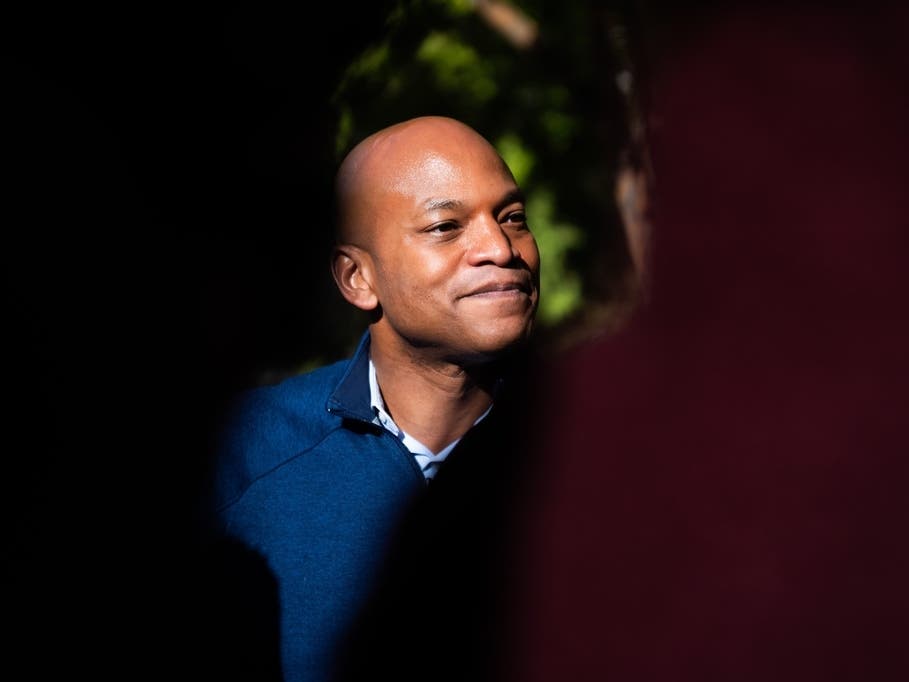
Gov. Wes Moore is heading toward a second term with a pledge to expand affordable housing, strengthen public schools and grow Maryland’s economy as the state faces another round of difficult budget decisions.
The Democrat defeated Republican Dan Cox in a rematch of their 2022 contest, according to The Associated Press, which called the race at 8:01 p.m. Tuesday.
Find out what's happening in Across Marylandfor free with the latest updates from Patch.
The Maryland State Board of Elections’ 9:21 a.m. Wednesday update showed Moore and Lt. Gov. Aruna Miller with 1,163,909 votes, or 62.55%, to Cox and running mate Rob Krop’s 617,114 votes, or 33.17%.
That put Moore ahead by 546,795 votes, with 1,968 of 1,979 Election Day precincts reporting. The totals remained unofficial. Green Party nominee Andy Ellis and Working Class Party nominee Cathy White each had about 2%.
Find out what's happening in Across Marylandfor free with the latest updates from Patch.
Cox told supporters late Tuesday that he wanted all votes counted before conceding, WYPR reported.
“We are going to let the votes be counted, we are going to let every voice count and matter in this state,” Cox said, according to WYPR.
Preliminary vote tallies are as follows. The tables below will continue updating in real time as the state releases new vote tallies.
Moore Outlines Work Ahead
Supporters greeted Moore with chants of “four more years” during his victory speech at M&T Bank Exchange in Baltimore, according to WYPR’s Wednesday report.
Moore said he intended to build on his administration’s work on jobs, education, public safety and child poverty.
“I know our goals are ambitious. I know they're audacious. But if that's not why we're here, then why bother?” Moore said, according to WYPR.
In a statement released by his campaign, Moore said he and Miller would work across party lines to improve public schools, fight childhood poverty and help more residents afford homes and build financial security.
A Difficult Budget Awaits
One of Moore’s first major tasks will be preparing the spending plan lawmakers will consider when the General Assembly returns in January.
State budget officials said in September they were planning for a roughly $3 billion gap between expected spending and recurring revenue in fiscal 2028, Maryland Matters reported. Agencies were asked to identify potential spending reductions, and some Cabinet-level departments were directed to outline cuts of up to 10%.
Those requests were part of budget planning, not final decisions on cuts. The publication reported that fiscal 2028 is also the first year the Blueprint for Maryland’s Future education plan's costs are expected to exceed its dedicated revenues, putting additional pressure on the state’s general fund.
Taxes were a central point of contention in the campaign. The fiscal 2026 budget Moore signed in 2025 included more than $1.6 billion in taxes and fees, including a 3% tax on certain technology services and new income tax brackets for higher earners, according to Maryland Matters’ coverage of the budget signing.
Moore and legislative leaders defended the package as necessary to address a substantial shortfall compounded by federal spending and workforce cuts. Republicans argued the increases outweighed the income tax relief offered to other taxpayers, the publication reported.
Energy Costs And Development Remain In Focus
Cox campaigned on affordability, promising to cut taxes and fees and criticizing Moore over electricity bills and projected deficits, according to Maryland Matters’ debate coverage published by Patch.
During their October debate, Moore emphasized attracting private investment and argued that Trump administration policies had worsened Maryland’s economic challenges.
Data center development also presents a policy question for the next term. During the debate, Moore said he would seek to repeal tax breaks for the facilities after signing an executive order calling for greater state scrutiny. Cox supported a statewide moratorium, according to the same report.
Building On His First-Term Record
Moore, Maryland’s first Black governor, entered office in 2023 after serving in the Army, working in business and leading the anti-poverty organization Robin Hood, as Patch previously reported.
His early legislative victories included accelerating Maryland’s increase to a $15 minimum wage, which took effect in January 2024. He also pardoned more than 175,000 low-level marijuana-related convictions that year, Patch reported.
In July, the governor’s office announced more than $1 billion in financing and tax credit awards to create or preserve 3,025 affordable rental homes. Projects included senior housing in Capitol Heights and Silver Spring, family housing in Towson and a development near the New Carrollton Metro station.
In September, the administration announced $32 million in ENOUGH Initiative grants supporting community-led anti-poverty efforts in 30 communities.
Moore’s next term also comes amid national attention. AP has described him as a potential 2028 presidential contender. During the October debate, when asked whether he would serve a full second term, Moore did not commit, saying he was committed to Maryland’s residents, according to a debate report published by Patch.