Politics & Government
Maryland Supreme Court Dismisses Climate Lawsuits From Baltimore And Annapolis
The court finds that the cases were a backhanded attempt to regulate carbon emissions.
March 25, 2026
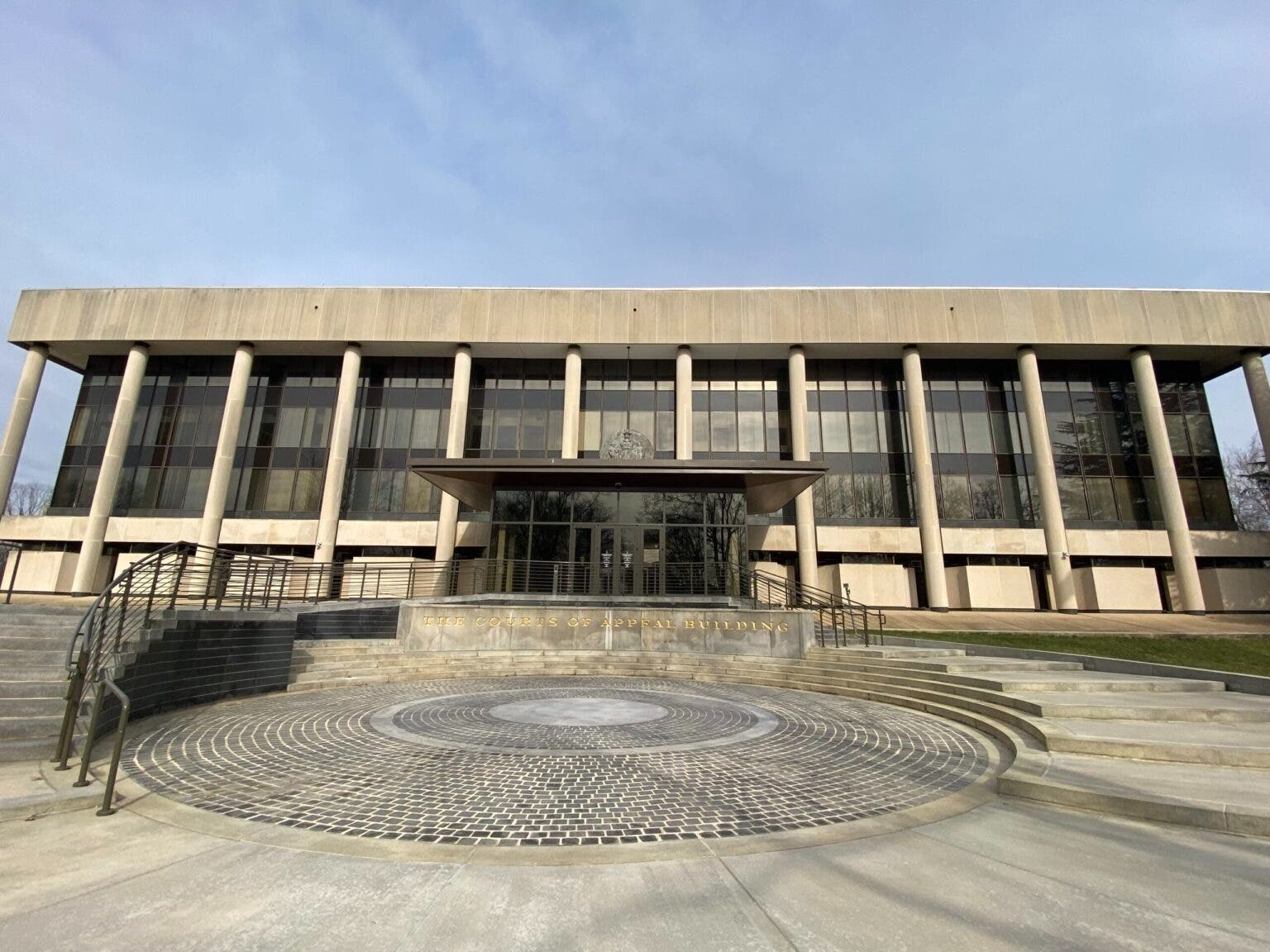
In a scathing decision issued Tuesday, the Supreme Court of Maryland tossed out climate change lawsuits filed against fossil fuel companies by Baltimore, Annapolis and Anne Arundel County, ruling the localities were stepping on the toes of the federal government.
Find out what's happening in Across Marylandfor free with the latest updates from Patch.
The jurisdictions had argued, including during an October hearing before the justices, that their suits against 26 companies, including BP and Chevron, were focused on the firms’ deceptive marketing practices about climate change — and could therefore go forward in state court.
But the state Supreme Court disagreed, determining that the local governments were actually trying to regulate interstate emissions, which rests solely with the federal government, under the federal Clean Air Act.
Find out what's happening in Across Marylandfor free with the latest updates from Patch.
“No amount of creative pleading can masquerade the fact that the local governments are attempting to utilize state law to regulate global conduct that is purportedly causing global harm,” read the majority decision from Justice Brynja Booth.
In dismissing the case, the Supreme Court affirmed circuit court decisions in Baltimore City and Anne Arundel County.
In a dissent, Justice Peter Killough wrote that the majority bought a “classic strawman” argument from the oil companies: That the case was actually about emissions.
“It is clear from the Majority Opinion that it did not decide the case Plaintiffs brought. Rather, it decided the case Defendants described,” Killough wrote.
Killough wrote that “not a single emissions regulation is implicated in this case.”
“Plaintiffs do not challenge any EPA permit. They do not seek to compel reductions in any Defendant’s emissions. And they do not ask this Court to set a standard that conflicts with any federal rule,” he wrote.
Justice Shirley Watts agreed with Killough in part, finding that Baltimore and Annapolis had made “fraud and deceptive marking claims that survive federal displacement.”
To the majority, though, the local governments were asking for damages that would have effectively punished the companies for their emissions and activities “far beyond Maryland’s borders.”
The cases have been tangled up in arguments about whether they should be heard in federal or state court. The Baltimore case, which at one point reached the Supreme Court on a technical question, was filed in July 2018. The Anne Arundel and Annapolis cases were filed in 2021.
The court’s decision Tuesday places it at odds with state supreme courts in Hawaii and Colorado, which determined that the cases do not concern emissions and can therefore go forward in state courts. The U.S. Supreme Court has agreed to hear the Colorado case.
It wasn’t immediately clear what tack the Maryland cities would take after Tuesday’s dismissal. In a statement, Sara Gross, chief of the affirmative litigation division in the Baltimore City law department, sided with Killough.
“We agree with Justice Killough’s dissent when he states clearly and plainly that, ‘The Majority’s conclusion that these cases are tantamount to emissions regulation is not a finding—it is a prediction about what discovery would show, dressed up as a legal conclusion and deployed to close the courthouse door before discovery could confirm or refute it,'” she wrote.
Theodore J. Boutrous Jr., who represented Chevron in October’s arguments before Maryland’s Supreme Court, said in a statement Tuesday that the ruling “adds to the ‘growing chorus’ of climate lawsuit dismissals by federal and state courts, including in Delaware, New Jersey, New York, Pennsylvania, Puerto Rico, and South Carolina.”
“Claims for climate-related damages under state laws are precluded by clear U.S. Supreme Court precedent,” he added.
The majority on the court also determined that, even if the claims from the cities and the county were not preempted by federal law, the localities failed to support their claims under Maryland law for public and private nuisance, failure to warn and trespassing. Chief Justice Matthew Fader wrote that he agreed that the suits were federally preempted, but would have stopped there.
The court called the localities’ attempt to assert a public nuisance claim about worldwide emissions “so far afield from any area of traditional state or local responsibility that it cannot be seriously contemplated.”
On the private nuisance claim, the parties failed to prove that they would suffer additional consequences from climate change that would be any different from those of the general public, the court ruled.
On the whole, Baltimore, Annapolis and Anne Arundel were trying to escape an “inescapable conclusion,” wrote the majority: That they were trying to regulate emissions.
“If the Defendants had labeled their products differently in Maryland to warn Marylanders about the dangers of fossil fuel consumption, and every human, government, corporation, or other entity that consumes fossil fuels every day heeded those warnings, it would have been but a drop in the bucket in terms of the effects of greenhouse gas pollution,” reads Booth’s majority opinion.
Killough argued that the court was rushing to judgment when it could have more closely evaluated the localities’ claims during discovery.
“Discovery might have revealed that the deception allegations were pretextual — that what Plaintiffs really wanted was to force Defendants to reduce the amount of carbon-producing fuels they produce and sell,” Killough wrote. “It might have revealed the opposite.”
He argued that the Clean Air Act regulates the source of the air pollution, not producers and marketers. So it would not apply to the specific claims made against the 26 companies targeted in the lawsuits from Baltimore, Annapolis and Anne Arundel. Remove that premise, and the argument from the oil companies starts to fall apart, Killough wrote.
“The local governments deserve the opportunity to be heard on the merits of their claims,” he wrote. “In its haste to close the courthouse doors, the Majority has built its edifice on sinking ground.”
Maryland Matters is part of States Newsroom, a network of news bureaus supported by grants and a coalition of donors as a 501(c)(3) public charity. Maryland Matters maintains editorial independence. Contact Editor Steve Crane for questions: scrane@marylandmatters.org. Follow Maryland Matters on Facebook and Twitter.