Politics & Government
Maryland Utilities Fight Bill That Would Regulate Employee Bonuses
The bill would prevent utilities from paying bonuses from ratepayer funds.
January 2, 2026
Pretty much everyone agrees that a bill prohibiting the use of ratepayer funds for utility employee bonuses would only be a drop in the bucket when it comes to reducing electricity bills in Maryland.
Find out what's happening in Across Marylandfor free with the latest updates from Patch.
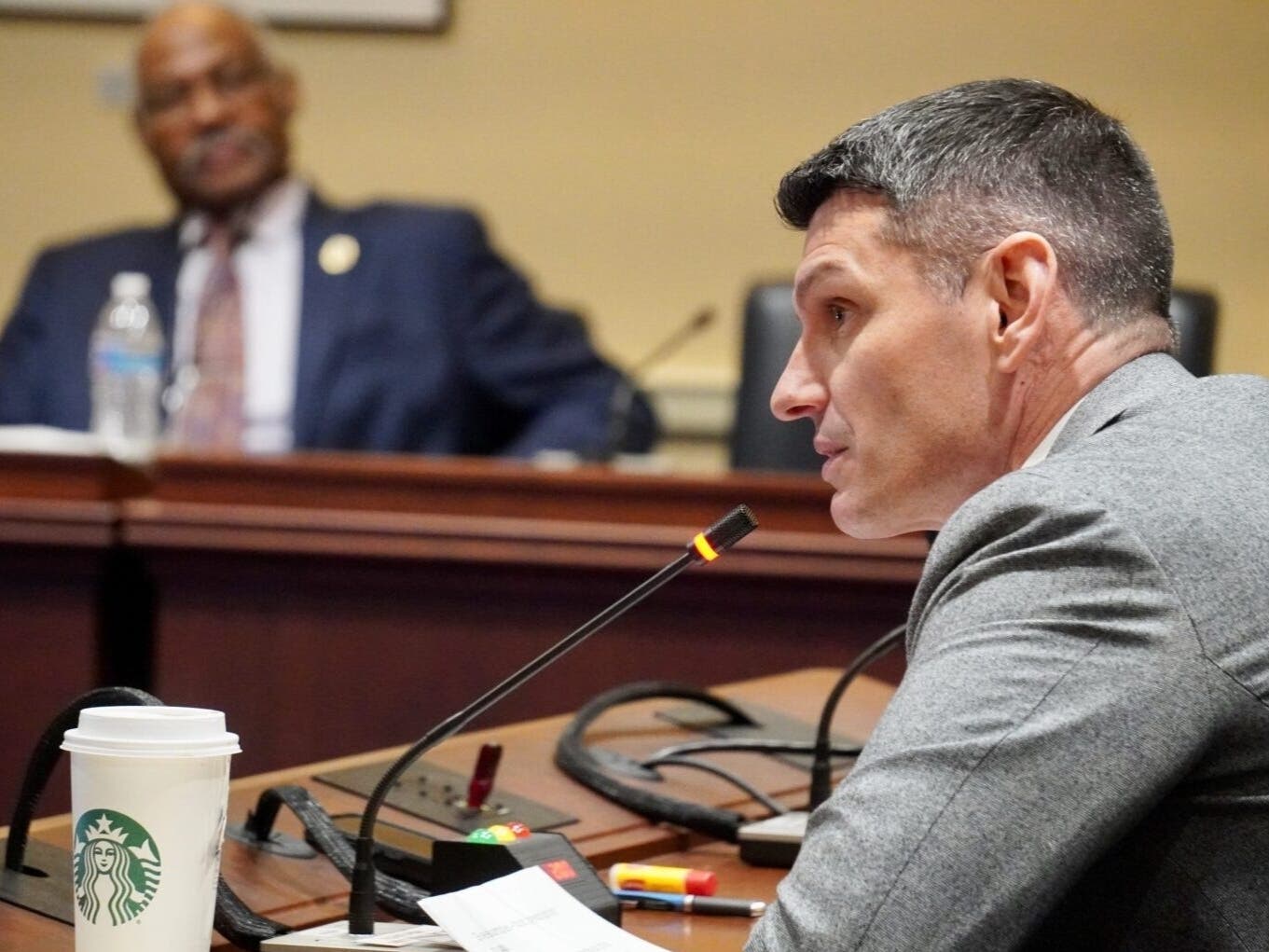
But it still got plenty of discussion Wednesday in the House Environment and Transportation Committee.
House Bill 1 would prohibit investor-owned gas and electric companies from paying many employee bonuses with ratepayer dollars, and it would restrict the use of rates for supervisor compensation that exceeds 110% of the maximum salary of a Maryland Public Service Commission member. Commissioners on the PSC, which regulates utilities in the state, earn $191,900 a year and the chair gets $258,812, salaries set by the legislature.
Find out what's happening in Across Marylandfor free with the latest updates from Patch.
The bill has the support of House Speaker Joseline Peña-Melnyk (D-Prince George’s and Anne Arundel). Predictably, opposition came from several utilities in the state with investor-owned Exelon — the Chicago-based owner of Baltimore Gas & Electric, Delmarva Power and Pepco — leading the way.
Exelon officials, the only utility representatives to testify, argued Wednesday that the bill would hamper its ability to attract and retain talented employees, while doing little in the way of reducing soaring customer bills. The average residential BGE customer pays about $1.70 a month for bonus payments, for instance, according to a filing from the company.
The bill’s sponsor, Del. Brian Crosby (D-St. Mary’s), acknowledged that the measure is “not going to save people hundreds of dollars. But even if it is a small change, it’s still a message that we’re not allowing our ratepayers to subsidize exorbitant bonuses.”
Even small savings are meaningful to Marylanders struggling with the cost of living, particularly older adults on fixed incomes, said Jennifer Bevan-Dangel, deputy director of Economic Action Maryland.
“We take some umbrage at the thought that, even if it’s a $5 a month savings, that’s somehow not worth it,” Bevan-Dangel said. “These are individuals who are on fixed incomes, who are on incredibly low incomes — $60 a year is a week of essential groceries for one of our clients.”

The Exelon Building in Baltimore’s Harbor Point. Exelon is one of the nation’s largest utility companies and owns three utilities in Maryland. (Photo by Christine Condon/Maryland Matters)
In testimony for the bill, Emily Scarr, senior adviser for the Maryland PIRG, noted that profits for Maryland’s Exelon utilities have jumped in recent years.
“BGE profits were consistently under $150 million until the utility was bought by Exelon in 2012,” Scarr wrote. Since then, “profits have rapidly increased to $527 million in 2024.”
Legislative analysts noted that “gas and/or electric utility rates may decrease – or future rate increases may be minimized – as a result of the bill’s prohibitions on rate recovery.” But they added that, “The extent to which the bill results in a decrease in rates cannot be reliably estimated at this time.”
There is also a chance that, in response to the bill, investor-owned utilities could cut down on bonuses but roll more payments into employees’ base salaries, as a workaround, said Ben Baker, senior adviser at the PSC, which would enforce the bill.
“There are ways for utilities to potentially reset their compensation structure in a manner that would not result in the same decrease [in bills], and possibly lead to it being, I’ll say, more fixed,” Baker said.
When utilities come in requesting a rate increase, the commission already evaluates things like executive pay and bonuses. Under existing PSC policy, utilities can only recover through rates incentive payments that are based on the performance of their system, not incentives based on financial benchmarks like stock price.
But those items are “less litigated” in rate cases, Baker said.
“Because we deal with hundreds of millions of dollars of costs in rate cases, these costs themselves are not likely to get a lot of scrutiny,” said Maryland People’s Counsel David Lapp, who represents utility ratepayers in rate cases and other proceedings.
Lapp said it would be helpful for the legislature to codify the stricter limits, to make it easier for the commission to curtail high spending on compensation.
He did acknowledge, though, that he sees “bigger ticket items” lawmakers could tackle when it comes to reducing customer bills, such as lowering the guaranteed return on investment that utilities receive for infrastructure spending. In most cases, utilities get repaid for their investments and receive a roughly 9% profit as well.
Brittany Jones, director of governmental and external affairs at BGE, said that although the 110% compensation limit only impacts supervisors, the portion of the bill about employee bonuses is much more far-reaching.
“Despite what you’re hearing, this bill does not just target executive compensation and bonuses,” Jones said. “It impacts all employee bonuses who are not represented by a union.”
Anne Klase, senior manager of state government affairs at Pepco, argued that the bill would negatively impact the utility’s ability to compete for the nation’s best talent in fields such as engineering, cybersecurity and emergency response.
“Maintaining competitive compensation packages supports affordability, rather than undermines it. When utilities cannot secure the talent needed to prevent outages, manage complex digital systems or increase efficiency, service quality declines and cost to customers rises,” Klase said.
Del. Linda Foley (D-Montgomery) pointed out that the utilities could continue doling out bonuses — just not using rates to pay for them. Foley noted that last year, the General Assembly restricted utilities’ ability to recoup costs from private jets and trade association memberships using ratepayer dollars, but the utilities haven’t stopped the practice.
“Do you still do that?” she asked Jones.
And when Jones replied in the affirmative, Foley said: “Where do you get the money to do that?”

Emily Scarr, a senior adviser for Maryland PIRG, speaks at a July 3 news conference about high energy bills in Maryland. (Photo by Christine Condon/Maryland Matters)
“The shareholders,” Jones said.
But Jones noted that about 85% of Exelon shareholders are “institutional holdings,” including some pension funds.
“It’s an easy thing to say, tap into the shareholders,” Jones said. “But you have to remember, these are retirees. These are Marylanders who want to retire in the state, and they are banking on us to continue to perform.”
Jones also took the opportunity to highlight Exelon’s suggested reforms. Namely, the company is trying to convince legislators in Maryland and other states that it should be allowed to build and operate power generation infrastructure in Maryland, under the gaze of the commission. Opponents argue that the practice should not be allowed, since Exelon could recoup its costs on the backs of regulators.
Current law, in place since the late 1990s, bars companies like Exelon, which handle power transmission infrastructure, from owning generation.
“What really makes the difference on these bills and how we help with affordability is increasing generation in the state,” Jones said. “But there’s also a lot of other opportunities where we want you to know that utilities are here to be a partner with solutions.”
She noted that BGE customers pay, on average, $19 per month for the EmPOWER Maryland program, which helps Maryland residents and businesses reduce their energy use and lower their bills with appliance upgrades, weatherization and more.
While Peña-Melnyk has called the bill one of her priorities this session, Senate President Bill Ferguson (D-Baltimore City) was noncommittal when asked about it this month.
“We will look at every single policy that could possibly constrain costs and take it very seriously,” Ferguson said. “Obviously, we have to do the hearings and understand the full impact of any change. But I think there are a lot of concerns about how utility rate hike approvals have happened.”