Politics & Government
Moore, Legislative Leaders Look To Curtail ‘Dynamic Pricing' In Maryland Grocery Stores
Retailers say the bill solves a problem that doesn't exist — claims that prices change according to customer data are 'simply inaccurate.'
January 21, 2026
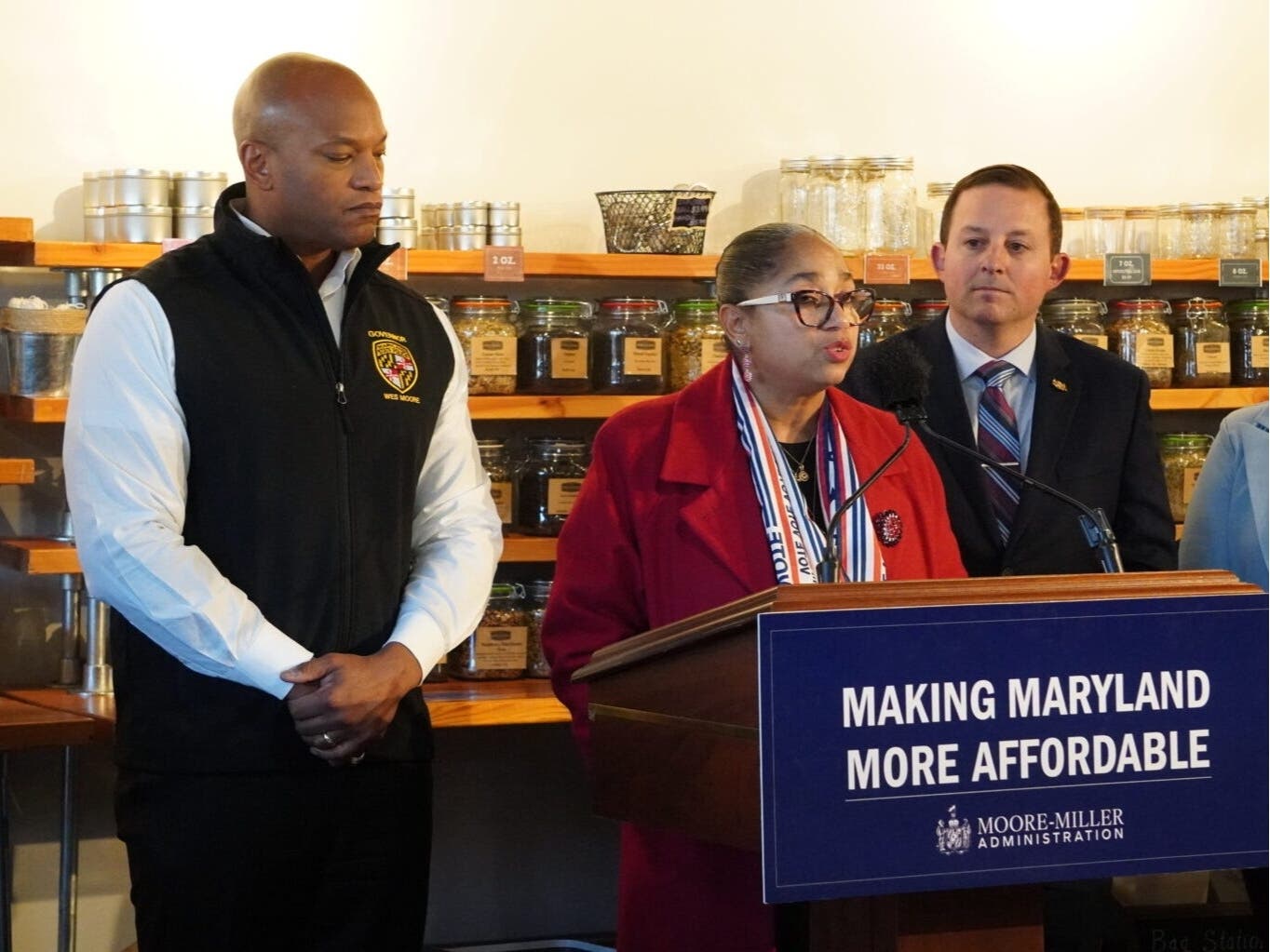
Gov. Wes Moore (D) and legislative leaders unveiled legislation Tuesday they said will prohibit so-called “dynamic pricing” to ensure that Maryland grocery stores are not using surveillance data to charge some consumers more than others for the same product.
Find out what's happening in Across Marylandfor free with the latest updates from Patch.
“The same algorithms that can predict what we need, can also be weaponized to exploit while we need it,” Moore said Tuesday at a small bulk grocery store in Severna Park called BD Provisions. “Price can change constantly — by the hour, by the minute and even by the second, based on who you are and where you shop.”
The proposed legislation would require grocery prices to stay fixed for at least one business day, avoiding rapid changes throughout the day. The proposed legislation would also prohibit retailers from using surveillance data in automated systems to set individualized prices.
Find out what's happening in Across Marylandfor free with the latest updates from Patch.
“This is not a fair market,” Moore said. “This is a stacked deck. This is about profit … Profit that’s extracted from people who are seeing their bills increase and who are struggling to afford basic goods.”
But retailers say that the conversation around dynamic pricing misrepresents how grocery pricing works. The Maryland Retailers Alliance denies that grocery prices can fluctuate from person-to-person to reflect personal consumer data, and any suggestion otherwise is “simply inaccurate.”

Grain and pasta offered at local bulk food retailer BD Provisions located in Severna Park. (Photo by Danielle J. Brown/Maryland Matters).
But as Marylanders continue to see rising grocery costs, state and national lawmakers worry that the growing use of electronic shelf labels let grocery stores change prices at any time, leading to concerns of price gouging or even charging individuals differently based on personal data collection.
That’s why Moore, flanked by the Senate president and House speaker on Tuesday, is backing the Protection from Predatory Pricing Act to protect consumers from any such price-changing attempts.
“As rising costs continue to eat away at paychecks, the government must stand up for working families,” House Speaker Joseline Peña-Melnyk (D-Prince George’s and Anne Arundel) said. “People are barely making it. These are difficult times that we are living in…. They’re making tough choices in what they spend. So dynamic pricing, we have to address it.”
Senate President Bill Ferguson (D-Baltimore City) said grocery stores that use dynamic pricing practices disrupt the balance between consumers and retailers.
“What we know in basic economics is that a market works when buyers and sellers have the same information. The price is set, the buyer knows what it is and can choose across different places,” Ferguson said.
“However, when the seller is changing the price based on who it is, based on unclear information, based on personal data that’s been siphoned off from every possible avenue you can imagine, and the price changes by the time you walk in the door to when you put that loaf of bread on the counter – that is called a failed marketplace,” he said.
The bill would build off the Maryland Online Data Privacy Act from the 2024 legislative session. “Surveillance pricing” would be considered an unfair or deceptive trade practice under the Maryland Consumer Protection Act, with grocery stores subject to a $10,000 fine for the first offense and then up to $25,000 for subsequent offenses, enforced by the Office of the Attorney General.
Retailers say it’s a solution to a problem that doesn’t exist.

Candy products offered at local bulk food retailer BD Provisions located in Severna Park. (Photo by Danielle J. Brown/Maryland Matters).
“Grocery shelf prices are the same for every customer who walks through the door, regardless of who they are, where they live, or what they have purchased in the past. Claims suggesting otherwise are simply inaccurate,” the Maryland Retailers Alliance said in a written statement.
“Much of the confusion stems from a misunderstanding of dynamic or algorithmic pricing, which retailers use to manage inventory, respond to wholesale cost changes, and remain competitive,” the statement said. “This technology helps retailers adjust prices uniformly across all shoppers based on factors such as supplier costs, seasonality, promotions, and market competition—not personal consumer data.”
The Maryland Chamber of Commerce said it will be reviewing the legislation once the bill is formally introduced.
“As recently enacted taxes and regulations continue to pressure businesses and consumers, proposals that restrict pricing tools risk unintended consequences and deserve careful scrutiny,” according to a written statement from Mary Kane, president and CEO of the Maryland Chamber of Commerce. “Policies shouldn’t reduce flexibility or open the door to broader market disruption through government-imposed pricing rules.”