Politics & Government
Moore, Peña-Melnyk Make Rare Committee Appearances To Testify For ‘Dynamic Pricing' Bills
The governor's bill would prohibit the practice.
March 4, 2026
Legislative leaders and the governor don’t think retailers should be able to charge different prices for the same product based on a customer’s personal data — but if they do, the customer should at least be warned about it.
Find out what's happening in Across Marylandfor free with the latest updates from Patch.
Those were among the proposals debated Tuesday during a hearing of the House Economic Matters Committee, a rare occasion when both Gov. Wes Moore (D) and House Speaker Joseline Peña-Melnyk (D-Prince George’s and Anne Arundel) came out to testify on their bills in person.
Moore, Peña-Melnykc and Senate President Bill Ferguson (D-Baltimore City) announced in January that they would be working to curtail so-called “surveillance” pricing, part of a broad effort to tackle everyday affordability issues. But the speaker took it a step further Tuesday with her bill, which would ensure that shoppers know if their data has been used to set prices.
Find out what's happening in Across Marylandfor free with the latest updates from Patch.
House Bill 1475 would require stores to show shoppers a disclaimer when the price of goods and services has been set based on “personalized algorithmic data.”
“With the rise of artificial intelligence and advanced data collection, companies now have the ability to tailor prices to individual consumers to maximize their profits,” said Duane Bond, senior policy adviser to Peña-Melnyk, during Tuesday’s hearing.
“While we are familiar with examples of dynamic pricing related to airline fares, concert tickets and ride-share surge pricing, emerging technology now allows companies to adjust prices based on consumer data,” said Bond, sitting next to the speaker. “This creates the potential for unfair and predatory practices.”
HB 1475 would prohibit a merchant from price setting using “personalized algorithmic pricing” unless the merchant issues a disclaimer. That disclosure would be shown every time a price had been set based on the personalized consumer data and would read: “This price was set by an algorithm using your personal data.”

House Speaker Joseline Peña-Melnyk (D-Prince George’s and Anne Arundel) testifies Tuesday with her senior policy adviser Duane Bond. (Photo by Danielle J. Brown/Maryland Matters)
The bill currently also calls for a prohibition on rent-setting through personalized algorithms, but Bond said Peña-Melnyk has proposed striking that language from bill. He said the proposed amendment language would also create a carveout for loyalty programs and subscription-based savings, so they would not be affected.
A 2025 study by the Federal Trade Commission on “surveillance pricing” found that stores could use tools to “merge data from disparate sources into a unique profile about a specific consumer that a company can link to identifiers such as a unique browser cookie, or an email address a shopper provides during checkout.”
As Marylanders continue to see rising costs, state and national lawmakers worry that personal data collection at stores and retailers could be used to squeeze extra profit out of vulnerable customers. But it’s not clear what scale that’s happening in Maryland.
Marceline White, executive director with Economic Action Maryland Fund, supports HB 1475, which she called a “good first step” toward transparency.
“This bill provides a simple disclosure to let people know that the price is set using personal data,” she said. “Transparency and sunshine let people know how their data is being used and provide them with some informed decision-making. They can at least understand that this is being used in that way.”
But business representatives argued that consumers do not understand dynamic pricing or how the use of algorithms works to set prices.
Cailey Locklair, president of the Maryland Retailers Alliance, suggested that the disclaimer should only occur when personalized algorithmic data is used to drive prices up, not when lowering prices, since it’s “likely to unnecessarily alarm consumers.”
“Most consumers do not understand how algorithms are functioning; they may not realize that this tool is being used to generate personalized discounts, optimize our inventory, reduce waste and ultimately lower prices,” Locklair said.
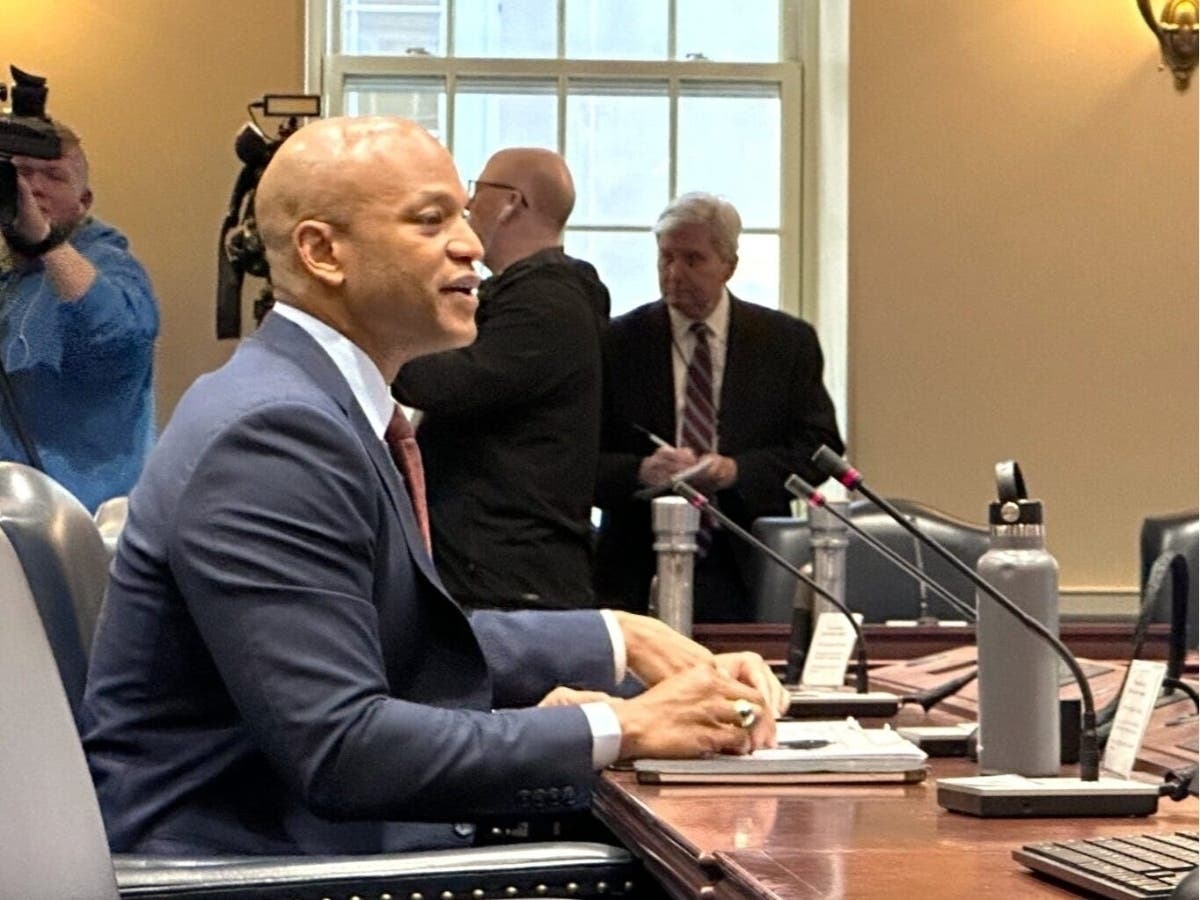
Peña-Melnyk’s appearance followed testimony by the governor on one of his priority bills, the Protection from Predatory Pricing Act.
Dynamic pricing bill could backfire, ‘eliminate’ targeted consumer discounts, merchants warn
House Bill 895 would prohibit “dynamic pricing,” defined in the legislation as “the practice of varying prices of consumer goods or services within a business day based on demand or other factors, including through the use of artificial intelligence or models that retrain or recalibrate based on received information in real-time.”
The legislation would prohibit food retailers from using “surveillance data” to collect information on a “consumer’s behavior, characteristics, location or other personal attributes” to set prices for an individual or a group of people.
“Here is basically how it works, prices are changing sometimes by the hour and sometimes by the minute based on where you shop and based on who is shopping,” Moore said in his testimony. “And it’s happening because digital price tags are replacing paper ones. It’s happening because we have cameras that are watching aisles.
“It’s happening because we have apps that are moving from search-based to predictive and having true curated experiences that end up harming the average shopper,” he said. “That algorithm can crunch data into one question: How much should I charge this person, and how much can I get away with charging this person?”
But retail lobbyists like Locklair, as they have said before, denied that dynamic pricing, as described in the bill, is occurring widely in Maryland.
“There is no data … of widespread surveillance-based pricing abuses,” Locklair said, reiterating that the current bill language is too broad and could eliminate loyalty programs meant to reduce prices for shoppers.
Locklair and other retail lobbyists are trying to land on more business-friendly bill language with the Moore administration, and the governor has already indicated that there will likely be some tweaks to the bill.
Del. Marlon Amprey (D-Baltimore City), one of more than 40 co-sponsors of HB 895, told the business lobbyists that he looks forward to seeing where the legislative language lands.
“Sounds like we’re going to need a scalpel with this bill,” Amprey told the opponents. “I think you all raised some valid issues around some of these technologies being used for lowering prices.
“I love a bargain, so I want my prices to go down,” he said. “But I think we have an obligation to figure out a way to make sure that we are helping people with affordability issues.”