Politics & Government
Peña-Melnyk, Ferguson Cite Affordability As A Watchword For Legislative Session
Presiding officers highlight energy and housing costs, protection of immigrants as key issues for the 2026 General Assembly.
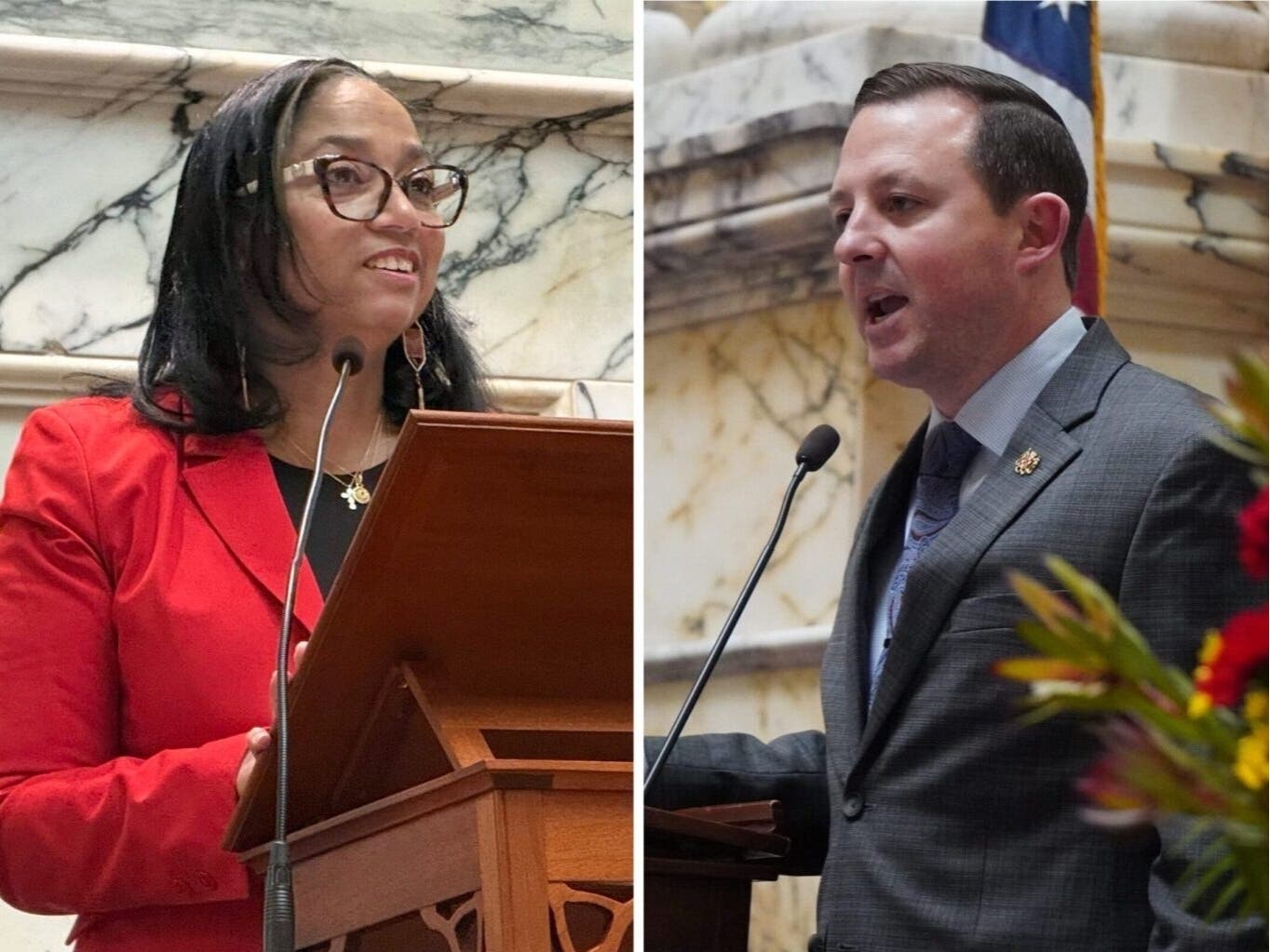
January 15, 2026
Maryland’s presiding officers opened the 2026 General Assembly by reminding their respective chambers that pocketbook issues should be their primary concern as lawmakers try to address rising costs without adding to them with new taxes.
Find out what's happening in Across Marylandfor free with the latest updates from Patch.
The speeches by new House Speaker Joseline Peña-Melnyk (D-Prince George’s and Anne Arundel) and Senate President Bill Ferguson (D-Baltimore City), now in his seventh year leading the chamber, come as the legislature faces an estimated $1.5 billion budget deficit in the fiscal 2027 budget and demands for increased spending on education and health care, among other areas.
They also come at a time when state residents face steadily increasing costs for utilities, health care and housing, issues that must be at the top of lawmakers’ concerns when making decisions, the leaders said.
Find out what's happening in Across Marylandfor free with the latest updates from Patch.
“The big issues for us to tackle are far from a secret,” Ferguson said during a roughly 10-minute speech after being unanimously reelected to lead the chamber. “Despite the actions we took last year, our state faces another $1.4 billion deficit. We still must invest in kids and health care. We continue to have an energy affordability crisis in Maryland, and Marylanders are getting whiplash from the increasing cost of their utility bills.”
Peña-Melnyk, elected by acclamation to her first term as speaker, said she fears her children will not be able to buy a home, and told the story of the surging utility bills faced by one of her daughters, a medical student in Baltimore.
“She keeps her thermostat at 60 degrees,” Peña-Melnyk said, “because her last utility bill was more than $300.”
89 days to go, but on day one of the legislative session it’s all back slaps and applause lines
The rising cost could mean that the House of Delegates takes a harder tack with utility companies, Peña-Melnyk said in a meeting with reporters after the House session.
“I told my members to be innovative, to be creative, and to leave it all out there, all right? We need to get relief,” she said. “Now, I will work with the companies, and I will sit down … and talk it out and compromise. But the number one issue that I’m concerned [about] are the people of Maryland.”
Peña-Melnyk has already voiced her support for House Bill 1, a measure that would prohibit certain utility companies from using ratepayer funds for employee bonuses.
The solutions to Maryland’s affordability challenges could come from delegates on either side of the aisle, Peña-Melnyk noted, even though Democrats hold a super-majority in both House and Senate.
“See your fingers?” she said, raising her hand into the air during a roughly 30-minute speech. “They’re not the same. Not the same, but you need them all for your hand to function. There is no reason why we can’t do that here.”
She asked all 141 delegates in the chamber to make suggestions, including about how to respond to a series of damaging audits for the Moore administration agencies, which have included reports on lapses by the state foster care system and costly leases for state office buildings.
“How can we provide stronger oversight to ensure that agency audits are addressed and the taxpayer funds are wisely protected? Think about that,” Peña-Melnyk told the House.
Despite the need for cuts to close the budget shortfall, Peña-Melnyk said funds in the state’s multibillion-dollar education reform plan, the Blueprint for Maryland’s Future, shouldn’t be among the cuts. As a young girl who immigrated to the United States from the Dominican Republic and did not speak any English, Peña-Melnyk said the education system lifted her up, allowing her to become an attorney, then College Park city council member and, finally, a delegate and speaker of the House.
“The Blueprint is important,” she said. “I know that we have to figure things out, but we will. But can we all agree that education is a change-maker? Can we do that?”
‘Rooted in justice’
Both leaders worried that any gains lawmakers can come up with could be upended by Trump administration cuts to federal programs and federal jobs — Maryland lost 25,000 federal jobs through the first 11 months of 2025, the most of any state in the nation, according to recent state data.
Ferguson said the legislature “must do three things this year.”
“One, we must grow our economy by capitalizing where Maryland can excel in industries like health care, higher education, quantum biomedical research, transportation and logistics and other private sectors that diversify our economy in the future,” he said. “Second, we must make decisions that ask this simple question: Did we enhance affordability for Marylanders, particularly in areas of health care, energy and housing?
“And third and finally, the Senate of Maryland must protect our state’s residents from what has been too often needlessly cruel [federal] government policies that have too often sown distrust,” Ferguson said.
After the Senate adjourned, Ferguson spoke with reporters on several topics, including immigration. He emphasized that Maryland will always protect immigrants, and has already thrown his support behind legislation, which failed last year, to ban 287(g) agreements, which allow local police to perform certain immigration enforcement roles to support U.S. Immigration and Customs Enforcement.
“We are a country built on immigrants,” Ferguson said. “Of course, we should enforce the law, but we don’t need to do it in a way that disrespects humanity. I think that’s what ICE has become, is a paramilitary force that has disrupted and been offensive to humankind, frankly.”
Those thoughts were echoed by Peña-Melnyk, who said immigrants in the U.S. “deserve to live with dignity and respect.”
“How can we as Americans stand by the disrespect, the abuses, people losing their lives, racial profiling, civil rights violation?” she said of recent aggressive ICE tactics. “It doesn’t matter whether you’re a Republican, a Democrat: What’s right is right. What’s wrong is wrong. You don’t treat any human being that way. My God that I believe in loves everyone.”
Both leaders also support legislation to prohibit face coverings for law enforcement officers in the state, including ICE agents. Under both Senate Bill 1 and House Bill 155, face coverings include a ski mask, neck gaiter or tactical mask. The bills wouldn’t apply to an individual “actively engaged in an undercover operation.”
With another budget deficit in Maryland, Republicans see an opportunity
SB1, sponsored by Sen. Malcolm Augustine (D-Prince George’s), has been scheduled for a Jan. 22 hearing before the Judicial Proceedings Committee. No hearing has been set yet in the House Judiciary Committee for HB155, sponsored by Del. Nicole Williams (D-Prince George’s).
When asked if it would pass the House, Peña-Melnyk said, “Yes.”
Ferguson brushed off questions about how state laws would apply to federal officers.
“How a law enforcement entity operates in the state of Maryland is subject to Maryland state laws and the constitution,” he said. “I know there is contention about this, but that will have to be figured out in the courts.”
This year’s session is the last of the cycle for lawmakers, all of whom are up for reelection this fall — one of the reasons higher taxes were taken off the table early in the discussion on the current $1.5 billion budget shortfall. But the demands of this year make it different than a typical election year, Ferguson said.
“The old adage used to be that the election year sessions are quiet, where the General Assembly tries to punt on the hard topics and avoid rocking the boat too much. That will not be the case for the 2026 legislative session,” Ferguson said. “Circumstances dictate policy, and the circumstances our residents are facing require bold and immediate action.”