Politics & Government
Senate Committee Again Ponders Bill To Reduce The Number Of Juveniles Charged As Adults
Supporters say youth cases should start in juvenile court; opponents again argue that the bill would create public safety concerns.
February 5, 2026
Sen. William C. Smith Jr. (D-Montgomery) gave a small history lesson Wednesday to accentuate the need for legislation to end Maryland’s practice to automatically charge youth as adults.
Find out what's happening in Across Marylandfor free with the latest updates from Patch.
Smith's testimony before the Senate Judicial Proceedings Committee included a photo of the House of Reformation and Instruction for Colored Children that opened around 1870. It opened about 20 years after the House of Refuge for juvenile offenders. But that facility, on the site of what is the current Charles Hickey School, was reserved for white children.
Smith said the language to talk about Black and white children “in our criminal justice system is loaded.”
Find out what's happening in Across Marylandfor free with the latest updates from Patch.
“That’s the kind of the long backdrop in the history of where we are today,” he said during the 95-minute bill hearing. “As I’ve said before, there’s a direct nexus and I can rely on this history to current practices that we’re engaging.”
Similar to the bill presented last year that seeks to raise the age at which a juvenile would be tried as an adult from 14 in the current law, to 16. Smith, who testified during the 95-minute hearing, said several of the 33 offenses youth could be charged as adults would be sent straight to juvenile court. Some of those include second degree rape, third-degree sex offense and certain firearms offenses.
One change made in this year’s legislation from the previous one, Smith said, is that if a youth was previously convicted of a felony and then charged as an adult, then that individual’s case would go to adult court.
One particular co-sponsor and attorney on this year’s bill is Sen. Chris West (R-Baltimore and Carroll), who said after the hearing he supports the measure to ensure judicial consistency.
“Start the cases in the jurisdiction, whether adult or juvenile, where they’re most likely to end up based on the statistics that we have at our disposal,” he said. “Why would we want to multiply and waste legal, judicial, etc. resources having two trials for each case, if we can avoid it?”
North East Police Chief Stephen Yates said the measure would decrease public safety by allowing certain violent offenses to land straight in juvenile court.
“Maryland’s existing juvenile justice framework already provides a balanced case-to-case process that allows courts to evaluate the severity of an offense,” said Yates, who spoke on behalf of Maryland associations for police chiefs and for sheriffs. “This bill minimizes accountability, and particularly for juveniles charged with the most serious offenses and dangerous offenses.”
Juvenile services
Part of the hearing focused on the Maryland Department of Juvenile Services, which houses and oversees troubled youth who have been in and out of the court system.
Pam Chung, juvenile division chief in the Baltimore City State’s Attorney’s office, said juvenile services cannot handle the additional workload needed to provide youth services if more cases come through juvenile court.
“DJS is unable to meet the needs of the youth currently under their supervision,” Chung said. “The agency is unable to support the idealism behind this bill. Across the state, juvenile court systems would become overwhelmed with the influx of cases.”
Chung’s reasoning is based on a report released last month by the Maryland Office of the Correctional Ombudsman. The report covers July through September 2025 at five juvenile facilities, three placement centers and three smaller programs. Some of the report details unclean or poorly maintained living units and bathrooms, staffing shortages, lack of educational programs and rodent infestation at the Baltimore City Juvenile Justice Center.
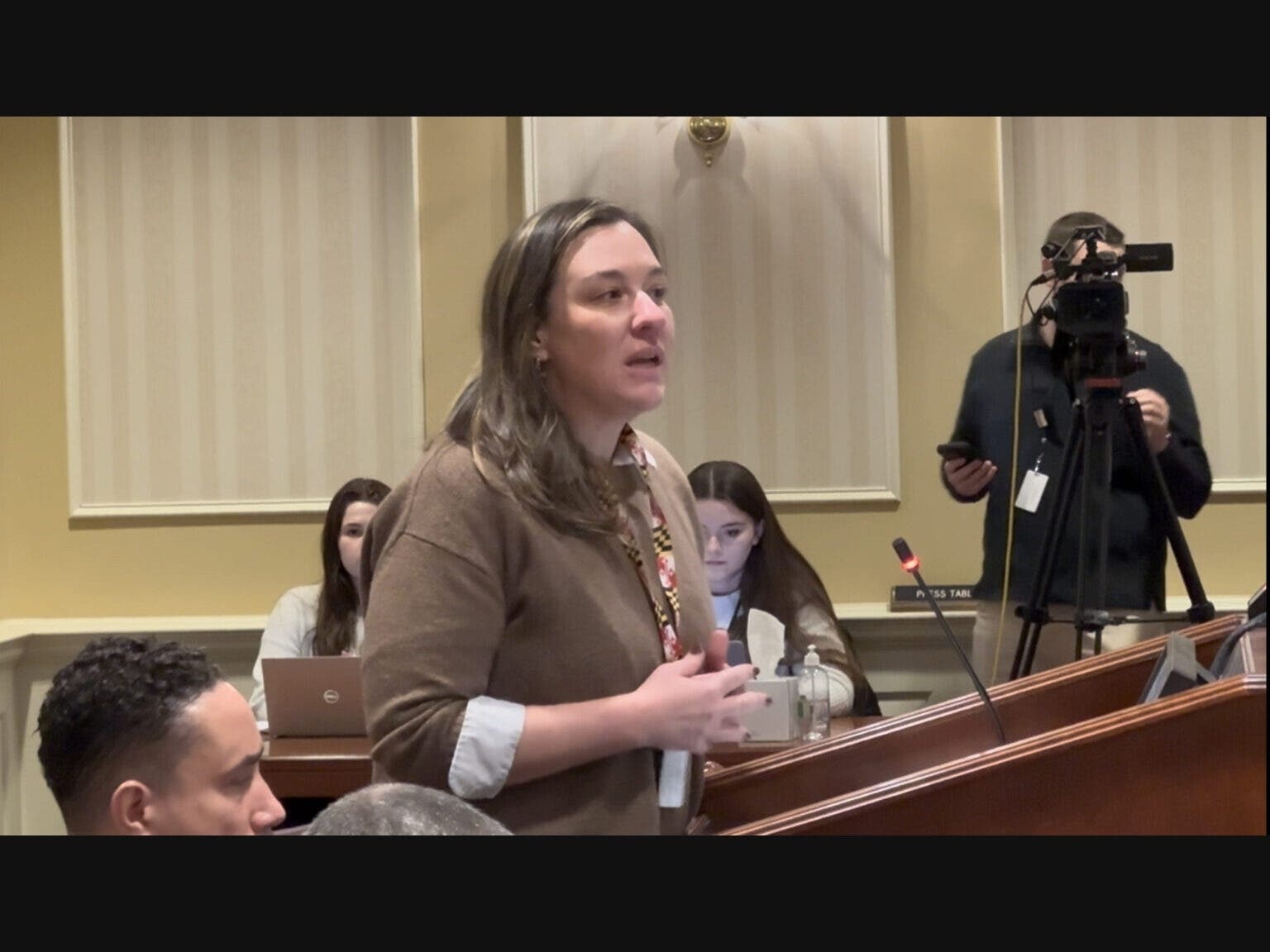
Betsy Fox Tolentino, acting secretary for juvenile services who began in June, traveled to Annapolis on Wednesday to testify in support of Smith’s bill.
Sen. Jeff Waldstreicher (D-Montgomery), vice chair of the committee, acknowledged the panel has supported but is hesitant to back the legislation “because of the previous leadership of the department.” He asked Fox Tolentino to explain how accountability, rehabilitation and public safety for the youth take place.
Fox Tolentino said the agency continues to improve, such as adding 50 new positions to residential facilities, investing $33 million in community-based programming and providing staff with safety training in partnership with Maryland State Police and the Department of Public Safety and Correctional Services.
Juvenile Services also launched a data dashboard with information on intake, detention and community supervision.
“We are rebuilding relationships. None of this system works well in a vacuum. Department of Juvenile Services can’t do this on its own,” Fox Tolentino said. “But when we have effective relationships with law enforcement, with state’s attorneys, with public defenders, with community, we can sustain real change that will get us the outcomes that all of us want to see for our kids, for our victims and our communities.”
Before Fox Tolentino stepped away from the lectern, she received a bit of an endorsement from Sen. Mike McKay (R-Western Maryland). She worked in juvenile services as deputy secretary of community operations, a position created by the General Assembly in 2021.
“I believe with you at the helm and going forward and making these changes that this department will be able to report back to this committee that we are in a good helm, you can be safe with the outcomes and it’s a brighter future for the department. Isn’t that so?” McKay said.
Fox Tolentino replied: “Thank you so much, senator.”