Politics & Government
Anne Arundel Man Will Not Get New Trial In Attempted Murder, U.S. Supreme Court Rules
The U.S. Supreme Court rejected Charles Brandon Martin's bed for a new trial in the attempted murder of his Crofton girlfriend.
January 27, 2026
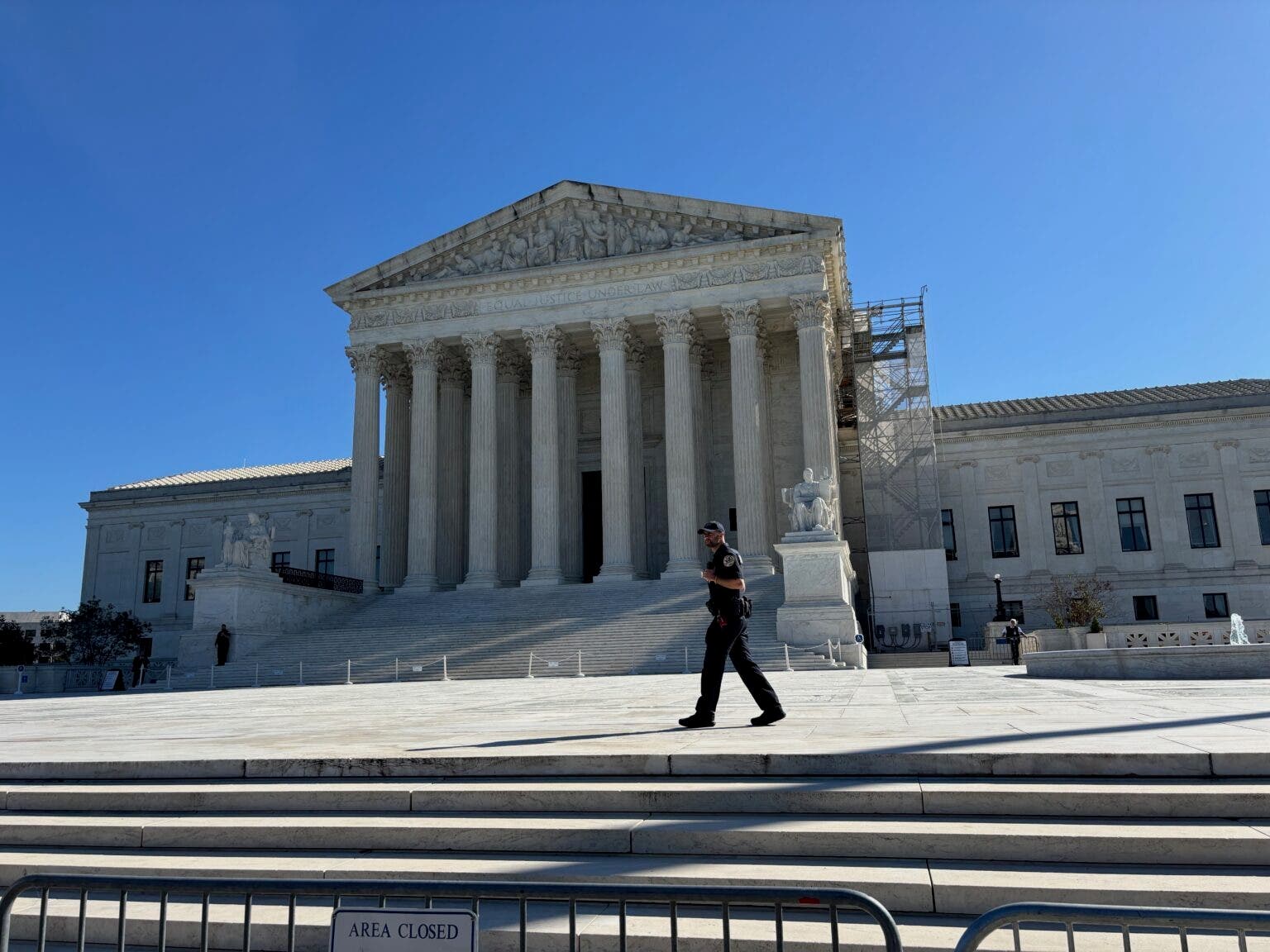
The U.S. Supreme Court ruled Monday that an Anne Arundel County man should not get a new trial in the attempted murder of his pregnant girlfriend after prosecutors withheld some information from him in the case.
Find out what's happening in Across Marylandfor free with the latest updates from Patch.
The unsigned decision by the court went against rulings by two lower federal courts that had granted Charles Brandon Martin a new trial in the 2008 shooting of his girlfriend, Jodi Torok. Justice Ketanji Brown Jackson was the only judge who dissented from the ruling, but there was no written explanation for her dissent.
The justices said federal courts are bound by the Antiterrorism and Effective Death Penalty Act (AEDPA) to give deference to state court rulings, unless the state court had “blunder[ed] so badly that every fairminded jurist would disagree” with the decision. That was not the case for Martin, the high court ruled.
Find out what's happening in Across Marylandfor free with the latest updates from Patch.
“Faithful application of those standards sometimes puts federal district courts and courts of appeals in the disagreeable position of having to deny relief in cases they would have analyzed differently if they had been in the shoes of the relevant state court,” the court wrote in the 16-page decision. “But federal courts are dutybound to com ply with AEDPA, and we have granted summary relief when the lower courts have departed from the role AEDPA assigns.”
According to court documents, Martin was married and had two children as well as two other girlfriends in 2008 when he was told by Torok, his third girlfriend, that she was pregnant. Martin wanted Torok to get an abortion. Not only did she refuse, but “intended to go to court to compel him to provide child support. She also threatened to tell his ‘wife or baby mama’ about the child.”
A few weeks later, in October, Martin sent Torok a text message asking when she would be at work, and Torok replied that she was off that day. Hours later, Torok’s housemate found her in their Crofton apartment, bleeding from an apparent gunshot wound to the head. Torok survived the shooting with permanent injuries, but the unborn baby did not.
Police recovered a spent .380-caliber shell casing from the apartment, along with a Gatorade bottle with the mouth end wrapped heavily in tape and a small hole in the bottom — what prosecutors argued was a homemade silencer for a gun.
DNA evidence presented at trial linked a hair that was found in the tape on the Gatorade bottle to Martin. Also at trial, Maggie McFadden, one of Martin’s other girlfriends, testified she saw Martin with a “small semiautomatic gun in the weeks before the shooting.” McFadden’s brother said the same thing.
The state presented testimony from the third girlfriend, Sheri Carter, who said Martin kept a laptop computer at her apartment where she said he looked up silencers. Carter said Martin “got rid of it … because he didn’t want it found there” after Torok’s shooting.
The trial judge instructed the jury that Martin could be found guilty if he had aided or encouraged the attempted murder and assault with the intent that the crime succeed. Martin was found guilty as an accessory before the fact and sentenced to life in prison.
On appeal, Martin’s attorneys claimed that not only was the laptop not lost, it had been in police custody the entire time. They said a forensic computer report showed that no search for silencers had been done on the computer, which had not been used since 2005, discrediting Carter’s testimony.
In their 43-page petition to the Supreme Court, Martin’s attorneys wrote prosecutors failed to disclose “favorable” evidence to the defense to safeguard the defendant’s “right to a fair trial.”
“Had the report been disclosed, it would have destroyed the prosecution’s made-for-TV-movie theory,” wrote Martin’s attorneys. “The report would have discredited Carter’s testimony and thus eliminated the only evidence connecting Mr. Martin to silencers.”
Martin’s attorneys did not respond to requests for comment Monday evening. The Maryland Attorney General’s Office declined to comment on the case.
The Maryland Court of Special Appeals and the Court of Appeals rejected that argument and let Martin’s conviction stand. But a U.S. District Court judge in Maryland ordered a new trial for Martin over the state’s failure to disclose the computer report, and a divided panel of the 4th U.S. Circuit Court of Appeals affirmed that ruling in January 2025.
But the Supreme Court ruled the AEDPA limits federal review of habeas claims raised by state prisoners. The justices wrote the act is an important but limited safeguard to protect against extreme malfunctions in the state courts’ adjudication of constitutional claims. It is not an opportunity for federal judges to decide “whether the state court’s opinion satisfies the federal court’s opinion-writing standards,” the justices said.
In addition, the justices wrote that evidence of Martin’s DNA on the Gatorade bottle, his text to Torok the same day as the shooting and testimony that he “owned the kind of gun that seemed to have used to shoot Torok” linked Martin to the crime.
Even if the undisclosed forensic report about the laptop had been disclosed at trial, the justices wrote, Martin “would have been convicted even if it the report severely impeached Carter.”
“Based on its review of the entire record, the court found that the evidence linking Martin to the crime was so strong that there was no reasonable probability that the result of his trial would have been different,” the justices wrote.