Community Corner
13 Bald Eagles Killed On Eastern Shore By Banned Poison
13 raptors on the Eastern Shore were poisoned by a banned chemical; who used the poison two years ago, and why, remains a mystery.


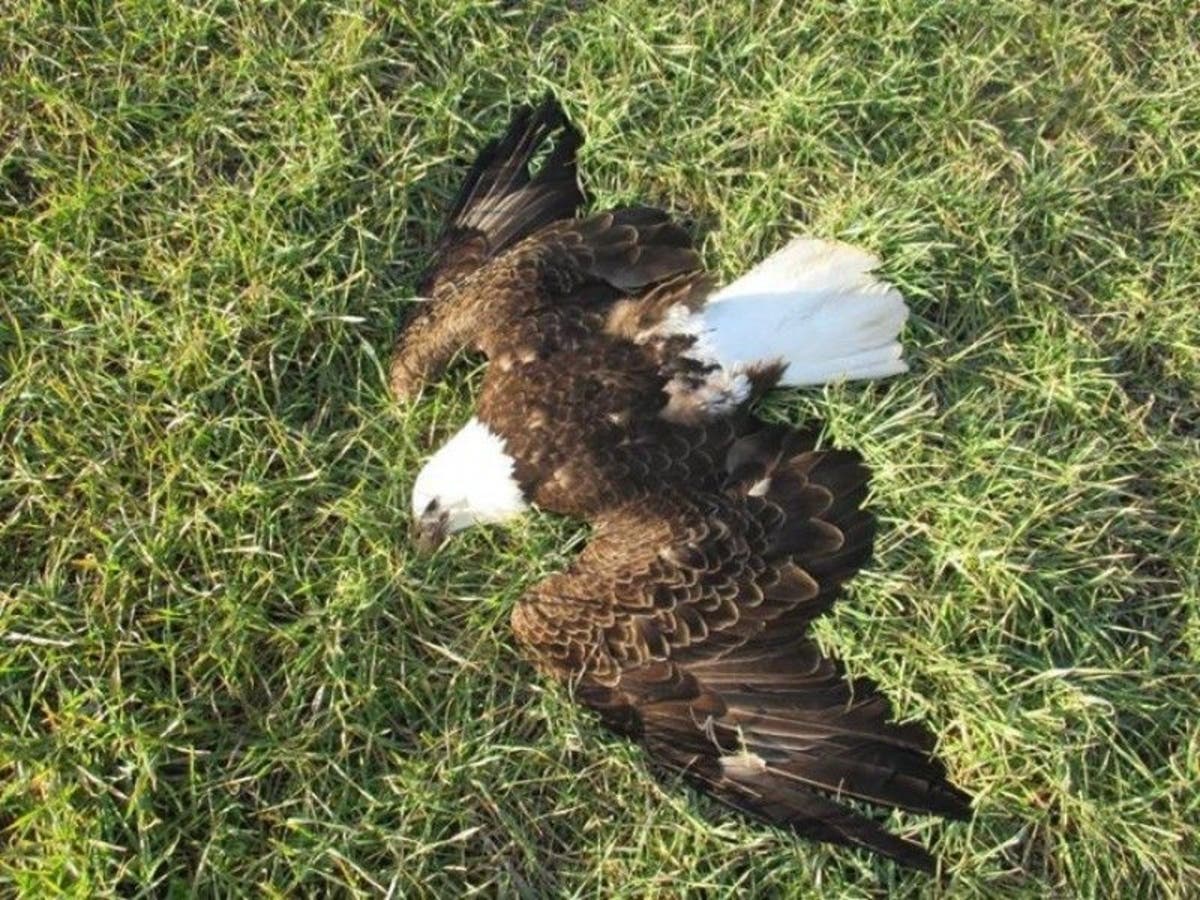
FEDERALSBURG, MD — A new report says that a long-banned pesticide, carbofuran, is the chemical that poisoned 13 bald eagles on Maryland's Eastern Shore – the state's largest die-off of the protected birds in 30 years — but no suspect has been found, and the investigation ended in August 2016.
Maryland Natural Resources Police said in March 2016 that humans were the likely cause of the eagle deaths. There was no visible sign of wounds to the birds, so a necropsy was done at a federal lab in Oregon to help determine what killed the eagles. Tests showed the raptors did not die of natural causes, including disease, said the U.S. Fish and Wildlife Service.
But WNAV filed a Freedom of Information request for the necropsy results on the bald eagles since, and received the findings on June 15, the first news outlet to share the details. The report shows that along with tests on the eagles, experts with the U.S. Fish and Wildlife Service also examined a raccoon carcass and fur from a raccoon; carbofuran was found in all the animal remains. It is possible a raccoon found an old supply of the chemical and its remains were ingested by the eagles, the station reports.
Find out what's happening in Annapolisfor free with the latest updates from Patch.
"This chemical is dangerous for humans and animals," WNAV posted. "We're hopeful that people will look around their property (especially farm owners) to ensure there isn't any still around. And let their neighbors know to do the same."
The bodies of the birds, a national symbol, were found Feb. 20, 2016, on a farm and in woods in Federalsburg in Caroline County. Bald eagles are federally protected under the Bald and Golden Eagle Protection Act and the Migratory Bird Treaty Act. Maximum fines for violations of those two acts are $100,000 and $15,000 respectively, and up to a year's imprisonment, says an advocacy group.
Find out what's happening in Annapolisfor free with the latest updates from Patch.
(For more news like this, find your local Patch here. If you have an iPhone, click here to get the free Patch iPhone app; download the free Patch Android app here. And like Patch on Facebook!)
Carbofuran is a toxin used in Africa to kill lions, and in California illegal marijuana growers use it to keep rodents from eating the plants, The Washington Post reports. The chemical causes diarrhea, vomiting, seizures and prompts glands to secrete fluids, causing animals to “drown in their own fluids,” a toxicologist told the newspaper.
The Environmental Protection Agency banned the use of carbofuran in granular form in the mid-1990s because it was main cause of eagle deaths in the Chesapeake Bay region, then the liquid form of the chemical was banned in 2009.
Four more bald eagles were found dead in Delaware in March, soon after the Maryland eagles were found. After first finding one dead bald eagle in the Dagsboro area, Delaware authorities say they found three more disoriented bald eagles in a farm field not far away. They died later. Two other eagles were treated.
Authorities appreciate the high level of concern and response from the public regarding the investigations into the eagle deaths in Federalsburg, and Sussex County, Delaware, Mendelsohn said. The Delaware investigation continues, so authorities declined further comment.
The American Bird Conservancy offered a $5,000 reward for information leading to a conviction in the case. The money was added to contributions by the U.S. Fish and Wildlife Service and four other charities, for a total reward of $30,000.
"It is deeply disturbing that 13 of these revered birds appear to have been killed, either deliberately or through reckless negligence," said Darin Schroeder, ABC's vice president of government affairs. "Either way, we at American Bird Conservancy will do everything we can to help the U.S. Fish and Wildlife Service track down those responsible and bring them to justice."
Federal investigators focused on human causes and bringing to justice whoever is responsible for the death of the Maryland eagles. U.S. Fish and Wildlife Service agents worked with the Maryland Natural Resources Police on the case. The reward is available for information leading to the arrest and conviction of suspected wildlife offenders.
Three adult eagles, two adolescents and eight young eagles were found deceased at the Maryland site.
In August 2007, the bald eagle was removed from the federal endangered species list, says the Maryland DNR, and in April 2010, it was removed from Maryland's list of threatened and endangered species. But federal law still prohibits hunting or possessing bald eagles, either alive or dead, punishable by a $250,000 fine and two years in prison.
»Photo of dead bald eagle courtesy of Maryland Department of Natural Resources
Get more local news delivered straight to your inbox. Sign up for free Patch newsletters and alerts.