Community Corner
Archaeologists Find Slave Barracks in Anne Arundel County
Findings include beads, animal bones, dish fragments and thousands of artifacts in a 34x34 feet stone foundation with brick floors.


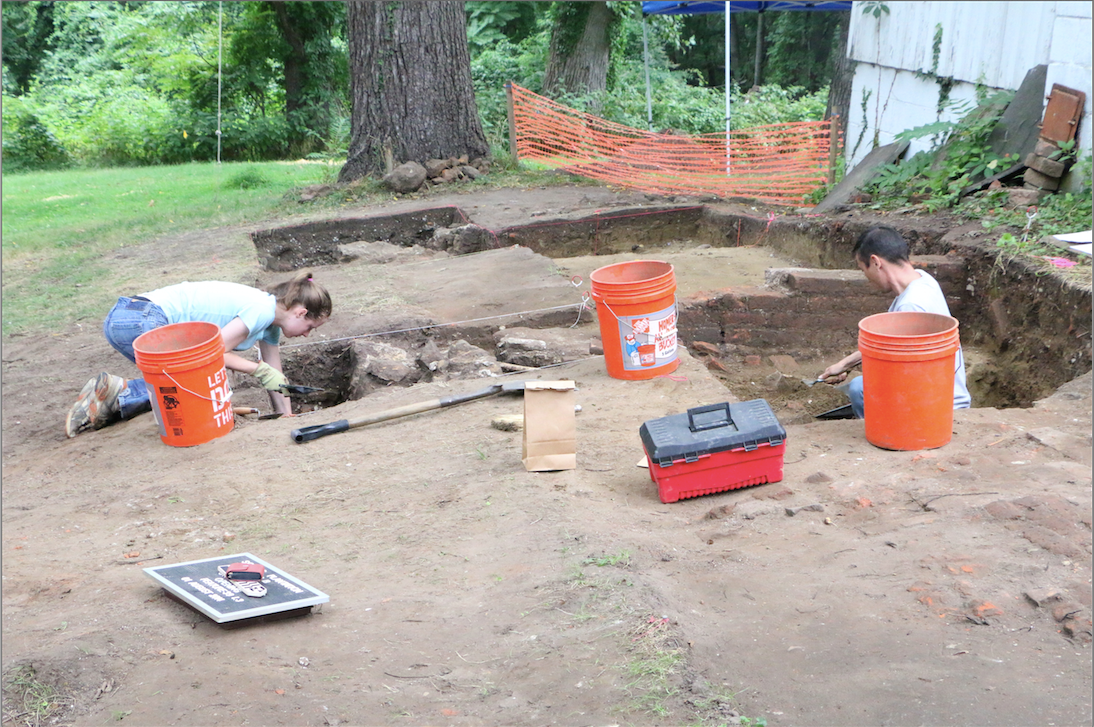
Anne Arundel County archaeologists and the Maryland State Highway Administration recently unearthed a 34 x 34 feet stone foundation with brick floors that is believed to be slave barracks from the Civil War era.
As part of the Transportation Enhancement Program, archaeologists and the SHA have been surveying an area along General’s Highway.
“Understanding the history around our highway network is an important element in our work; these activities and discoveries, as part of our cultural resources stewardship program, help us piece together that valuable story,” said Gregory Slater, director of the Department of Planning and Preliminary Engineering, according to a news release.
Find out what's happening in Annapolisfor free with the latest updates from Patch.
The target area of focus has been Scott’s Plantation, also known as Belvoir, the location where French commander Rochambeau encamped with almost 5,000 men in 1781 on his way to Yorktown, VA. The plantation was also the home of Anne Ross Key, “Star-Spangled Banner” composer Francis Scott Key’s grandmother.
But instead of finding history from the time of the American Revolution, archaeologists found thousands of artifacts, including beads, animal bones and dish fragments, from every-day slave life in and around the stone foundation.
Find out what's happening in Annapolisfor free with the latest updates from Patch.
“We have an intact foundation, the brick floors walked on by slaves more than 200 years ago, and pits full of everyday things,” said Dr. Julie Schablitsky, SHA Chief Archaeologist, according to a news release. “This site is an important contribution to African American history.”
An estimated 35 enslaved African Americans lived at Belvoir, according to the news release. Stories of their lives can be found in both Maryland State Archives and the ground where the discovery was made. One particular story is about Cinderella Brogden, a young enslaved African American woman who lived at the plantation with her family until 1847.
Archaeologists are questioning what the building was used for after emancipation. Other uncoverings include Union Civil War buttons and a Minie ball, a type of lead bullet used during the American Civil War.
The property is now owned by Rockbridge Academy, which is allowing access to the site for research.
Headmaster Michael J. McKenna recognizes the importance of freedom and liberty, according to the news release.
“I’m so glad that Rockbridge Academy has an opportunity to help better our understanding of true freedom and liberty through the archaeological finds on Belvoir, and the uncovering of the slave quarters here.”
“With numerous people of color tracing their ancestry to the inventories of slaves owners in Anne Arundel County, this unearthing provides a plethora of information for descendants of slaves who lived at Belvoir,” said Janice Hayes-Williams, Chair of Annapolis 1864, City of Annapolis commission on Maryland’s 3rd Constitution and the Abolishment of Slavery.
In November, Maryland will celebrate its 150th anniversary of emancipation, 1864.
Photos courtesy of MDOT/SHA
Get more local news delivered straight to your inbox. Sign up for free Patch newsletters and alerts.