Weather
Hurricane Season 2018: Fewer Storms Forecast
An updated hurricane season forecast decreased the number of named storms likely in 2018.


BALTIMORE, MD — With two named storms meandering in the Atlantic, this is some good news about the 2018 hurricane season. Colorado State University weather forecasters have revised their prediction, now forecasting a "below-average" Atlantic hurricane season.
Meteorologists Philip Klotzbach and Michael M. Bell predict 10 named tropical storms, with four becoming hurricanes. The experts released their new forecast on July 2. "We have decreased our forecast and now believe that 2018 will have below-average activity. The tropical and subtropical Atlantic is currently much colder than normal, and the odds of a weak El Niño developing in the next several months have increased. With the decrease in our forecast, the probability for major hurricanes making landfall along the United States coastline and in the Caribbean has decreased as well," the meteorologists said in a statement.
The warming of waters in the central and eastern Pacific, an El Niño, can tear apart developing storms in the Atlantic. The new forecast is a decrease in the number of hurricanes predicted in April when the experts said seven hurricanes would likely form in an above-average hurricane season. On May 31, the university's Tropical Meteorology Project team called for a "near-average" season, predicting six hurricanes to form.
Find out what's happening in Annapolisfor free with the latest updates from Patch.
Subtropical Storm Alberto already formed in May before the start of hurricane season on June 1. The hurricane season runs through Nov. 30.
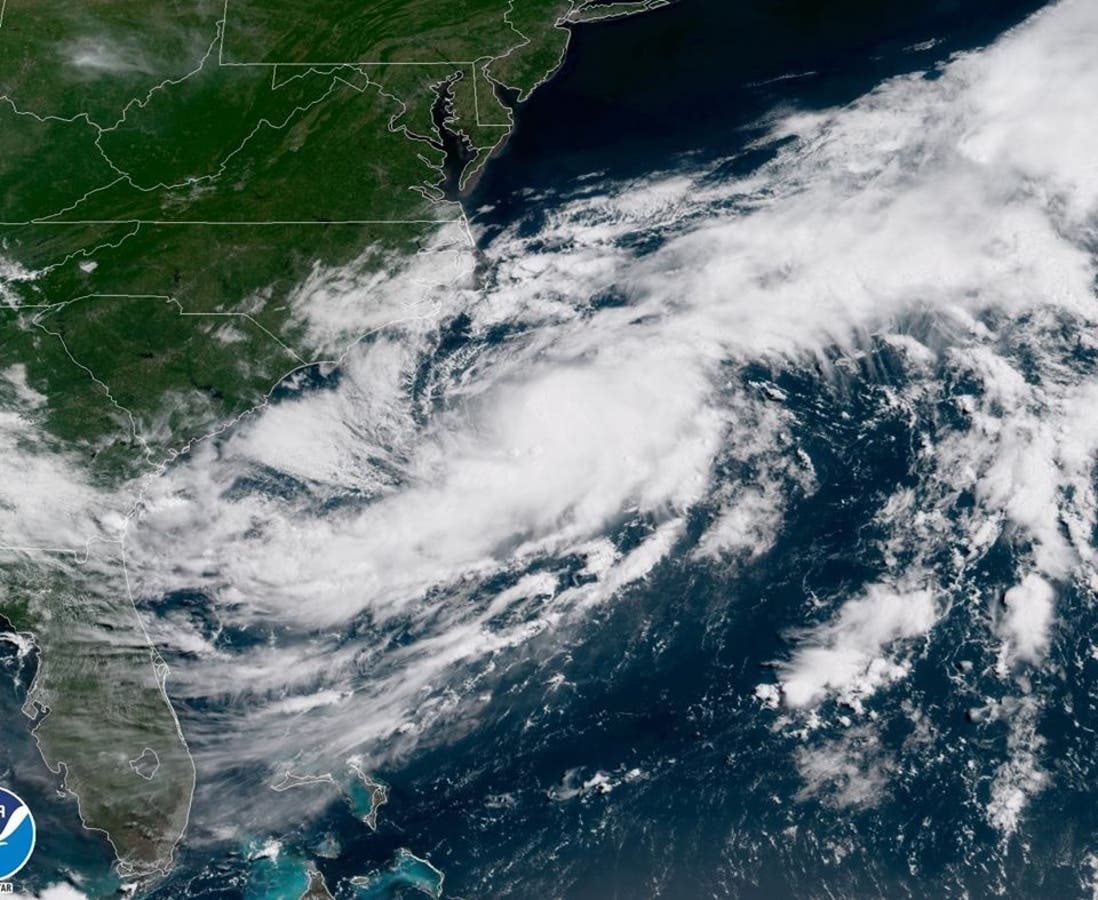
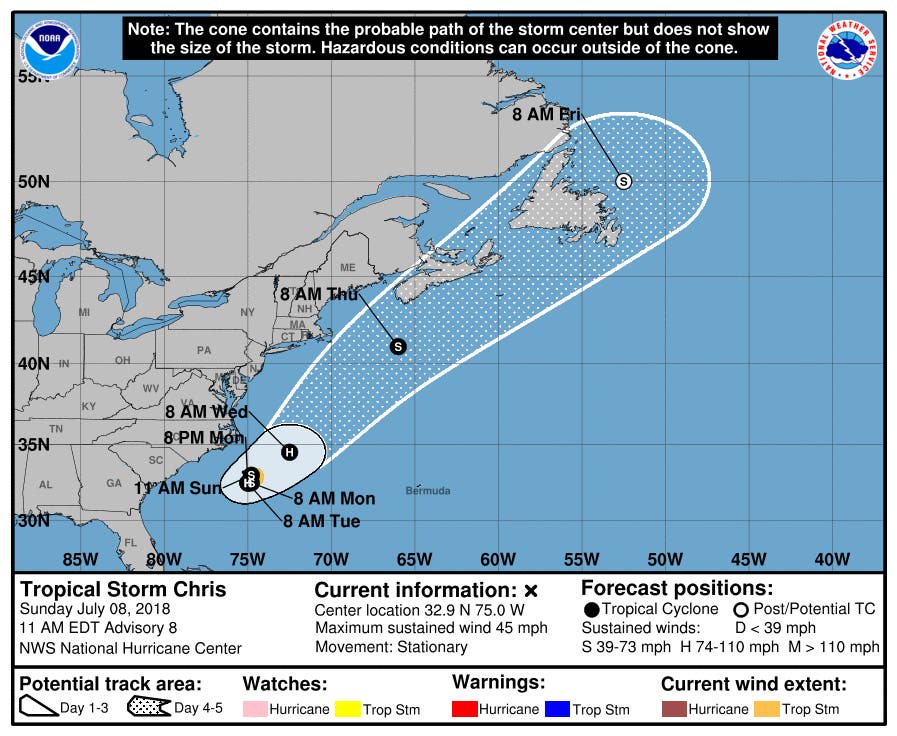
The season's first hurricane, Beryl, has decreased to tropical storm status and should move near or south of the Virgin Islands and Puerto Rico on Monday, says the National Hurricane Center. Meanwhile, tropical storm Chris is about 160 miles south of Cape Hatteras, North Carolina, and isn't expected to move much in the coming days. There are no coastal watches or warnings in effect because of it.
Find out what's happening in Annapolisfor free with the latest updates from Patch.

Swells generated by Chris are expected to increase and affect portions of the coasts of North Carolina and the mid-Atlantic states into early this week, the National Weather Service said Sunday. These swells could cause life-threatening surf and rip current conditions.
(For more news like this, find your local Patch here. If you have an iPhone, click here to get the free Patch iPhone app; download the free Patch Android app here. And like Patch on Facebook!)
Hopefully the revised forecast will hold. Hurricanes Irma and Maria wrought widespread damage in Florida, Georgia, and Texas last year, leveled parts of Puerto Rico, and sent refugees fleeing north to Virginia and Maryland. With the 2018 hurricane season now under way, experts say Marylanders should always be ready for what the season brings.
"Coastal communities such as Annapolis face unique problems from hurricanes and tropical storms," says Deputy Fire Chief Kevin J. Simmons, Director of Emergency Management. "Storm surge and large battering waves generated by tropical storms and hurricanes combined with destructive winds pose a greater threat to life and property."
SEE ALSO: Storm Names Released For 2018 Hurricane Season
Visit the Landfall Probability website for information on all coastal states as well as 11 regions and 205 individual counties along the coast. Landfall probabilities for regions and counties are adjusted based on the current climate and its projected effects on the upcoming hurricane season.
Hurricane Preparation Tips
- Get Prepared: Take action now to be prepared for hurricane season. As the storm approaches, it is often
- too late to get ready. Make sure you have family evacuation and communications plans, update your
- emergency supply kit, and evaluate your flood insurance needs.
- Complete a family communication plan. Plan how you will assemble your family and loved ones
- and anticipate where you will go for different situations. Get together with your family and agree on
- the ways to contact one another in an emergency and identify meeting locations.
- Create or restock your emergency kit. Being prepared means having your own food, water and
- other supplies to last for at least 72 hours. A disaster supplies kit is a collection of basic items your
- household may need in the event of an emergency, including an all weather radio.
- Check your insurance coverage. Most homeowner's insurance policies do not cover damage or losses from flooding. Review your policy, ensure you're adequately covered and understand exclusions, and contact your agent for any changes.
- Stay Informed. Know where to go for trusted sources of information during a hurricane event. Monitor
- local news resources for hurricane watches and warnings and follow directions of local officials.
- Determine Your Risk. Find out what types of wind and water hazards are likely in your area. Hurricanes are not just a coastal problem and their effects can reach hundreds of miles inland. Since the U.S. has not been hit by a major hurricane (category 3 or higher) in over a decade, "many people are suffering from hurricane amnesia in the forms of complacency, denial and inexperience."
- Develop an Evacuation Plan. Find out if you live in a storm surge hurricane evacuation zone or if your home is unfit to keep you safe in a hurricane. Speak with family and friends and work out a plan to use their home as an evacuation destination. Be sure to account for pets, since many shelters do not allow them.
- Assemble Disaster Supplies. Supplies are necessary not just for the storm itself, but for the often long and grueling aftermath. Stock up on non-perishable food, water and medicine to support your family for at least a week. Other recommended items are cash and battery-powered radios and flashlights. Since many of us use cell phones, have a solar-powered or hand-crank USB charger.
Know Your Risk and Plan Ahead for an Evacuation:
- Know how to receive information including recommendations or orders to evacuate.
- If you plan to go to a shelter, notify staff of any special needs you or your family have.
- Do not return to the evacuation area until the evacuation order is lifted.
Get Tech Ready
Technology has made it easier to prepare for emergencies, but it can be unreliable during big storms if you haven't planned to keep your gadgets protected and powered up. Here are some tips to make sure you are tech ready:
Be Informed
Here are basic commands to get started:
- Download the FEMA app. Receive weather alerts from the National Weather Service for up to five different locations anywhere in the United States. To search for open shelters (for disaster survivors): text SHELTER and a Zip Code to 43362 (4FEMA)
Make A Social Media Plan
- Use text messages, social media and email to connect with friends and family during emergencies.
- Mobile networks can become overwhelmed during emergencies, making it difficult to place and receive phone calls. Text messages require less bandwidth, which means they are able to be transmitted more reliably.
- Social media channels such as Facebook and Twitter can also be an effective way to update family and friends during emergencies. Facebook's Safety Check feature allows users to easily post a status update indicating that they are safe during a time of disaster.
- Register with American Red Cross's Safe & Well site to let family and friends know you're okay.
- Have an emergency charging option for your phone and other mobile devices. Smartphones have become a vital tool to receive emergency alerts and warnings,, so it's important to make sure you can keep them powered up in an emergency.
- In your car: Keep a portable phone charger in your vehicle at all times, and consider purchasing a back-up power supply to keep in your vehicle as well.
- Change the settings on your phone to low power mode or place it on airplane mode to conserve energy.
- Store important documents in a secure, password-protected jump drive or in the cloud.
- Capture electronic versions of important documents such as insurance policies, identification documents, and medical records. Don't forget to include your pet's information.
- Back-up your computer to protect photos and other personally important electronic documents.
- Scan old photos to protect them from loss.
- Keep your contacts updated and synced across all of your channels, including phone, email and social media. This will make it easy to reach out to the right people quickly to get information and supply updates. Consider creating a group listserv of your top contacts.
- Create a group chat via a texting app or a thread for family/friends/coworkers to communicate quickly during a disaster.
- Sign up for Direct Deposit and electronic banking through your financial institution so you can access your payroll funds and make electronic payments wherever you are. Federal benefit recipients can sign up by calling (800) 333-1795 or at at GoDirect.org.
Additional information can be found on the Maryland Emergency Management Agency (MEMA) website at
mema.maryland.gov.
Maryland Hurricane History
To find out more about hurricane season and storm preparation, read these related Patch stories:
- Remember Agnes? 14 Maryland Hurricane Names You May Want To Forget
- Hurricane Tips If Storm Hits Maryland
Maryland has been spared "the big one" on most occasions, but for roughly 60 years, named hurricanes have battered our water-oriented state, altering our lifestyles and our history.
Hurricanes Connie and Diane pounded Maryland in October 1955. Just days apart in their torture on the East Coast, the storms caused widespread flooding. Connie essentially came right up the Bay.
Meanwhile, Diane came on land near the Carolina border and turned east to pass over northern Maryland before going back out to sea.
More recently, Hurricane Sandy in October of 2012 made landfall just north of the upper Chesapeake Bay region, and destroyed the Ocean City fishing pier. From there it went on to devastate oceanfront areas of New Jersey and New York.
Residents readying for the upcoming season can get tips and advice on the federal government's Ready.gov website. To read the full 2018 Atlantic hurricane season prediction report, visit CSU online.
To keep up with potential storms during hurricane season, bookmark the National Hurricane Center's website. For local weather and severe weather alerts, visit the National Weather Service online.
So researchers leave us with this advice: "As is the case with all hurricane seasons, coastal residents are reminded that it only takes one hurricane making landfall to make it an active season for them. They should prepare the same for every season, regardless of how much activity is predicted."
Includes reporting by Patch Editor Paul Scicchitano
Image via NOAA
Get more local news delivered straight to your inbox. Sign up for free Patch newsletters and alerts.