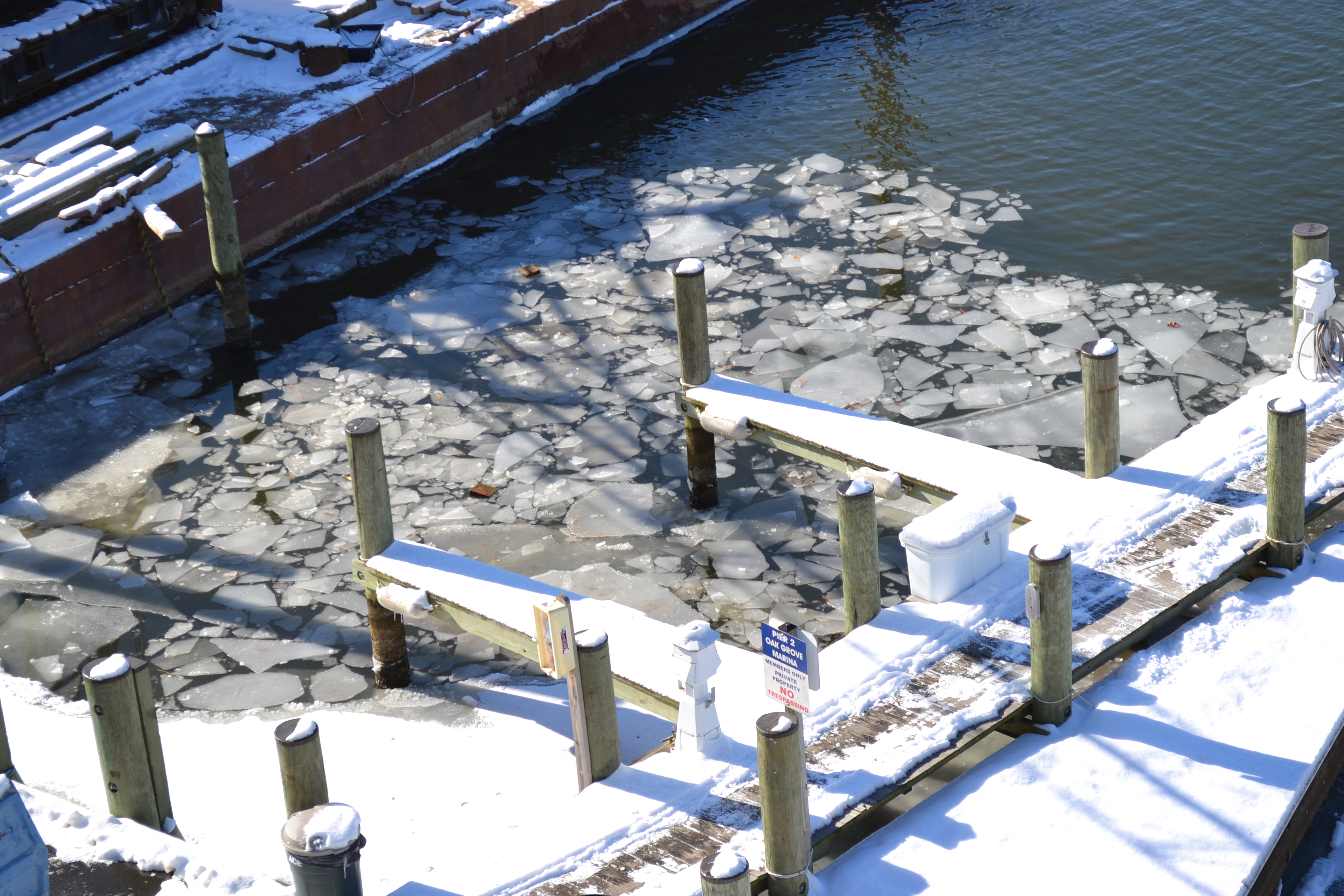
Ever wondered what happens to the South River during the winter? When the air temperature reaches low temperatures, the cold air will encourage the creation of ice on the river’s surface. Ice floats on the top of the river, acting as a cover, while the river continues to flow underneath. This allows aquatic life to survive under the ice.
Algae can continue to grow, even in the wintertime. Some species of algae are adapted to survive in cold temperatures. The amount of winter algae growth that occurs is largely dependent on how much light and nutrients are available. On sunny days, light is able to travel through the ice cover and be used by algae for photosynthesis. This is important because this process will provide oxygen to the other organisms also living under the ice.
Oysters are dormant for the winter. They have the ability to survive in freezing water temperatures. Even if they are completely encased in ice, they will remain healthy in cold water. For those of you who grow oysters, it is important to make sure that your oysters stay completely submerged in the water. If oysters are exposed to freezing air, they will die. In addition, a variety of bird species remain on the South River for the winter. This includes Canada geese, coots, crows, cardinals, and several others. Bird species can typically feed on seeds, nuts, and winter berries during the winter. Despite the frigid temperatures this winter, many species still call the South River home in the colder months.