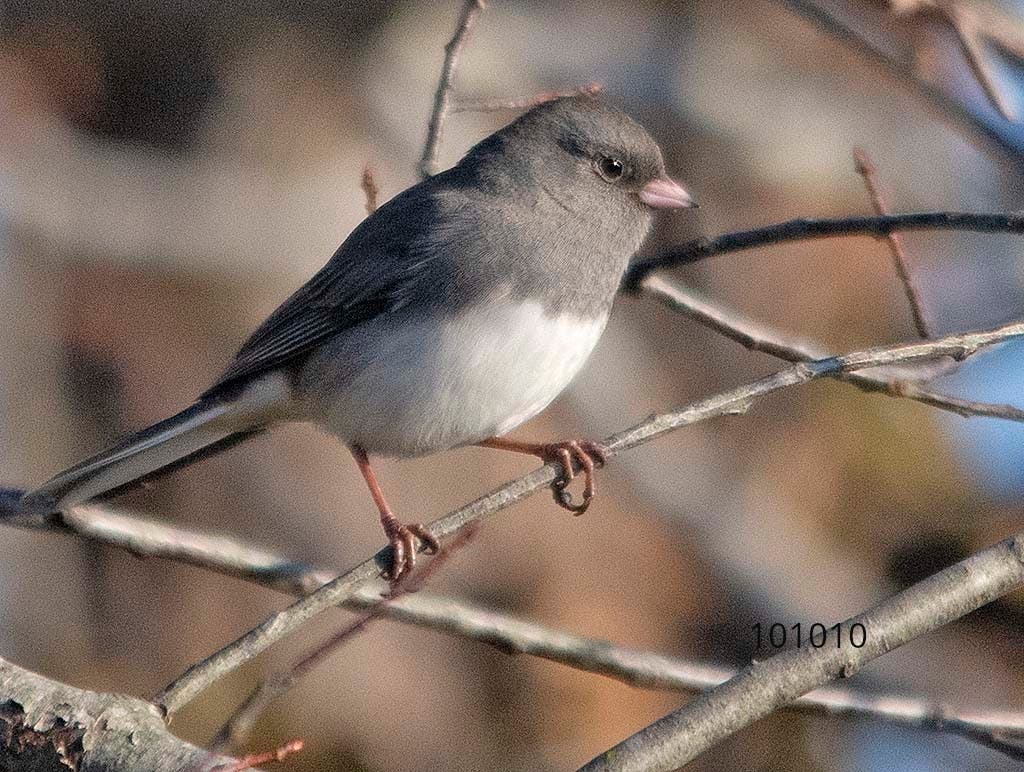
Don't let their diminutive size fool you. The Dark-eyed Junco is a feathered marvel, a common sight flitting across forest floors and gracing our backyards throughout winter. Often referred to as a "snowbird" for their arrival with the colder months, these birds hold a captivating story waiting to be explored, from their remarkable hardiness to their surprising variations across North America. While Dark-eyed Juncos may appear to be a study in simplicity, a closer look reveals a touch of elegance. Their upperparts are a cool slate gray or brown, depending on the subspecies, offering superb camouflage amongst wintery landscapes. A flash of white on the outer tail feathers, however, adds a touch of personality. These white markings are particularly conspicuous when the junco takes flight, providing a burst of contrast against the darker plumage. Observing a Dark-eyed Junco perched on a branch, its body blending into the background before taking flight with a flash of white, reveals the subtle beauty of their markings. Dark-eyed Juncos are remarkably well-adapted to survive harsh winter conditions. Their thick downy feathers provide excellent insulation, allowing them to retain body heat even in freezing temperatures. Additionally, their small size minimizes heat loss, making them efficient at conserving energy during the coldest months. Their stout bills are perfectly designed for cracking open seeds, a vital food source readily available throughout winter. Witnessing a Dark-eyed Junco foraging on the forest floor in the midst of a snowfall reveals their remarkable resilience and adaptation to winter's harshest realities. Ann Murray had a big hit with ""Snowbird" a few years ago. Worth a listen still. In the Winter you'll find flocks of these birds at Thomas Point.