Crime & Safety
Ship Pilot Used Cell Phone Before Vessel Got Stuck In Chesapeake Bay: New Report
A pilot was on the phone right before their cargo ship got stuck in Chesapeake Bay, a new report said. The pilot's license was suspended.


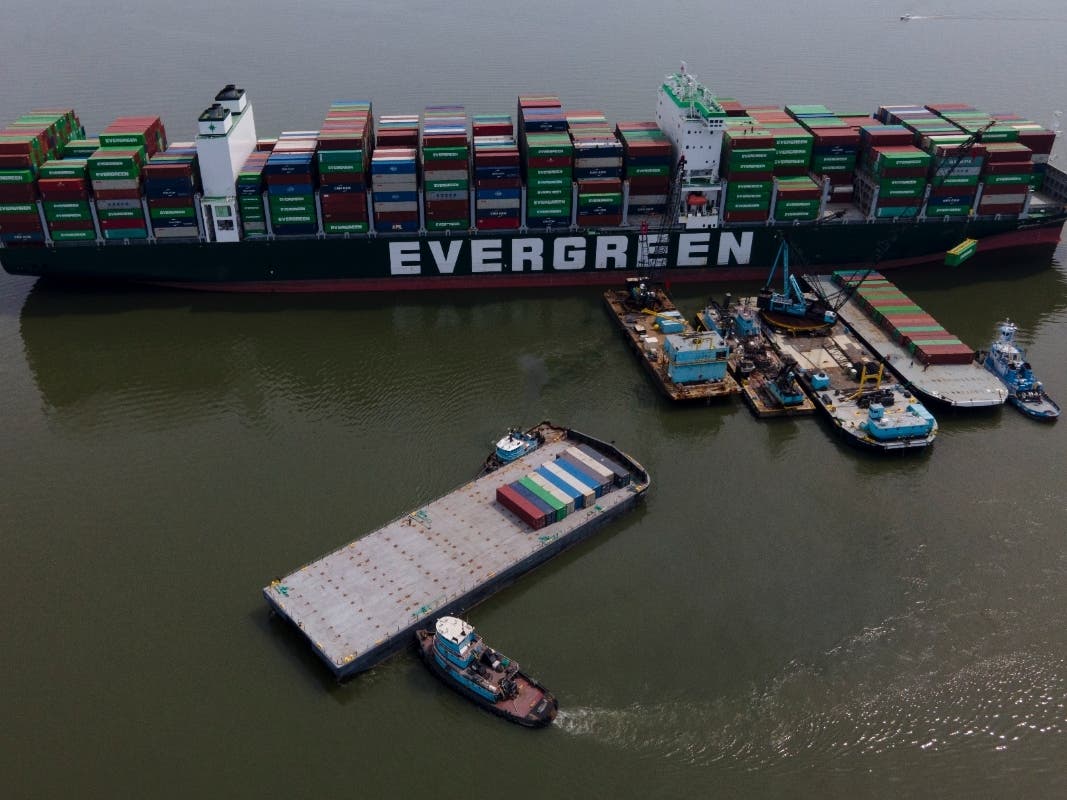
PASADENA, MD — A pilot's license was suspended this week after their ship got stuck in the Chesapeake Bay earlier this year, reports said. Officials also accused the pilot of using their cell phone right before the ship was grounded near Pasadena, where it would remain lodged for over 35 days.
The U.S. Coast Guard on Tuesday completed its investigation into the incident.
The Coast Guard ruled that the cargo ship, named the Ever Forward, ran aground in March in the Craighill Channel because of distracted operations and poor bridge resource management.
Find out what's happening in Anne Arundelfor free with the latest updates from Patch.
The Maryland Board of Pilots said Tuesday that it suspended the pilot's operating license, the Associated Press reported.
Distracted Operations
The Coast Guard accused the unidentified pilot of using their cell phone for about half of the two hours after the ship had left Baltimore. A Coast Guard report said the pilot "placed and received numerous calls, texted messages, and draft emails on their personal cell phone right up until the incident."
Find out what's happening in Anne Arundelfor free with the latest updates from Patch.
The report also said "the Pilot admittedly relied solely on their Portable Pilot Unit (PPU) for navigation and was watching playback of a previous transit at the time of the incident."
The Coast Guard recommended that ships develop stronger policies on when phone usage is allowed and prohibited. It also suggested additional training on Portable Pilot Units and how to integrate them into a wider array of tools for ship navigation.
Poor Bridge Resource Management
Another section of the Coast Guard report pointed to the lack of clear communication between the ship's bridge officers as a cause of the vessel getting stuck.
"During the outbound transit, the Third Officer was aware that a turn needed to be made in order stay within the channel," the Coast Guard said. "However, rather than directly telling the pilot, the Third Officer repeated the ship’s heading multiple times in an attempt to cue the pilot that the turn needed to be made."
Pilots are required to control ships in the Chesapeake Bay. The Associated Press said the pilot is not an employee of Evergreen Marine Corp., which operates the Ever Forward.
Because this pilot was in charge of navigating the local waterways, the third officer did not feel comfortable questioning this geographical authority.
"The Third Officer correctly understood the Pilot to be in direction and control of the vessel, and he felt hesitant to speak up as the purpose of the pilot is largely to act as the local geographic and navigational expert on board the vessel," the report said. "The Third Officer and two other members of the bridge team did not directly alert the pilot to the dangerous situation or summon the Master, until after the vessel had grounded."
The Coast Guard suggested that ships create a clear outline of duties and install a culture of collaborative communication between officers, even when a pilot is being used.
The full Coast guard report is posted here.
The Voyage
The 1,095-foot Ever Forward ran aground on March 13 while heading from the Port of Baltimore to Norfolk, Virginia. The Hong Kong-flagged ship was carrying 4,964 containers.
The Ever Forward was freed on April 17.
Crews had to dredge, or dig out the seabed, 43 feet to refloat the ship. This pumped out 206,280 cubic yards of material. Workers also removed 505 containers to reduce the ship's weight and buoy the vessel.
Related:
Get more local news delivered straight to your inbox. Sign up for free Patch newsletters and alerts.