Crime & Safety
3 Gas Leak Reports Missed Before Deadly Bel Air Home Explosion: NTSB
A report released Wednesday shows that Exelon, BGE missed three reports of a gas leak at a home that exploded in 2024, killing 2 people.


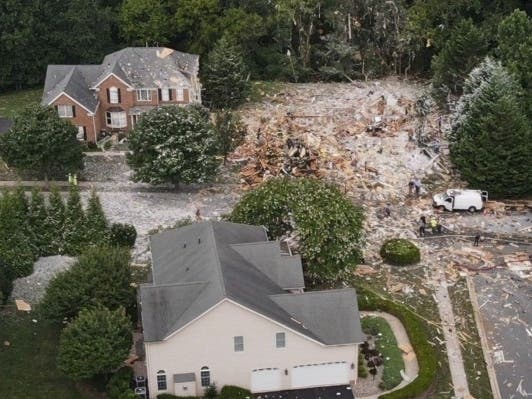
BEL AIR, MD — A Baltimore Gas and Electric call center employee admitted to drinking before heading into work, where he missed a phone call from a utility worker reporting a gas leak — one that ultimately led to a massive explosion that flattened a Bel Air home and killed two people in 2024.
In fact, a report released Wednesday by the National Transportation Safety Board found BGE missed several reports of a suspected gas leak, allowing it to go unaddressed for more than 10 hours before the deadly explosion on Aug. 11, 2024.
Homeowner Ray Corkran Jr., 73, and BGE utility contractor Jose Rodriguez-Alvarado were killed in that explosion. Three others were injured and homes surrounding the house on Arthurs Woods Drive also were damaged.
Find out what's happening in Bel Airfor free with the latest updates from Patch.
What Led To The Explosion
According to the report, the warning signs began the night before the explosion.
Around 8:27 p.m. on Aug. 10, 2024, a passerby reported smelling natural gas in the neighborhood. Minutes later, a BGE electric technician responding to a report of a power outage at the Corkran home also smelled natural gas and reported it, in addition to finding an electrical fault nearby.
Find out what's happening in Bel Airfor free with the latest updates from Patch.
But investigators stated in the report that the suspected gas leak was never checked at the correct address.
Instead, a gas technician was sent to a nearby home roughly two-tenths of a mile away after a dispatcher failed to relay the correct location, according to the report. The technician found no leak there and left without ever inspecting the Corkran property, investigators learned.
Hours later, just before dawn, a county water service technician preparing the Corkran home for electrical repairs smelled natural gas and heard it hissing. He repeatedly tried calling BGE's emergency line but couldn't reach anyone, the report stated.
Investigators later determined his calls were routed to an on-duty call center employee who admitted he had been drinking before accepting an unscheduled overtime shift and had fallen asleep at his desk, according to the report.
The county worker notified his supervisor, who reached BGE around 6:22 a.m. to report what investigators classified as a "strong gas leak," which included the sound of escaping gas.
According to the report, a county worker repeatedly tried to report the issue to Exelon before the explosion, but each call also appeared to go unanswered after the automated system went blank. Investigators later determined the calls had been routed to an on-duty, on-call agent who failed to respond.
Twenty-six minutes later, at approximately 6:48 a.m., the Bel Air house exploded.
The Explosion's Aftermath
A home next door to the explosion was heavily damaged, and a woman in that house was treated for injuries, according to Oliver Alkire, a master deputy with the fire marshal's office. Photos of the scene show the house that exploded reduced to a pile of rubble. A neighboring home appeared to have a partially collapsed roof and a massive hole in its siding, Patch reported previously.
"I've been on the job for nearly 18 years, and this is one of the largest explosions I've seen," Alkire said.
Less than two hours after the explosion, emergency personnel found the BGE contractor, who was pronounced dead at the scene. Nearly eight hours after that, they reported they had discovered another deceased person, believed to be the 73-year-old homeowner, Patch reported previously.
The NTSB determined the leak began after electrical service lines and a plastic natural gas service line were installed together in the same trench. Investigators found an electrical fault generated enough heat to damage the plastic gas pipe, allowing natural gas to escape, drift into the home and ignite.
In its final report, the NTSB concluded the probable cause of the explosion was BGE's ineffective responses to reports of the suspected gas leak, which allowed it to remain unrepaired for more than 10 hours after the damage occurred.
Because BGE did not perform post-accident drug or alcohol testing on the call center employee who told investigators he had been drinking before going into work, investigators said they could not determine for certain whether impairment played a role in the home explosion.
Since the explosion, BGE said it has also taken the following steps to enhance the safety, reliability and performance of its system and employees:
- Implemented refresher trainings reemphasizing proactive safety measures and gas and electric emergency processes.
- Reinforced facility procedures with craft employees and an enhanced process to ensure employees responding to issues at these locations can maintain the safety of the gas and electric systems.
- Requiring overnight call-center employees to manually answer emergency calls.
- Requiring electric crews to remain at scenes involving common gas and electric trenches until gas technicians arrive.
- Launching a pilot program to provide natural gas alarms to customers.
Related:
House Explosion Leaves 2 Dead, 12 Families Displaced In Bel Air
2 Victims In Sunday's Bel Air Home Explosion Identified: Maryland Fire Marshal
Bel Air House Explosion Report By NTSB Outlines Events Leading Up To The Deadly Blast
Get more local news delivered straight to your inbox. Sign up for free Patch newsletters and alerts.