Business & Tech
Regenerative Organic Teaching, Research Farm Raises African, Caribbean Veggies
Asawana Farms grows African and Caribbean vegetables, and shares farming techniques with refugees displaced by conflict.


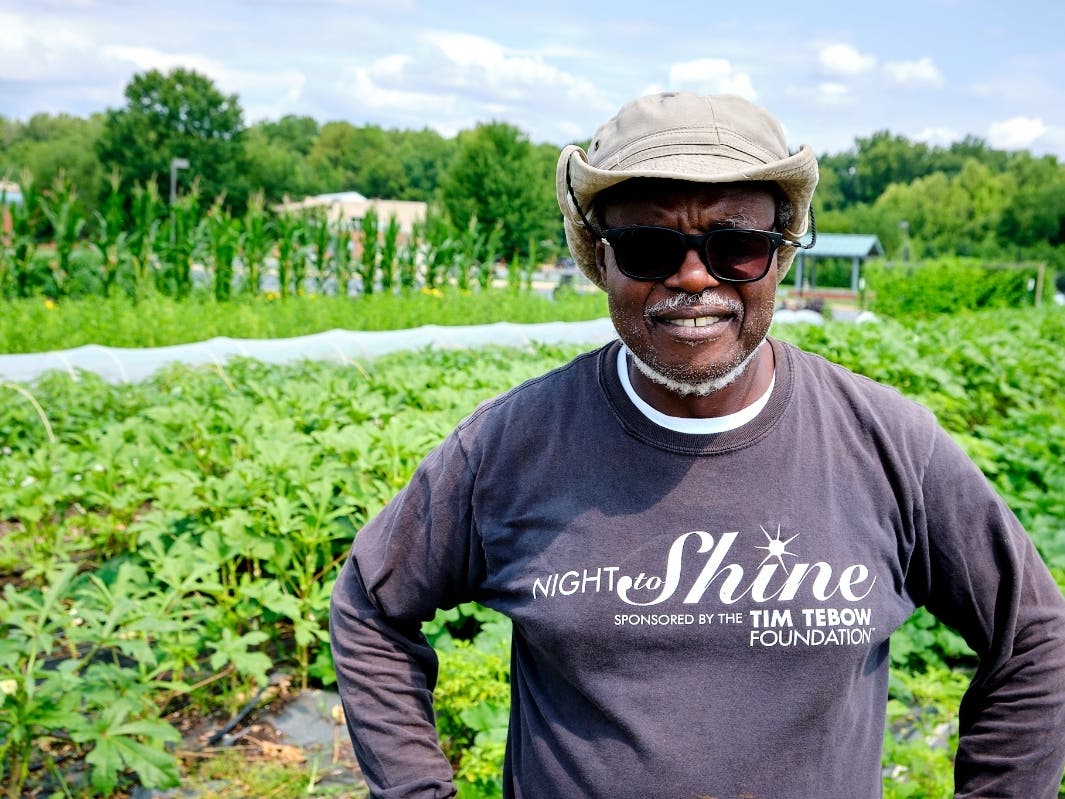
UPPER MARLBORO, MD — From bitter leaf and African eggplant to moringa and okra, an Upper Marlboro farm focuses on more than growing vegetables - it's helping families reconnect with their cultural roots, teaching residents how to grow their own food and sharing agricultural knowledge with refugees thousands of miles away.
Asawana Farms, founded by Isaac Zama in 2022, specializes in raising African and Caribbean vegetables while promoting what Zama calls a "food as medicine" approach to farming.
Find out what's happening in Bowiefor free with the latest updates from Patch.
"I started the farm in the summer of 2022, right in the middle of the COVID-19 pandemic," Zama told Patch. "That was a time when a lot of people started paying closer attention to where their food comes from and how fragile our food system can be. For me, it was a call to go back to my roots."
Zama grew up farming in Njong, a village in Bamenda in Southern Cameroons, where his mother taught him about cultivating vegetables and using traditional plants. He later earned a doctorate at the University of Wisconsin-Madison, studying international agriculture and rural development.
Find out what's happening in Bowiefor free with the latest updates from Patch.
"Asawana Farms brings those two parts of my life together: what I learned in the field as a child from my mother and what I learned in the classroom," Zama told Patch. "Today, Asawana Farms is a regenerative organic teaching and research farm focused on reconnecting food, health, culture and community.
"We grow culturally important Afro-Caribbean and African specialty crops, but we also use the farm as a classroom. We teach people how to grow their own food, introduce them to crops and traditional food knowledge that has been passed down through generations, and encourage them to think more intentionally about the relationship between what they eat and their overall health," Zama said.
The farm got its start through the Watkins Park agricultural incubator, which provided space to grow specialty vegetables. What began as a personal interest has evolved into an agricultural education and community health initiative.
"What began as a hobby has grown into a Food as Medicine mission. We grow fresh, culturally meaningful crops. We teach families how to grow their own food. We also work with health and community partners, like the University of Maryland Capital Region Medical Center, to make nutritious food easier for people to access," Zama said.
Connecting Families To Their Roots
Among the farm's crops are bitter leaf, bitter melon, moringa, ugu, okra, African eggplant, scent leaf, callaloo, waterleaf, jute leaf, sweet potato leaves, habanero peppers and Scotch bonnet peppers.
More familiar vegetables, including kale, collards, lettuce and Swiss chard, also are grown. Some of the African and Caribbean vegetables can be difficult to find fresh in American grocery stores.
"What makes many of these crops special is that they are more than vegetables to the communities we serve. They carry cultural memories, traditional knowledge, and nutritional value," Zama said. "Many people tell us that what they value most is not only having access to fresh produce, but also having a place where they can learn, reconnect with familiar foods, and feel part of a community.
"We also grow some of these crops specifically because they can be difficult to find fresh in the United States. By growing them locally in Prince George’s County, we are helping families reconnect with foods they know from home while also introducing them to people who may be encountering these vegetables for the first time," he told Patch.
The farm's health-focused mission grew from Zama's childhood experiences in a community where medical care was difficult to access.
"The purpose and mission of Asawana Farms are deeply personal to me. I grew up in a small village in Southern Cameroons where the nearest dispensary or medical facility was about five miles away, and the nearest hospital was almost 100 miles away," Zama said. "Because access to medical care was limited, my mother often relied on herbs and vegetables that she grew herself to care for us when we were sick."
Those memories eventually helped shape the farm's emphasis on nutrition, cultural food traditions and agricultural education.
"For me, Food as Medicine is not simply a slogan. It comes from lived experience and from the knowledge my mother passed down to me," Zama told Patch.
Helping Refugees Overseas
The farm also supports an agricultural education initiative benefiting people displaced by the conflict in Southern Cameroons.
As the 6-year-old civil war in La Republique and Southern Cameroons was turning out thousands of refugees and IDPs, so Zama founded Amba Farmers Voice in 2019 as an educational program to teach refugees and IDPs, simple and practical methods of growing food with very little resources.
The project is done in collaboration with Southern Cameroons Broadcasting Corporation, also known as SCBC TV. The program uses television, videos and agricultural training to help refugees and internally displaced families grow food with limited land, equipment and money.
"Our work with refugees is primarily educational," Zama said. "We use the farm as a place to test, demonstrate and refine practical farming methods that can then be shared with Southern Cameroonian refugees and displaced families living in places such as Nigeria, where they often have very limited land, money, equipment or agricultural inputs."
At Asawana Farms, Zama experiments with growing vegetables in rice bags, five-gallon buckets and other inexpensive containers. He also explores methods of making organic fertilizer from locally available materials and preserving food without costly equipment.
The techniques are shared through Amba Farmers Voice, which has worked with refugee farmers in Nigeria through seed distribution and agricultural training.
"Refugees should not only be viewed as people waiting for assistance. Many of them were farmers, entrepreneurs and hardworking members of their communities before displacement," Zama said.
"If they are given practical knowledge, seeds and simple tools, they can grow food for their families, regain a measure of independence, and rebuild their livelihoods with dignity."
Volunteers Of All Ages Learn
Closer to home, Asawana Farms welcomes high school and college students, families and other community members interested in learning how to grow food.
Volunteers participate in planting, weeding, harvesting, composting, seed saving and preparing grow bags, depending on the season.
"What distinguishes Asawana Farms from other farms is that volunteers learn by doing," Zama told Patch. "We especially encourage young people to participate because one of our goals is to pass farming knowledge on to the next generation and help more people reconnect with the land, food and community."
For residents interested in growing their own African or Caribbean vegetables, Zama recommends starting with a small space rather than worrying about having enough land.
"My first advice is to start small and not be intimidated. You do not need a large farm to grow many of the vegetables we raise at Asawana Farms. A backyard, raised bed, five-gallon bucket, grow bag, or even a small sunny space on a porch or balcony can be enough to begin," Zama told Patch.
Warm-season vegetables such as okra, bitter melon, moringa, ugu and peppers generally need warmer weather. Zama recommends starting some plants indoors before transplanting them after the danger of frost has passed. Healthy soil, compost, mulch, sunlight and regular watering also can help beginning gardeners succeed.
"Most importantly, I encourage people to learn by doing. Farming becomes much easier to understand once you put your hands in the soil," Zama told Patch.
"At Asawana Farms, we teach people that growing food does not have to begin with owning acres of land. It can begin with one grow bag, one container, or one plant. Once someone successfully grows and harvests their own food, it can completely change the way they think about food, health, and self-reliance."
Anyone interested in volunteering at Asawana Farms can sign up through their Eventbrite page.
Get more local news delivered straight to your inbox. Sign up for free Patch newsletters and alerts.