Politics & Government
Hotel Booking Sites to Pay More Tax Under Change in Law
Anne Arundel County Council discusses a possible loophole in the law. More tax revenue would be generated by the change.
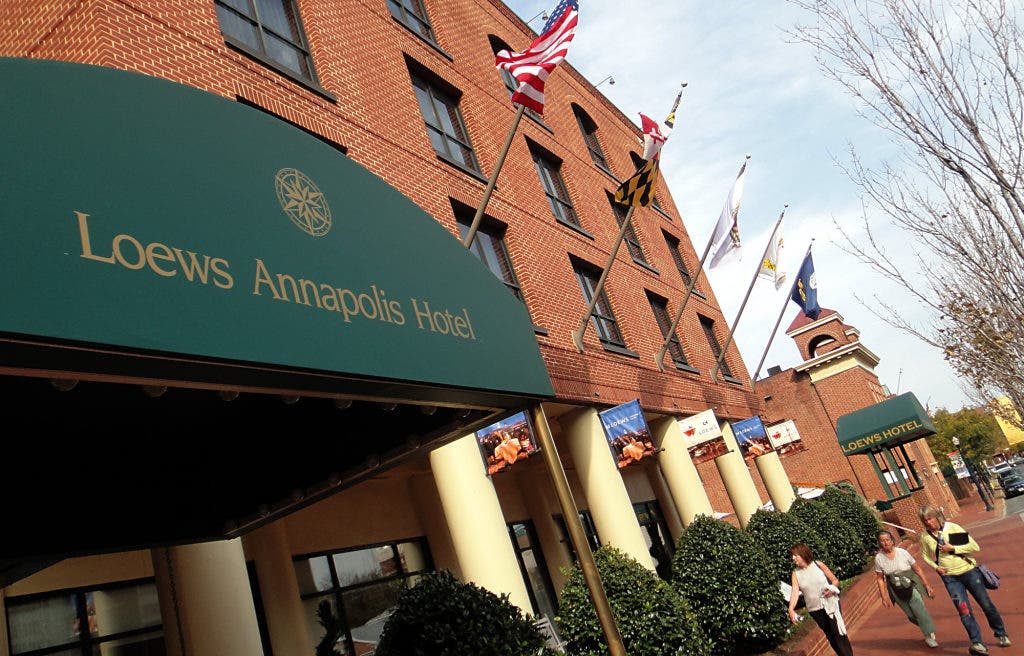
Online hotel booking sites like Expedia and Travelocity would have to pay more in hotel taxes toward the county if new legislation is passed next month.
When customers book a hotel room through an online travel company, the county gets a 7 percent cut of the room through the hotel tax. But what exactly is being taxed? The full amount customers pay, or the discounted rate these companies pay through their arrangements with local hotels?
County officials say these websites have only been paying taxes on the lower rate, not the amount they charge customers. By changing the county’s hotel tax language, they hope to close what they called a loophole in the law.
Find out what's happening in Broadneckfor free with the latest updates from Patch.
Alan Friedman, the director of government relations in Anne Arundel County, said Monday night at the county council meeting that the issue of how these companies construe the amount owed on hotel tax is being examined in more than 50 jurisdictions nationwide, and it’s time Anne Arundel County took a stand.
“The administration strongly believes this is a fairness issue with respect to the collection of taxes and with respect to consumers,” Friedman said. “They’re only remitting taxes on the wholesale rate, not the retail rate.”
Find out what's happening in Broadneckfor free with the latest updates from Patch.
Friedman said he conducted an experiment this week by calling several area hotels, and some near Baltimore-Washington International airport, and compared their prices to those offered online. What he found was that the hotel price and online prices were comparable, about $150 in one hotel, but when fees and taxes were added, the totals proved the online prices to be slightly higher, $6 more in the aforementioned hotel.
“As a consumer, I am a little upset I am being charged a tax, but I am not being told what the amount is upon what that rate is calculated,” Friedman said.
The significance of that, said District 2 Councilman John Grasso, is that these companies appear to be charging slightly more than the hotel rate but end up remitting a tax based on the lower rate they pay the hotel, and pocket the remainder.
“They’re actually collecting the tax money from people and using that as a profit,” Grasso said.
A proposed change in the language for the hotel tax would spell out that online vendors must pay taxes not only the discounted rate, but also the difference between that and the amount that they charge customers.
As it stands, the county makes about $15 million annually through the hotel tax. But Friedman said if this new legislation passed, it would definitely provide increased revenue for the county’s general fund, but exactly how much remains to be seen.
But the legislation might not go over so smoothly. Representatives of Internet travel services were in attendance at the county council meeting Monday night, ready to defend their company’s activities.
Colin Tooze, the director of government and corporate affairs for Expedia, said that the “room rate” is being taxed appropriately, and that his company sees this legislation as imposing an unwarranted tax increase on the service they provide to the tourism industry.
“For the first time in Anne Arundel County, a lodging tax would be applied to a service fee. So yes, it’s a tax increase, undoubtedly,” he said.
If this legislation passed, the added cost would likely be borne on the backs of consumers, not the company, Tooze said.
“Historically, in other retail settings, taxes tend to trickle down to the consumer,” he said.
After an hour of deliberation, District 7 Councilman Jerry Walker requested the bill be tabled until next month so they could have time to process the new information. The bill will be up for a vote at the next county council meeting, set for Nov. 7.