Politics & Government
Robert Catlin: 'Progress is Being Made in the City and in District 2'
Councilman Robert Catlin runs for his eighth term on the city council in District 2.

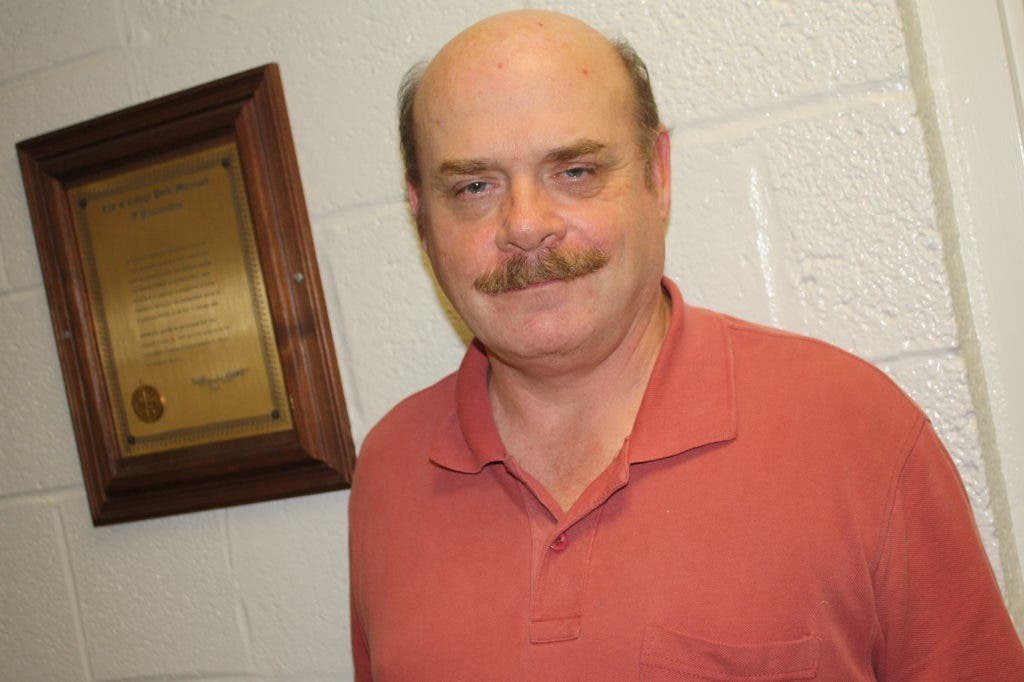
Although he originally planned to step down at the end of this term, Councilman will run for an eighth term on the city council in District 2.
Catlin has two degrees in economics and worked for the Federal Energy Regulatory Commission. He moved to College Park in 1989 and has served as Mayor Pro Tem since December 2004.
Although the , we think it's important to get Catlin's viewpoints out there. Patch e-mailed Catlin with some questions, and here are his responses.
Find out what's happening in College Parkfor free with the latest updates from Patch.
College Park Patch: As you look back over the past 14 years that you've been on council, which of your contributions makes you most proud?
Robert Catlin: I will focus on three financial examples of things I have accomplished that otherwise would very likely not have happened. In 2001, while researching commercial tax policy options, I discovered that the commercial properties in north College Park near the CSX railroad tracks were not being billed city real property taxes by the County and apparently had not since the 1980s. The city revenue generated from that discovery far exceeds my salary on the council.
Find out what's happening in College Parkfor free with the latest updates from Patch.
In 2004 I persuaded my colleagues on the council to decrease the city’s Homestead Tax Credit rate from 10 percent to 1 percent. In 2008 it was increased to 4 percent where it remains today. Those changes saved the average College Park homeowner approximately $1,000 in city property taxes over the past seven years and will continue to save most homeowners money for the next few years.
Finally, in 2009, I persuaded my colleagues to piggyback on the state’s Homeowner Tax Credit program to provide property tax relief for lower income households. So now, about 200 lower income city property owners receive about $40,000 a year in city property tax relief and the program operates at virtually no administrative cost to the city.
Patch: Do you have any regrets over the past seven terms as councilman?
Catlin: Nothing of any great significance, even looking back with 20-20 hindsight. I have learned a lot however, and so I would probably approach some issues differently now.
Patch: Some have argued that term limits should be instilled for the city council. As a member whose been on council for seven terms already, what's your response, and how long do you want to serve the council?
Catlin: Over the last 20 years the only people I can think of who have advocated for term limits were members of the landlords group (PGPOA). Since I was first elected to office in 1997, counting the new people who will be joining the city council in December, I will have served with more than 30 other council members. Over the past 25 years only a handful of council members served more than three terms. While most council members voluntarily step down after two or three terms, a fairly large number of incumbents have been defeated in their quest for reelection, too. So there is no valid reason for city term limits, as the turnover on the council is high by any measure.
With respect to my time on the city council, I have already served 14 years longer than I had intended when I first ran for office in 1997. I generally have not even decided to run for reelection until July or later. At least twice I stated that I would NOT be running for reelection, including this year. But when no viable candidate emerges by September, I have stepped in to fill the void. That explains my recent proposal to change the city charter to provide a process to fill council vacancies when there is NO candidate for a council seat.
Patch: What is the cultural make up of College Park’s District 2, and what challenges and/or opportunities result from that?
Catlin: District 2 contains a wide mix of residents. It includes the lower portion of north College Park and the old trolley car neighborhoods of Berwyn and Lakeland. Lakeland is one of a small group of historically African-American neighborhoods in the county whose origins go back to the early 20th century. The district includes a large number of university students both on campus and off campus. Off-campus students live in large number in both large apartment complexes and group homes. Both of College Park’s senior housing apartments are in District 2. All of the townhouse developments in the city are in District 2. The district’s makeup means the proportion of people who live in single-family homes is low relative to the rest of the city. While this group of residents are the most politically active, as is normally the case everywhere, I try to approach issues taking into consideration what is appropriate for all residents of the district and the city as a whole.
Patch: What do you feel are the most important issues facing District 2?
Catlin: I believe that the major issues facing District 2 are the same issues that face the city in general: public safety, revitalization of the Route 1 corridor and other commercial areas, better transportation alternatives to people using the automobile, and the need for better public school options.
Patch: What are your motivations for running for re-election?
Catlin: Being on the council is a lot of fun. I have learned a lot and had the opportunity to meet and work with a lot of great people. It is rewarding to work to solve the complex problems that we face. While under our system of government, which places most power in the hands of the state and county governments, it takes seemingly forever to accomplish most things; progress is being made in the city and in District 2.
The new county administration and the new university administration bring exciting possibilities for the city, as these parties are going to work with the city in ways we have not seen before. I have seen a lot in my 14 years on the council and I know how much greater a place the city could be if the city, the county and the university were working together.
While we are getting much closer to resolving the student housing problems of supply and quality, we have made limited progress with respect to reducing crime and improving public school options. These are two areas where further progress would be difficult to achieve without the close collaboration of the county and the university. The knowledge and experience I have gained over 20 active years in the city make me a valuable member of the city council.
Get more local news delivered straight to your inbox. Sign up for free Patch newsletters and alerts.