Community Corner
Students Prepare for Start of Solar Decathlon
University of Maryland team hopes solar-powered, energy efficient WaterShed home will improve upon 2007's second-place finish in the international competition.
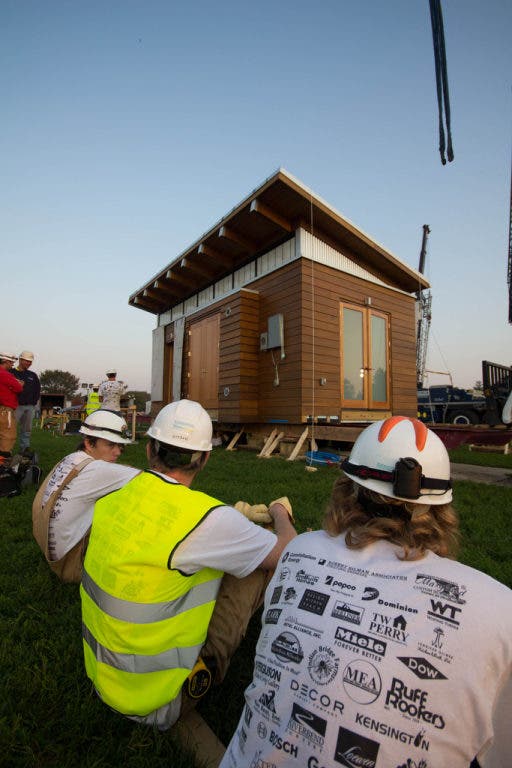


University of Maryland alumna Allison Wilson graduated in May and got a job in Baltimore, but she found a reason to stick around College Park — a sustainable, energy efficient and solar-powered building called WaterShed.
Wilson, along with dozens of University of Maryland students and faculty, is part of a team dedicated to building the WaterShed house for this year’s international student competition, the Solar Decathlon.
After working on the house for almost two years, Wilson felt she couldn’t leave it. She negotiated with her new bosses and is currently splitting her time between her day job and working with WaterShed.
Find out what's happening in College Parkfor free with the latest updates from Patch.
Over 200 students with architecture, engineering, business and environmental science backgrounds, along with a handful of faculty members, have worked on the WaterShed house in some capacity.
“[Working on the house] has allowed me to develop a whole new set of skills that I don’t think I would have learned just by going to class,” said Leah Davies, a Maryland architecture student.
Find out what's happening in College Parkfor free with the latest updates from Patch.
It’s an all-hands-on-deck approach for University of Maryland, as the team hopes to improve on their second-place effort in 2007.
The WaterShed House attempts to integrate the environment into the architectural plans by implementing an edible garden, a plant-covered roof and an artificial wetlands environment surrounding the house.
The house will also feature a number of innovations to help reduce energy demand while still maintaining the comfort of living in the 21st century. Some features include low-flow water fixtures to cut down on water waste, a water-based cooling system to reduce humidity and help cool the air on high-temperature days, and artificial wetlands to filter excess wastewater.
These features might sound futuristic, but Wilson stressed that just about all of the technology used for the project is available on the market for current construction projects. Cost specifics for WaterShed will not be disclosed until the start of the competition.
According to the competition website, cost efficiency, sustainability and attractiveness are all considered when selecting the winning entry.
The house only has about 900 square feet of living space, not including two outdoor deck spaces.
As of press time, the house is currently in the final stages of construction for the start of the U.S. Department of Energy competition, held from Sept. 22 to Oct. 2, 2011 at West Potomac Park near the National Mall. Entry is free to the general public.