Neighbor News
Emily Schindler lecture combines clinical research with powerful personal narratives
Around 80 participate in substance abuse lecture at The Meeting House

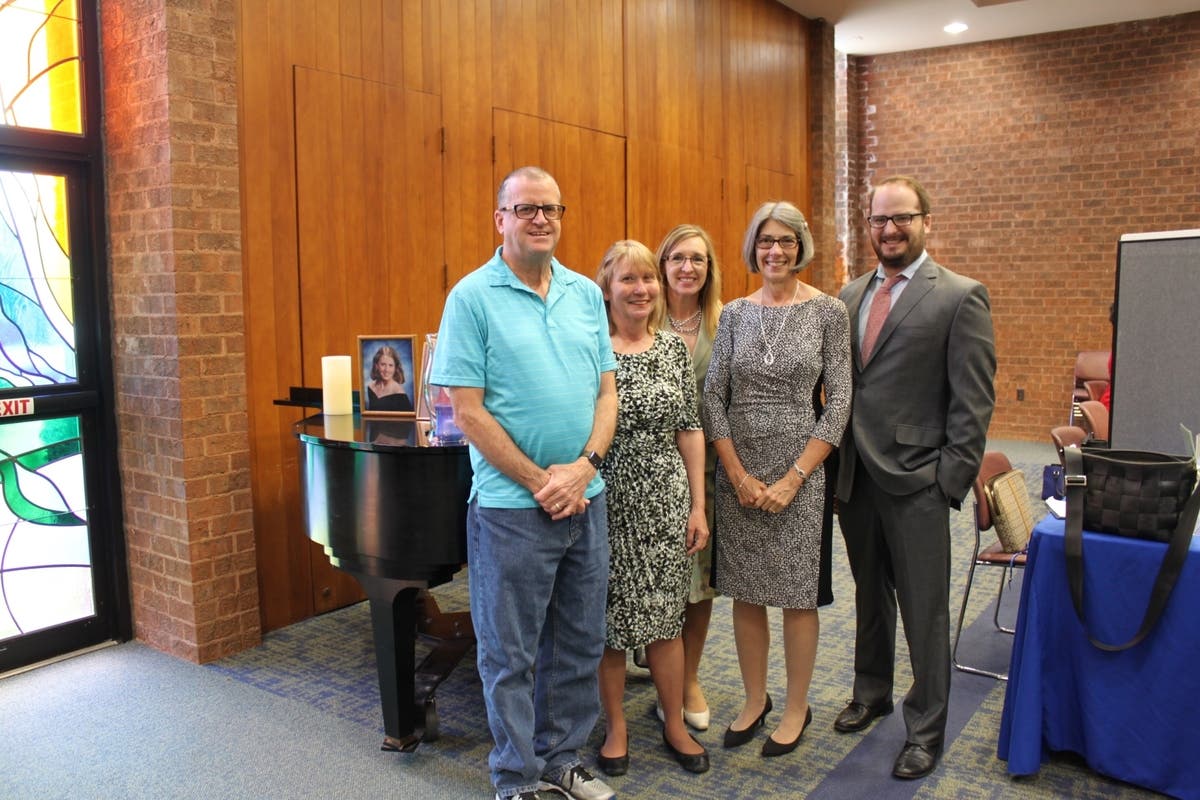
The emotion and shame that comes with the topic of substance abuse can make reasonable and meaningful conversation a difficult goal to achieve. The speakers and panelists who presented at the 12th annual Emily Schindler Memorial Lecture tried to cut through the stigma to provide a fact-based yet still deeply personal educational opportunity.
Around 80 people, many of whom are clinical professionals, attended the lecture hosted by Chesapeake Life Center and held May 3 at The Meeting House in Columbia, Maryland. The first speaker, Dr. D. Andrew Tompkins, an Assistant Professor in the Department of Psychiatry and Behavioral Sciences at Johns Hopkins University School of Medicine, shared his research on opioid use disorders and their treatments.
Nancy Schrum, the coordinator of Anne Arundel County’s overdose prevention initiative, Not My Child, was joined by two panelists Ginger Rosela and Matt Santangelo, who shared how substance abuse affected themselves and their families. Rosela lost her son to an overdose while Santangelo is recovering from addiction.
Find out what's happening in Columbiafor free with the latest updates from Patch.
The final speaker, licensed clinical social worker Susan Coale, Clinical Manager of Bereavement Services for Chesapeake Life Center, addressed a variety of issues facing families suffering from substance abuse loss.
The lecture was created in 2005 through a gift to the Schindler family from the Saint Agnes Cancer Center. Emily Schindler was an 18-year-old freshman at Frostburg State University and a member of the SPY swim team in Severna Park, Maryland, when she was tragically killed in a car accident in 2004.
Find out what's happening in Columbiafor free with the latest updates from Patch.
A program service of Hospice of the Chesapeake, Chesapeake Life Center serves hospice family members and the community with bereavement services and activities aimed at enhancing the quality of life for those grieving the loss of a loved one. For details, visit www.chesapeakelifecenter.org.
PHOTO CAPTIONS
Picture from left are Emily Schindler’s parents, Charles and Jane Schindler; Laurie Harrison, Director of the Chesapeake Life Center; licensed clinical social worker Susan Coale, Clinical Manager of Bereavement Services for Chesapeake Life Center; and Dr. D. Andrew Tompkins, Assistant Professor in the Department of Psychiatry and Behavioral Sciences at Johns Hopkins University School of Medicine.
Dr. D. Andrew Tompkins shares research on how opioids can rapidly change the physiology of the brain to a group of about 80 that included clinical professionals and other members of the community.
Ginger Rosela shares how her son, a star athlete in high school, began what would be his fatal journey with substance abuse after being prescribed pain medicine following an injury.
Nancy Schrum, the coordinator of Anne Arundel County’s overdose prevention initiative, Not My Child, talks about the program before introducing two panelists, Ginger Rosela and Matt Santangelo.