Business & Tech
Howard County Becomes 1st Community Solar Developer In MD
Officials announced Tuesday that Howard County will become the first community solar developer in Maryland with 5 projects on the horizon.


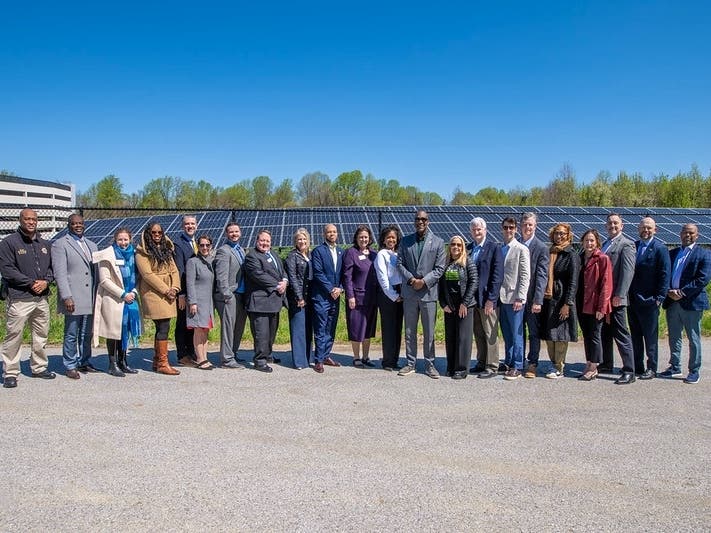
HOWARD COUNTY, MD — County officials unveiled plans Tuesday to become Maryland's first community solar developer.
The plan focuses on bringing discounted solar electricity to low- and moderate-income households.
“Solar energy represents more than just a shift in how we power our homes and businesses; it’s a commitment to a cleaner, more resilient future for Howard County,” said Howard County Executive Calvin Ball. “Through these investments in renewable energy, we are not only prioritizing affordability issues and increasing our energy independence, but we are also protecting our environment, creating opportunities for innovation, jobs and long-term sustainability for generations to come.”
Find out what's happening in Columbiafor free with the latest updates from Patch.
In his proposed fiscal year 2027 capital budget unveiled this past week, Ball included $14 million to advance five county-owned community solar projects that will produce a combined total of about five megawatts of electricity.
This includes the following projects:
Find out what's happening in Columbiafor free with the latest updates from Patch.
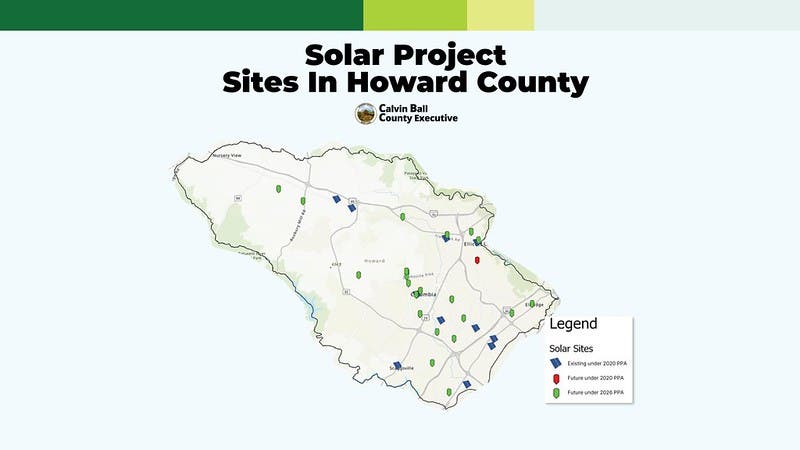
- A ground-mount solar array at the former Carrs Mill Landfill in western Howard County;
- A solar parking canopy at the county’s Ascend One Building in Columbia; and
- Solar parking canopies at the county’s Department of Recreation & Parks’ Blandair Regional Park and Cedar Lane Park in Columbia and Troy Park in Elkridge.
“This is what’s possible when we work together with purpose and partnership. Solar energy is lowering costs, improving air quality and expanding opportunity. With leadership from Gov. Moore and County Executive Calvin Ball, we’re not waiting—we’re building the future together,” said Maryland Secretary of Environment Serena McIlwain.
When completed at the end of 2027, the county plans to make half of the power generated at the Carrs Mill Landfill project available for free to low-income households. The county will then sell the power generated by the four solar parking canopy sites at a 25 percent discount to low- and moderate-income subscribers. This will help more than 500 low- and moderate-income households to lower their electric utility costs.
To support these projects, the Maryland Energy Administration (MEA) has awarded the county with more than $4.427 million in grants. This includes $3.075 million in fiscal year 2025 Community Solar LMI-PPA Grant Program funding towards the Carrs Mill Landfill Community Solar project and $1.352 million in FY 2025 Solar Canopy & Dual Use Technology Grant Program for the four solar canopy projects.
This funding builds upon the more than $6.3 million in grant funding the county has already received or is to receive from MEA to support building upgrades, geothermal heat pump system, creating a microgrid on the county's main government campus and implementing electric idling technology in county ambulances and heavy trucks.
“Howard County has been a leader among local governments – both in Maryland and nationwide – in identifying ways to deploy clean energy to save residents money,” said Eric Coffman, Maryland Energy Administration’s director of energy programs. “The county’s commitment to advance long-term capital projects and identify emerging opportunities has been highly effective at cutting emissions and operating costs. MEA looks forward to the returns on our mutual investments in clean energy projects that control costs for residents and speed Maryland’s progress toward its climate goals.”
In August 2025, the county, Howard County Public School System and Howard Community College signed a memorandum of understanding to work solar provider to develop a solar power purchase agreement to furnish photovoltaic solar projects, including installing and maintaining solar panels on county, HCPSS and HCC properties.
Today Ball announced that the trio will team up to produce another seven megawatts of clean electricity that will yield approximately $12 to $14 million in cost savings across all three institutions, all at no upfront expense to county taxpayers. This agreement will further reduce greenhouse gas pollution as much as taking 33,300 gas-powered cars off the road.
Get more local news delivered straight to your inbox. Sign up for free Patch newsletters and alerts.