Crime & Safety
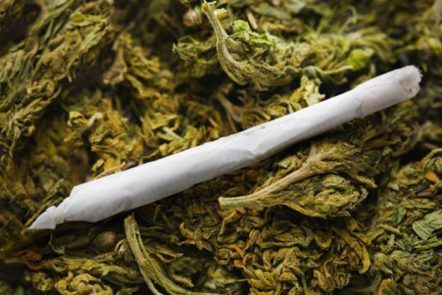
Maryland Has One of the Highest Rates of Marijuana Possession Arrests
Since 2007, Maryland has ranked in the top five states for its marijuana possession arrest rate.


By Christopher Neely
Capital News Service
Maryland is a state with a serious marijuana arrest problem, according to the FBI’s 2011 annual Uniform Crime Report.
With 22,043 arrests for marijuana possession producing an arrest rate of 378 people per 100,000, Maryland ranked among the top five in marijuana possession arrests according to the most recent data available. This is not new for the Free State.
Since 2007, Maryland has been in the top five states in marijuana possession arrest rate.
“I have no idea why these numbers are so high,” said state Sen. Bobby Zirkin, D-Baltimore County, who is an advocate for marijuana decriminalization in Maryland. “The numbers are shocking and staggering.
Experts say the numbers are in part the result of the war on drugs being focused on petty marijuana possession arrests starting in the 1990s. Some also attribute much of the increase to then-Baltimore Mayor and now Gov. Martin O’Malley, who helped introduce both statistics driven policing and zero tolerance policies to the state.
Because of issues with reporting statistics to the FBI, it cannot be said for sure where in the top five Maryland ranks. While most states and cities participate, reporting crime statistics is voluntary, and some places choose not to report.
The 2000s, O’Malley and the rise of Compstat
From 2000-2007, Maryland’s overall marijuana possession arrest rate rose by 4,916 arrests per year, or 28 percent statewide.
During the same time period, Baltimore’s marijuana arrest rate surged by 3,686 arrests per year - more than 155 percent.
O’Malley was elected Baltimore mayor in 1999 in a landslide victory, replacing former Mayor Kurt Schmoke.
O’Malley ran on an anti-crime platform, advocating for “zero tolerance” policing. As a Baltimore city councilman, O’Malley studied the drop in crime in New York City after “zero tolerance” was implemented and pushed for Baltimore to adopt the same policy.
“Zero tolerance” is a policing strategy that increases the focus on minor, non-violent offenses. The idea is based on the “broken windows” theory, which says if minor offenses are not met with strict enforcement, overall crime will increase.
“Upon taking office, Baltimore averaged 300-plus murders annually and the city was rapidly losing ground in the war on drugs on its street corners,” O’Malley’s office said in an emailed statement in response to questions from Capital News Service.
O’Malley’s first duty as mayor was to find a new police commissioner. In an attempt to mirror New York City’s crime reduction, O’Malley hired Ed Norris, a 20-year veteran of the New York City Police Department to set up a CompStat system for Baltimore. This new statistics-driven system was based on police department accountability and created a mapping system of crime type and location.
Norris lasted until 2002 as police commissioner. O’Malley, committed to the New York technique of crime-fighting, replaced Norris with former NYPD Deputy Chief Kevin Clark. Clark had been on the department’s Organized Crime Control Bureau’s Narcotics Division.
Maj. Neill Franklin, a retired officer of both the Baltimore Police Department and Maryland State Police Department, said Clark felt strongly about curbing drugs on the street.
“I remember him (Clark) saying that our main crime problem in the streets was drugs and that we were going to hit that hard and make more drug-related arrests,” Franklin said.
Franklin said Clark created the “Organized Crime Division” which was basically a narcotics team of more than 300 officers.
O’Malley and his new New York City style of crime-fighting watched as Baltimore alone accounted for 75 percent of the increase in the marijuana arrest rate in Maryland.
“There is undoubtedly a correlation between higher petty marijuana possession arrest rates and the CompStat and “zero tolerance” policies brought in by O’Malley,” Franklin said.
O’Malley’s office argues the policies were necessary because of the level of crime at the time.
“Then-Mayor O'Malley took steps he felt were necessary to ensure the safety and security of one of the most crime-ridden cities in the nation,” O’Malley’s office said in an emailed statement.
The Baltimore Police Department dropped “zero tolerance” in 2007, the year O’Malley left for state office, but “stop and frisk” techniques still live on.
“Stop and frisk” is a controversial technique that allows officers to stop people at will under suspicion that they may be carrying a concealed weapon.
Currently, Franklin said there is a stronger focus on getting guns off the street. But even if an officer’s main focus is searching a person for weapons, suspicion of marijuana possession is a great tool for law enforcement to initiate a “stop and frisk” on a person walking the streets.
Potential changes in Maryland
Times are changing. States like Washington and Colorado have legalized recreational use of the drug, and more states are jumping on the decriminalization bandwagon.
Maryland looked like it was starting to open up when the state passed a medical marijuana bill last year, however, the final bill only created a commission to oversee medical marijuana programs at academic medical research centers that choose to participate.
But according to a recent poll conducted by Democratic-affiliated Public Policy Polling, 68 percent of Marylanders support decriminalization. Fifty-three percent support legalization similar to Colorado and Washington.
Decriminalization bills are being reintroduced in Maryland by Sen. Zirkin and Sen. Allan Kittleman, R-Howard, after failing to come to a vote in the House last year. In addition, Senate President Thomas V. “Mike” Miller Jr. told The Washington Post in an interview recently that he favors regulated legalization.
Gubernatorial candidate Delegate Heather Mizeur, D-Montgomery County, also favors legalizing, regulating and taxing marijuana.
But O’Malley said Wednesday on the “Annapolis Summit” radio broadcast of the Marc Steiner show that he is against legalization.
“I’m not much in favor of it … because I’ve seen what drug addiction has done to the people of our state,” O’Malley said during the show. “I also know that this drug, and it’s use — it’s abuse — can be a gateway to even more harmful behavior.”
Get more local news delivered straight to your inbox. Sign up for free Patch newsletters and alerts.