Community Corner
Historic Homes Help Tell the Story of Essex
Homes provide insight into some of the community's first settlers, some of whom date back to pre-revolutionary times
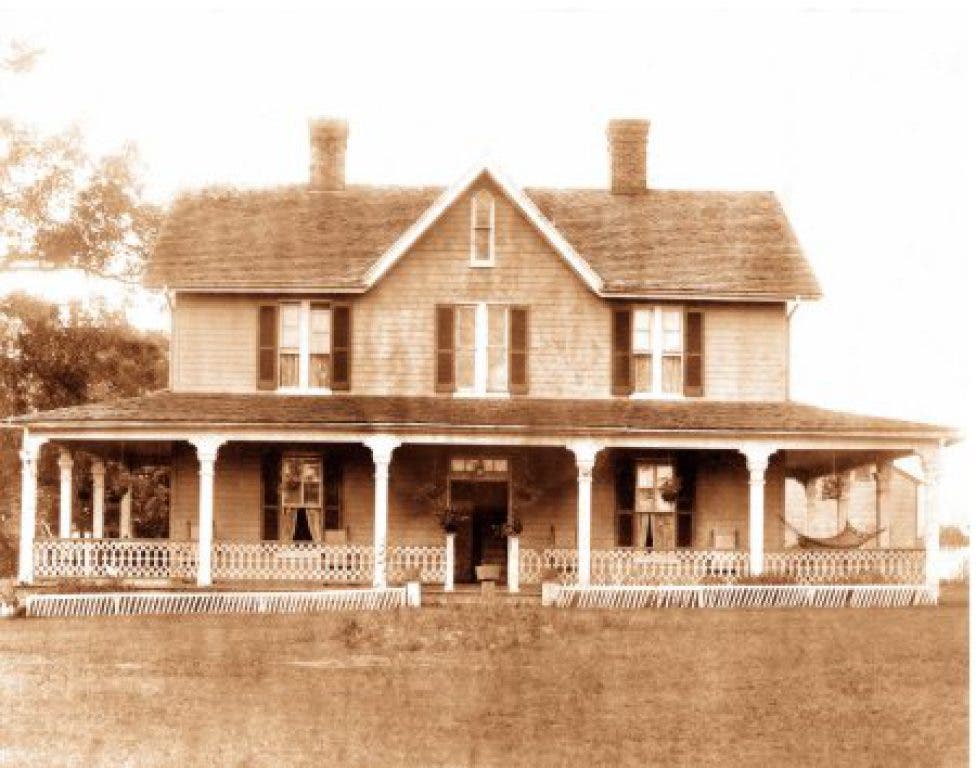


As a teenager, back what seems like 50 years ago, one of the first things I did when I got my drivers license was just drive anywhere and everywhere.
With no particular place to go, I just drove for the sake of driving. Going down roads I had never been on before and seeing places and things that I had never seen before. One of the sites that intrigued me the most (and sort of began my journey as an amateur history buff) was a very odd and old looking farmhouse near the end of Walnut Grove Road.
Even though I had no formal training in architecture or history, I could tell right away from the worn condition of the structure along with its two fireplaces and gothic style windows that it was certainly a home that would date before the 20th century. I really did not think about the home anymore until around the early 1980’s when I began researching and gathering information for a dream of mine: to write a book on the history of the Back River Neck Peninsula.
Find out what's happening in Essex-Middle Riverfor free with the latest updates from Patch.
One of the very first old maps I obtained many years ago was J. C. Sydney’s 1850 Map of Baltimore City & County. The house is clearly delineated on this map as being in the ownership of an S. Merryman. Subsequent maps dated 1857, 1877, 1898, and 1915 all show the house under different ownerships.
A plat of the property dated 1903 shows the site containing 181 ¼ acres, 94 ¼ of which was cleared land, 62 acres of wood and 25 acres of marsh. The land was called Walnut Grove and listed under the estate of Emma Lee Merriken.
Find out what's happening in Essex-Middle Riverfor free with the latest updates from Patch.
Very recently, I accidentally stumbled across a web site (500walnutgrove.com) dedicated to the house. It confirmed some of the data I had already collected. The web page traced the property back to a land grant dated 1664 and granted unto Owen Spry. Mr. Spry called the land Hunting Creek.
Tax records indicated that the next owner of the land was a Daniel Palmer, who was an established tobacco grower. A man by the name of Nicholas Merryman is said to have owned the property as early as 1840. It is presumed that Merryman built the house sometime between 1840 and 1862.
Sometime around 2000, the property was sold off, divided into around 120 individual lots, and developed as “Walnut Point." The old farmhouse was saved and underwent a major restoration effort in 2002. The house is somewhat difficult to find now because while Walnut Grove Road was once a continuous street, the new development has split it up.
Near the intersection of Back River Neck and Turkey Point roads stand a small unassuming white house. The casual passerby would have no idea of the significance of the tiny house to the history of our community, but the story behind the house is closely intertwined with the growth of our area. Not as much as a living quarters (even though it was built in the 19th century) but more for the family who settled the land.
Elisha and Arabel Hughes constructed the house sometime around 1890. Loyal readers to this column might recall that Elisha donated part of his land for the building of the original Back River Methodist Church back in 1888. Descendants of Elisha continue to live nearby the house and church to this day. Elisha was considered one of the first men in the county to earn a living as a commercial waterman.
Elisha and his brothers William and John were very prominent people and large landowners on the Back and Middle River Necks, but it is probably their ancestors who are better known for growing and shaping Baltimore County. Elisha’s parents, Henry and Elizabeth (Carback) Hughes were also prominent landholders on the Back River Neck and extremely active in the Methodist Church.
Elizabeth’s father John Carback was a very important minister in the Methodist Church. Carback's dwelling is markedly shown on Sydney’s 1850 map. If you drive down present day Route 702, just before you get to the terminus onto Back River Neck Road, look to your right and you will see a clearing with a white house located on it. I have heard stories that the current house was built around the log cabin John Carback resided in during the 1840’s and 1850’s.
The Carbacks can trace their history in the area to pre- revolutionary times. Author and professor Neal Brooks has said on many occasions that the Carbacks are one of the pioneering families of Baltimore County.
In future columns we will examine some of the other older homes in our community that you have been asking me to discuss. Next week, “Gone but not Forgotten”, a look at landmarks that are no longer with us.