Community Corner
Stansbury Family Linked with History of Middle River
Pioneering family settled in the area in the late 1650s.
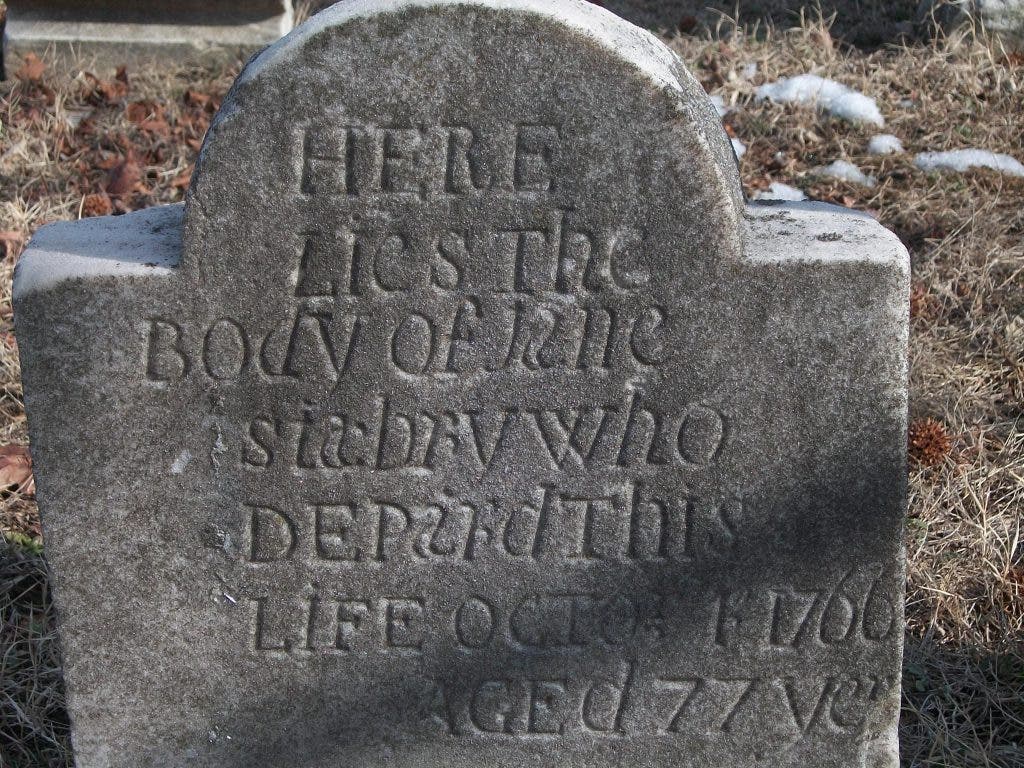


The Stansbury Family is one of the pioneering families of Baltimore County, and they have a long history of prominence throughout the Patapsco, Back, and Middle River Necks as well as other parts of the county.
Over the years, they have been mentioned in print by many well-known authors discussing the county's history. Their legacy can still be seen in certain areas even today.
I want to begin this column by thanking my good friend Betty Christopher. Many years ago, Betty gave me a copy of a book entitled “Kindred, The Davis-Stansbury Lines" written by Helen E. Davis in 1977. Much of the information derived in this column comes from that book, as well as other sources.
Find out what's happening in Essex-Middle Riverfor free with the latest updates from Patch.
Through research, it has been found that although the spelling of the names has changed many times over the years, Detmar and Reuska Stansbury were probably the first members of the family to arrive in Baltimore County sometime around 1658. They were more than likely indentured servants to a landholder by the name of Thomas Bradley.
One of their children, Tobias Stansbury was assigned approximately 100 acres near Bear Creek in 1671. In those days, settlers were still prone to attacks from Indians so “Rangers” were formed to patrol the area to protect residents from these attacks. Tobias was named a lieutenant of this Ranger force. Tobias passed away in 1709.
Find out what's happening in Essex-Middle Riverfor free with the latest updates from Patch.
The second child of Tobias and his wife Sarah Raven was born in 1678 and was named Thomas. He was the twin brother to Daniel Stansbury. In 1710, Thomas married Jane Hayes and they began to raise a family of six children. The headstones of Thomas and Jane as well as Thomas' younger brother Luke are located within a fenced-in section of Rocky Point Golf Course.
Two of Thomas and Jane’s children played a very important role in the early settlement of the Back River Neck peninsula. The homes that they constructed can still be seen. One as it was originally constructed and one that has been rebuilt, and placed on the historic landmarks list.
Edmund Stansbury (1724-1780) inherited land bordering Back River sometime in the 1760’s. The land was originally part of a “Manor” entitled “Danby.” Edmund built the home we now know as the Somogyi Farmhouse just off Back River Neck Road. The exact date the home was constructed is unknown, but many local historians have traced its roots back to the 1760’s.
The brick used was imported from England. There is a space of about 18 inches between the exterior and interior walls that was filled with horsehair to act as insulation. With only a few changes such as the introduction of modern conveniences like electricity and indoor plumbing, the home remains today as it was originally constructed. It remains in private ownership, so I would encourage those interested to view it from Bay Avenue and not trespass on the property itself.
Dixon Stansbury (1720-1805), brother of Edmund, through his wife Penelope Body, inherited 37 acres of land near Rocky Point in 1783. A few years later he paid taxes on his brother-in-law's adjoining property. It is on this site that Dixon constructed the first sections of what we now know as the Ballestone-Stansbury House.
Again, the exact date the house was built is unknown, but many scholars put it as sometime in the 1780’s. It remained in the Stansbury family until about 1819. Ballestone-Stansbury is open to the public at certain times during the year, and they hold many seasonal events such as Halloween and Christmas tours.
Another important Stansbury to mention is Carville Stanbury. Carville, who is listed as being from Stemmers Run, was a well-liked man who served in the Maryland General Assembly beginning in 1844. He was also a Delegate to the Democratic National Convention in 1860. A book entitled “History of Baltimore City and County," written by Thomas Scharf in 1881 mentions the Carville Stansbury mansion that was located on the Back River peninsula and burned to the ground in 1865. It was stated that the home had been in the Stansbury family for almost 200 years.
Many other lesser-known Stansbury family members have distinguished themselves in other activities over the years. Stansburys served bravely and proudly in the Revolutionary, 1812 and Civil Wars. Others have been appointed or elected to many positions and commissions such as school boards, election commissions, and more.
Tobias E. Stansbury served in the General Assembly from 1800-1815 and again from 1819-1823. In six of those years he served as Speaker of the House. Dixon Stansbury Jr. served in the state legislature from 1831-1839. Elijah Stansbury Jr. distinguished himself in the War of 1812 and was later elected Mayor of Baltimore.
Today, in addition to the two aforementioned homes, we can see the Stansbury name on places such as Stansbury Park and Stansbury Point in Dundalk; and Stansbury Creek and Stansbury Estates in Middle River.