Schools
Animals Have Feelings Too, Says Guest Lecturer at Northwest High School
Local author, activist and researcher Jonathan Balcombe talked to students about animal behavior and responsible meat consumption.
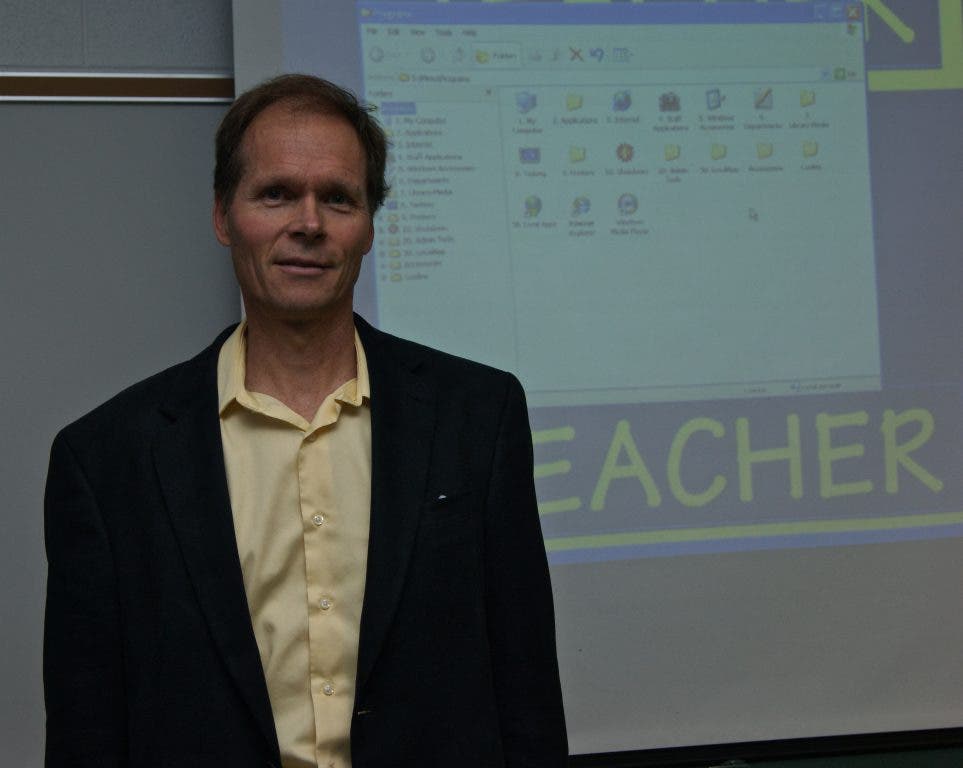
If you ask Dr. Jonathan Balcombe, the most lethal weapon is not the H-bomb or even Mel Gibson in the 1987 film of the same name. Balcombe, an animal behavior researcher, considers a common dinner fork the most potent weapon, closely followed by chopsticks as China rises to become the world’s leading meat consumer.
Speaking to students at Northwest High School on Tuesday the author, who also lectures on humane treatment of animals, said that while humans have made strides to fix the “might makes right” notion in social interactions between humans, the area of human-animal interaction has been neglected.
“We learn the oldest lesson in the book when it comes to our relationships with animals,” Balcombe said, “and that is: They are here for us and we can do with them as we please.”
Find out what's happening in Germantownfor free with the latest updates from Patch.
Balcombe argues that that animals have the capacity to feel and can hold memories. His latest book, “The Exultant Ark: A Pictorial Tour of Animal Pleasure” is a collection of a range of animal pleasure from a young male elk cub sticking out his tongue to catch a snowflake to two polar bears engaged in a wrestling match.
During his talk with students, Balcombe cited research that found caged birds were pessimistic and that sheep could recognize the faces other sheep two years after leaving a herd. He also presented evidence --- a YouTube clip --- that suggested chimps had better spatial memory than humans.
Find out what's happening in Germantownfor free with the latest updates from Patch.
Balcombe said that while most people worry about the carbon footprint they leave behind, meat consumption has a higher impact because of greenhouse gases like methane and nitrous oxide, which are more potent than carbon dioxide. He challenged students to try a meatless diet for 30 days.
“It is not how you get to the supermarket, he said, “it is what you buy there that is more important to the environment.”
Sennay Ghendot, a junior is not sure how well he would do without meat for a month. While he has successfully done it before, he is not sure how long he would last this time around.
“I tried during Lent to give up meat and it was hard,” he said. “It was a challenge but I felt good inside. May be I will try to last for five days before going into withdrawal and depression.”
Humane and healthier consumption resounded with Monica Aragon, also a junior at the school, who said she has been a vegetarian for three years.
“I believe animals have feelings and emotions just like us and they should not be eliminated by us who most of us do not feel that way,” she said. “I believe that I am doing completely fine without the consumption of meat.”
A student wanted to know if bugs feel pain and where to draw the line on sentience. Balcombe said while the jury is still out on lower animals and plant sentience, biological magnification --- when humans or animals higher up in the food chain take in more toxins as they eat the fatty tissues of lower animals --- has been linked to health problems such as cancer and diabetes.