Community Corner
Is the TV Your Go-To Babysitter?
How television-watching affects the parent-child relationship
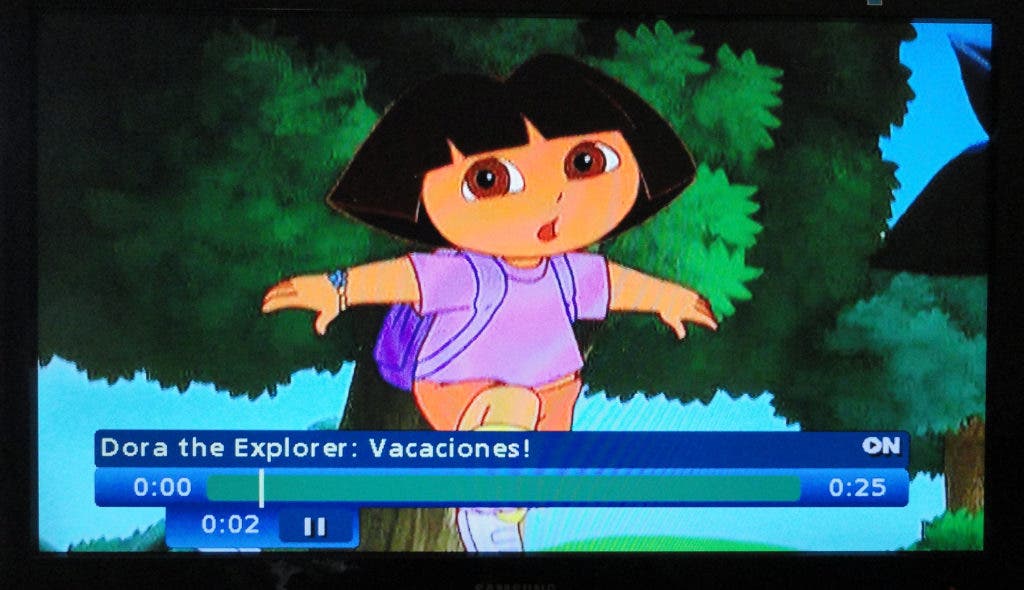
Let’s be honest. Every parent, at one point or another, has opted to use the television as a babysitter. Maybe it’s for five minutes so you can scarf down a meal, or maybe you watch together for 15 minutes so you just don’t have to be “on” for a brief moment in time. TV isn’t a bad thing in spurts, but making TV-watching a habit for your little one – whether you’re viewing together or separately – could be detrimental to your bond with your child.
Some folks say they learn a foreign language by avidly sucking up television shows in that language, but the same does not go for a child who’s just learning to speak. A recent study published in Human Communication Research shows that watching TV can lead to less interaction between parents and children, with a detrimental impact on literacy and language skills.
Sure, there are educational shows and there are entertaining cartoons. Dora may be “talking” to your child or teaching her a few words in Spanish, but it just isn’t the same as mom reading a book with her son or daughter. The study particularly focused on “maternal responsiveness.” Meaning, there are significant differences in the way moms communicate with their kids while engaged with the TV, toys, or books – and the level of maternal responsiveness plays a key role in a child’s literacy and cognitive development.
Find out what's happening in Germantownfor free with the latest updates from Patch.
“When a mother and child are focusing on the same object, the mother’s response can have an important impact on their child’s understanding and self-perception,” says Amy Nathanson, one of the scientists who conducted the study. Think about it: TV-watching doesn’t necessarily lend itself to interaction. The TV pretty much invites you to tune in and zone out. When you and your child read a book together, don’t you find yourself pointing out what’s going on in the accompanying pictures or prompting conversations by asking your child questions about what they think is happening in the story? You’re fully present in that moment and you and your child are getting the most of that bonding time.
Explaining and describing objects or new words and images is what engages your child with an activity – mom is also able to provide positive feedback and encouragement to a child or repeat what the child has said to help familiarize them with certain words or images. Though you can pause a TV show or DVD, how likely are you to do that to review a concept with your little one? The study found that mothers who co-read books with their children communicated significantly more with their kids than mothers watching TV. The reading parent also used a more active communication style, introducing their child to words they might not hear in everyday speech, ultimately improving vocabulary and grammar.
Find out what's happening in Germantownfor free with the latest updates from Patch.
“Mothers who are responsive to their infant’s communication promote a positive self-perception for the child as well as fostering trust in the parent. Positive responses help the child learn that they can affect their environment,” said Nathanson. “If maternal responsiveness is absent, children learn that their environment is unpredictable and may become anxious, knowing that their bids for attention or help may be ignored.”
“In some cases children are left alone to watch TV, missing out on any parental communication at a critical stage in their development,” said Nathanson. In other words, turn off the tube more often than not and read a book with your little one, or get truly interactive at The Little Gym of Germantown. Your child has their whole life to develop a relationship with the TV. Everything is new to your child – you don’t have to work that hard to engage their minds. Your little one is fascinated by what you have to say and they love when you interact with them.