Health & Fitness
BLOG: Grow Up, Not Out—Vertical Gardening
As if Square Foot Gardening didn't already save you enough space, today we'll learn how to grow vertically.

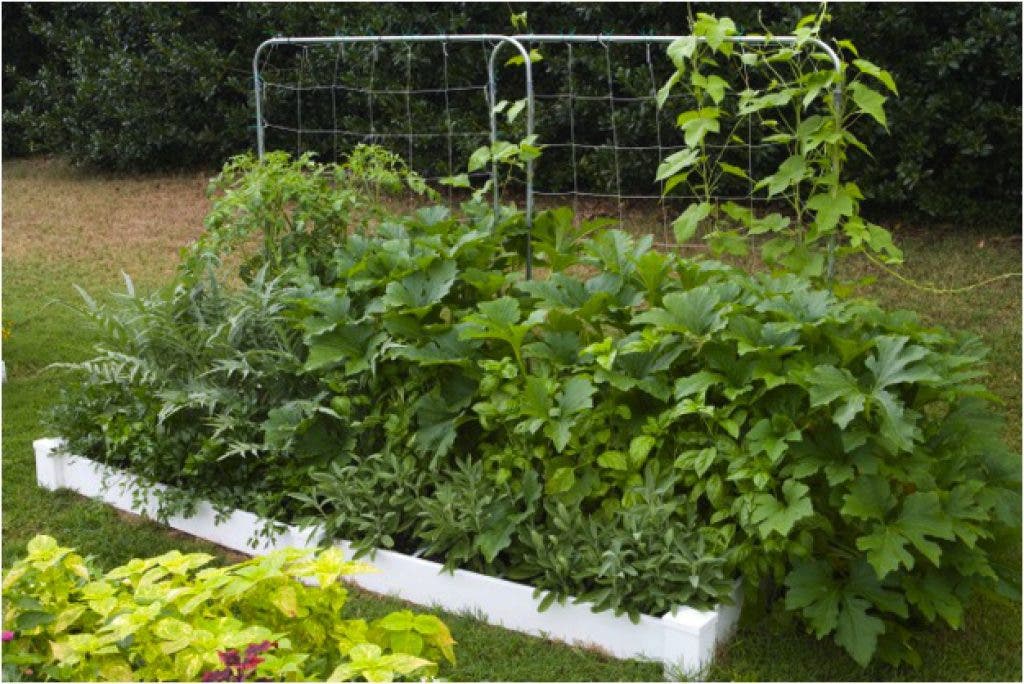


OK. Now you know that Square Foot Gardening reduces the space you need to garden by 80% and cuts your work by about 98% and almost eliminates weeding, but what if I told you it gets even better?
To save even MORE space, Mel Bartholomew, author of the All New Square Foot Gardening book shows us how to grow our vining crops vertically! As I’ve noted in a previous post, Mel was a civil engineer and an efficiency expert, and he brought those skills to gardening.
In Square Foot Gardening the sturdiest way to make a support is using electrical conduit and sturdy nylon netting. In the photo of the man in the brown shirt you can see that in his left hand is 18” rebar which has been pounded half way into the ground. The electrical conduit slips nicely over the rebar which holds it securely upright. For the top piece, you can either use elbow couplings and another straight piece of conduit or use a bender to put a gentle curve in the top bar and use straight couplings.
Find out what's happening in Glen Burniefor free with the latest updates from Patch.
In either case, you would use strong nylon netting and “weave” it in and out of the conduit (I find this is better than just tying the net onto the frame). The hole of the netting should be about 4” so that you can easily reach in to work on your plants.
Mel started growing vining tomatoes using this method, and after several successful years, he wondered if other vine crops could also be grown by this method. Pole beans, cucumbers and peas grew easily and all the vegetables looked great growing upright.
Find out what's happening in Glen Burniefor free with the latest updates from Patch.
Next he grew pumpkins, melons and squashes vertically. He found that when the weight of the “fruits” increased, the stems naturally thickened so that they would be supported. He does suggest that when growing very large crops, you may want to use something sturdier such as rebar mesh or cattle panels and use old panty hose or T-shirt material to make “slings."
No matter whether you use rebar mesh or nylon netting, you will want to carefully weave the tender tips of the plant in and out of the cross pieces at least weekly. If you wait any longer you will possibly damage the vine. The advantage of using the nylon net instead of twine is that it stretches and “gives” and it is easier to send it on its way upward with little chance of harming the plant.
When placing your vertical support, keep in mind it should be put on the north side so that it doesn’t shade the other crops in your bed. Of course if you’re growing lettuces or other crops that NEED shade, then you could locate the support on the south side of the box.
When growing vertical crops such as tomatoes, cucumbers, melons and squash you will want to prune the plants so that they don’t encroach on their neighbor’s territory. There are many good YouTube videos on how to prune these plants.
Let’s look at the space requirements of various vine crops:
Beans (pole type)—8 per square foot
Cucumbers—2 per square
Eggplants—1 per square
Melons (cantaloupes, watermelons, etc.)—1 per 2 squares
Pea (sugar snap)—8 per square
Squash (vine type)—1 per 2 squares
Tomatoes (vine type)—1 per square
Remember ... you’ll be pruning most of these crops, so this is the recommended spacing. You may be thinking that you’ll lose a lot of your harvest by pruning, but that’s not so. Yes, the “per plant” harvest will be less, but you’ll be able to put in FOUR plants into a 1’ x 4’ area, so you’re “per square foot” yield will be much higher and if you plant using a traditional method. And pruning encourages more vigorous fruit growth.
We'll get more into growing tomatoes in a future post.