Health & Fitness
BLOG: Mel’s Mix—The Foundation of Square Foot Gardening (Part I)
With the Square Foot Gardening (SFG) method, it doesn't matter if your soil is sandy or full of clay because you won't be using it. The "secret" is "Mel's Mix".


Is your existing soil full of clay or is it too sandy? With the Square Foot Gardening (SFG) method, it doesn’t matter because you won’t be using it. The “secret” is “Mel’s Mix”—named for SFG inventor Mel Bartholomew.
In order to grow healthy vegetables most people need to amend their soil with large amounts of organic material (compost). They need to rent or buy a rototiller each year and add more and more manure and other forms of compost and work it into the entire garden. Remember the average American home garden is 20’ x 25’ or 700 square feet, so this is quite a chore ... and quite expensive.
Mel thought, “Why not have great soil during the first year of your garden, and every year thereafter, no matter where you live?” We said in an earlier article that it takes about seven years to get the soil just the way you want. With SFG, you get a perfect soil-less mix the very first day without all the work and annual cost of renting a rototiller and buying huge amounts of compost and manure every year.
Find out what's happening in Glen Burniefor free with the latest updates from Patch.
The initial cost of Mel’s Mix SEEMS high, but when you consider that the “expensive” component only needs to be purchased once when you first make the mix, and you spread the cost of the ingredients over the lifetime of your garden, it is no more expensive than renting or purchasing a rototiller and the ingredients needed to amend your existing soil. Also, because the space of your garden is only 20% of a traditional row garden, it really is cost effective in the long run.
Simply, Mel’s Mix is composed of 1/3 sphagnum peat moss, 1/3 coarse vermiculite and 1/3 blended compost. Professional grade bales of peat moss run less than $20 for 3.8 cubic feet (cf) and will “fluff” up to almost 8 cf. The bales you find in the home improvement stores are also 3.8 cf, but only “fluff” up to about 6 cf.
Find out what's happening in Glen Burniefor free with the latest updates from Patch.
There’s a myth that peat moss is a non-renewable resource and shouldn’t be used. According to the Canadian Sphagnum Peat Moss Association (peatmoss.com): “Less than 0.02 percent (17,000 hectares) of Canada's peatland area is currently being used for horticultural peat harvesting and related applications. Canadian sphagnum peat moss is a sustainable resource. Annually, peat moss accumulates at more than 60 times the rate it is harvested.
“Peat moss is partially decomposed sphagnum moss. Sphagnum’s large cell structure enables it to absorb air and water like a sponge. Although peat moss does not contain nutrients, it does adsorb nutrients added to or present in the soil, releasing them over time as the plants require. This saves valuable nutrients which are otherwise lost through leaching.”
Vermiculite is the ground form of the mineral mica that is superheated until it pops like popcorn.
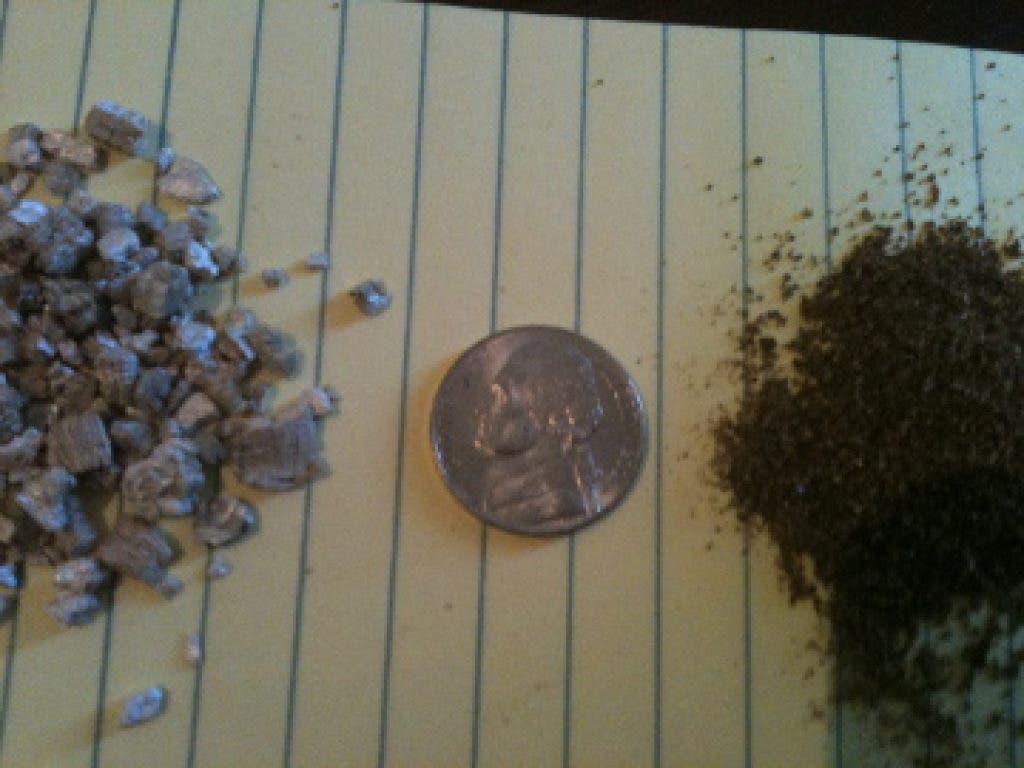
You will need to choose coarse (#3) or extra coarse (#4) agricultural grade vermiculite in 4 cf bags. What you find in most stores is the horticultural grade and is too fine for making Mel’s Mix. The photo shows the difference between coarse agricultural grade on the left and horticultural grade on the right with a nickel in between for reference. When I make my own version of Mel’s Mix (SFG4U Growing Medium) for my business, I actually use extra coarse vermiculite. Don’t be fooled ... when I bought the bag of horticultural vermiculite, the picture on the bag made it look as if the “grains” were even bigger than the coarse agricultural grade in the picture. You can usually “feel” the size through the bag, but if in doubt, ask the seller if you can see a sample before you purchase it.
The myth about vermiculite is that it has asbestos in it. Many years ago ONE mine in Montana was shut down because part of the mine was found to contain asbestos. Some news stories associated this problem with ALL of the products coming from the mine. The industry has proven over and over that this was an isolated incidence but the story pops up every few years. The vermiculite you get today is inspected and does NOT contain asbestos.
Next week we will continue the topic of Mel’s Mix.
I’ll be giving a short seminar on Square Foot Gardening at the Maryland Home & Garden Show Saturday, March 3, at 2 p.m. and again on Sunday, March 11, at noon at the Timonium Fair Grounds. Come see me!