Health & Fitness
BLOG: Power in Dirt
There is power in dirt as I recently learned when I helped at the Upton Edible Garden project in Baltimore last week. Dirt has the power to change lives, communities and even cities.



Power in dirt was a phrase I heard a lot last week when I helped at the Upton Edible Garden project in Baltimore, and it’s true, there IS power in dirt. Power to change the lives of people, the lives of a community and even the life of a city. Last Wednesday I saw “Power in Dirt” go from being a simple phrase to becoming a movement.
StepUP! Baltimore’s goal is to revitalize the city by improving and revitalizing one vacant lot at a time. Baltimore Mayor Stephanie Rawlings-Blake was on hand to dedicate the Upton Edible Garden project and thank neighbors and volunteers for their efforts. She has made it possible to streamline the efforts of community groups and citizens to improve abandoned and neglected parcels of land in the city. She said that this year there have been 400 such plots that have been put in the hands of the people for projects such as building playgrounds, meeting spaces and starting community gardens.
I enjoyed talking to several young people who are part of AmeriCorps including a young man from Alabama and a young woman from Brooklyn, New York. According to the americorps.gov web site:
Find out what's happening in Glen Burniefor free with the latest updates from Patch.
Each year, AmeriCorps offers 75,000 opportunities for adults of all ages and backgrounds to serve through a network of partnerships with local and national nonprofit groups. Whether your service makes a community safer, gives a child a second chance, or helps protect the environment, you’ll be getting things done through AmeriCorps!
AmeriCorps members address critical needs in communities all across America. As an AmeriCorps member, you can:
Find out what's happening in Glen Burniefor free with the latest updates from Patch.
- Tutor and mentor disadvantaged youth
- Fight illiteracy
- Improve health services
- Build affordable housing
- Teach computer skills
- Clean parks and streams
- Manage or operate after-school programs
- Help communities respond to disasters
- Build organizational capacity
Volunteers can earn Education Awards as a way to help pay for college which really helped when my son Jeremy was at Frostburg State University and participated in the program.
At the Upton project, volunteers started early in the morning when they dropped several loads of mulch which needed to be spread. I arrived at 9:00 when the first dump truck load was almost spread—several more were brought in. Just two short hours later when the mayor arrived, volunteers had spread mulch over the whole area, set up tables, a VIP stage area and tents (because it started to rain), set out and filled several raised garden beds, staged activities for several groups of children and much more.
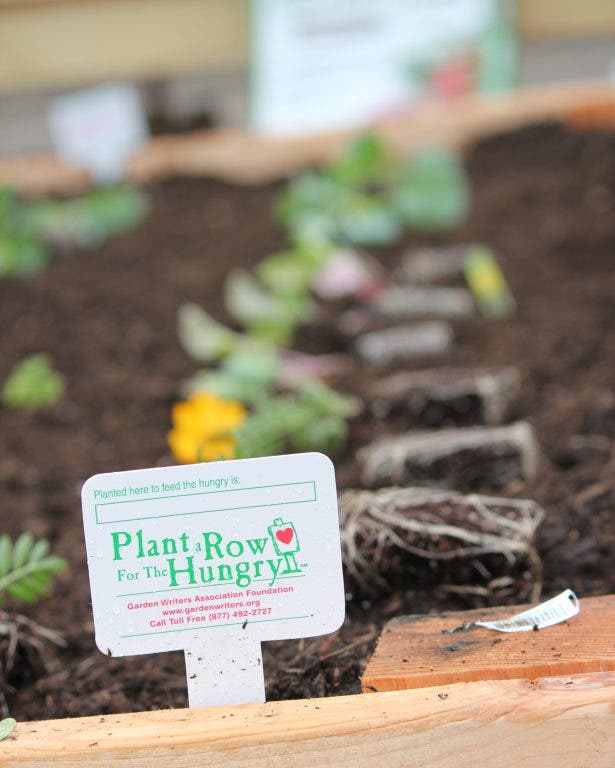
After the speeches, Mayor Rawlings-Blake helped the children plant marigolds in one of the beds and dedicated the Upton Edible Garden project. It was good to see various organizations come together to help—including the Garden Writers Association of which I am a member. It is part of the GWA’s Plant a Row for the Hungry project. Since Plant a Row (PAR) was founded in 1995, gardeners have donated 18 million pounds of food. GWA members encourage their readers to participate and plant an extra row that they will donate to an organization that feeds the hungry. They ask that you arrange ahead of time (before you plant) where you will donate and ask that organization exactly what they WANT and can use – some have rules against accepting such donations. If you can’t find an organization that will accept your donation of fresh vegetables, why not see if a family in your church or school could use your overabundance?